


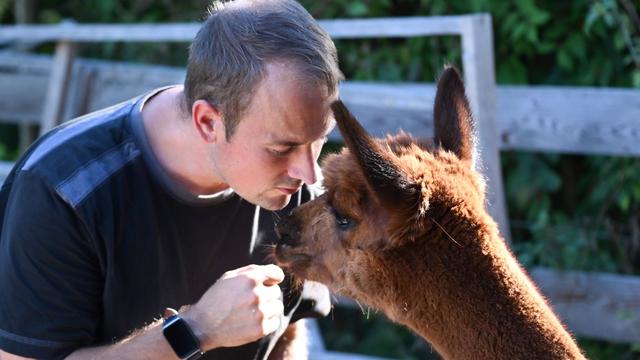

Alpaca farm caught between two authorities as dispute over animal breeding grows
Translated from German and summarized by DistantNews. Read the original for the full story.
At a glance
In-depth
From a news agency
In the courts
- Patrick Stellmach’s alpaca farm in Ensingen faces an uncertain future after a neighbor’s complaint and a dispute between the city of Vaihingen and the Stuttgart regional authority.
- The city approved an agreement allowing fencing and shelter under strict conditions, but the regional authority considers the arrangement probably invalid and the facility formally unauthorized.
- Stellmach has started a petition seeking recognition as a privileged agricultural operation, while arguing that moving pregnant alpacas within a week would threaten their welfare.
Patrick Stellmach wanted his alpaca farm to offer children in the region close-up experiences with nature. Instead, the project has become a dispute between a neighbor, the city of Vaihingen, and the Stuttgart regional authority.
Alpacas radiate an incredible calm and have fascinated me for several years.
Several alpacas graze behind Stellmach’s home in Ensingen, a suburb of Vaihingen an der Enz. Four females are expecting offspring, and Stellmach hopes to expand the herd. The 38-year-old former Bosch engineer says the animals have fascinated him for years because “alpacas radiate an incredible calm.” They have grazed on his pasture for about a year and a half, until a neighboring couple filed a complaint.
The dispute also reflects conflicting approaches within the authorities. In December 2024, the city concluded a public-law agreement with Stellmach, despite knowing that it could not issue a formal building permit. The agreement allowed fencing and a shelter under strict conditions. In return, Stellmach agreed to offer free visits to kindergartens and school classes.
The idea for the alpaca farm is part of the overall strategy that the city of Vaihingen and its districts are pursuing to become an attractive, lovable and livable city ahead of the 2029 civic garden show.
The city described the farm as part of its broader plan to make Vaihingen and its districts more attractive ahead of the 2029 civic garden show. It presented the arrangement as an example of administration enabling a local initiative. The Stuttgart regional authority takes a different view. It considers the agreement probably invalid and therefore treats the alpaca facility as an unauthorized structure. The authority says people who keep animals permanently need either a recognized agricultural operation, known as a privileged operation, or a development plan. Stellmach has neither.
The authority is fundamentally bound by law and order, not by public sympathy.
He has now launched a petition, which has temporarily suspended the deadlines and given him more time. A petitions committee will examine whether he can be recognized retroactively as a privileged agricultural operation. Stellmach says that would make the construction behind his house eligible for approval. He also cites animal welfare, saying a one-week deadline to remove the heavily pregnant females from the pasture was too short and incompatible with their welfare. The area behind the house, he argues, provides the distance from strangers that young animals especially need.
The deadline to remove the heavily pregnant female animals from the pasture was extremely tight and, in my view, incompatible with animal welfare.
About this summary
Originally published by Die Zeit in German. Translated, summarized, and contextualized automatically by DistantNews, with a note on how the source frames the story. Not individually reviewed before publishing. How this works.
More Stories



From Our Blog

News in Translation: What Gets Lost, and How We Keep the Framing

The Same Story, Different Countries: How Coverage Changes at the Border

Diaspora Media: How Communities Follow News From Home

Traveling Where the Press Is Not Free: How to Read the News There

The Digital Nomad's Guide to Local News
