



Alte Donau Reaches 29 Degrees as Extreme Heat Persists in Eastern Austria
Translated from German, summarized and contextualized by DistantNews.
At a glance
News
Sources not specified
Context piece
- Eastern Austria is experiencing extreme heat, with water temperatures reaching up to 29 degrees Celsius.
- Subtropical air masses and a high-pressure system are causing the unusually high temperatures.
- Health warnings advise staying hydrated, avoiding exertion, and seeking cool places, especially for vulnerable individuals.
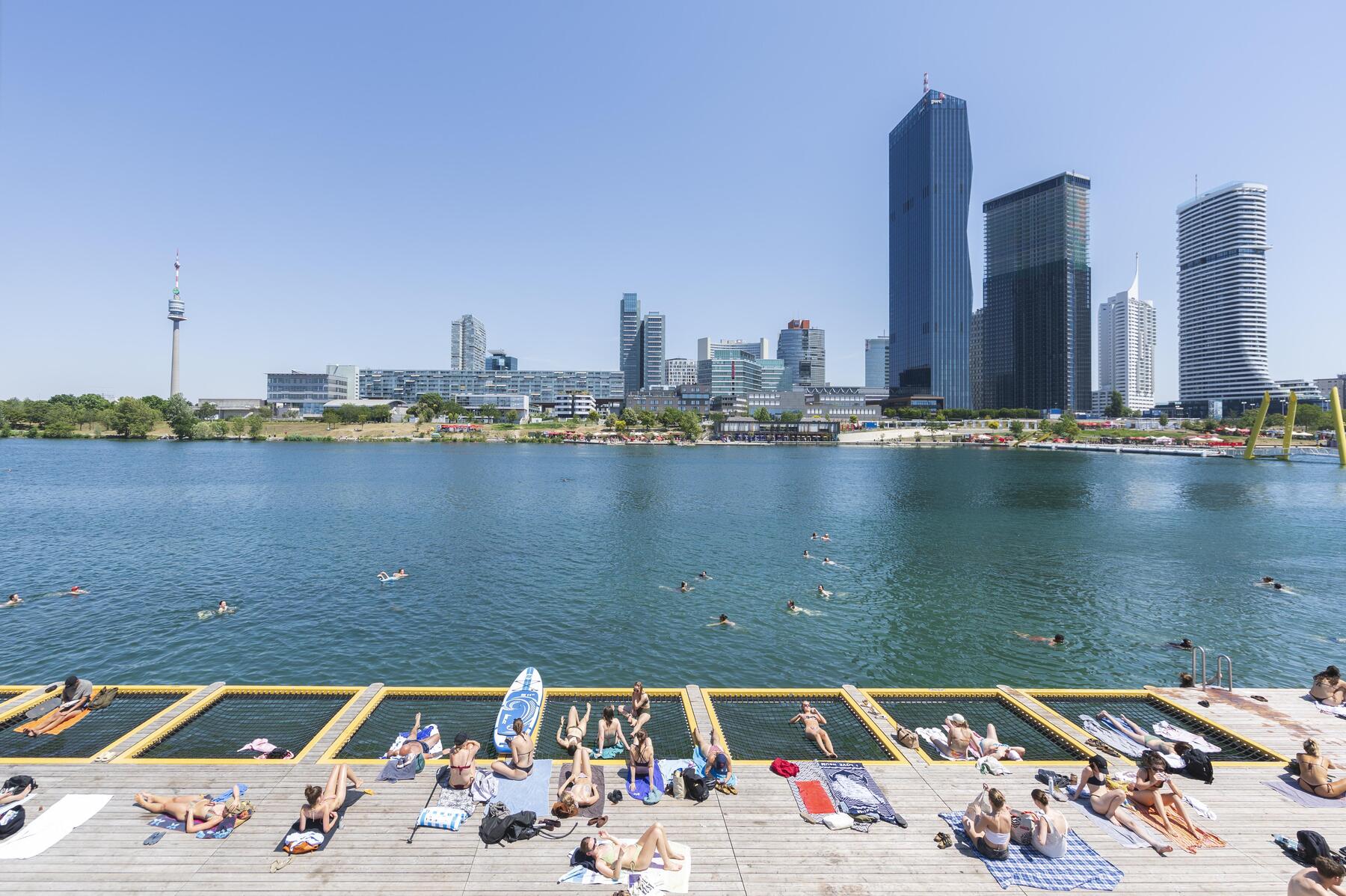
Eastern Austria continues to swelter under an intense heatwave, with water temperatures in popular recreational spots reaching levels more akin to a warm bath. The Alte Donau, a Danube backwater in Vienna, registered a balmy 29 degrees Celsius early Monday morning, according to ARBÖ information.
The extreme heat is attributed to a powerful high-pressure system combined with subtropical warm air masses, according to Geosphere Austria. This weather pattern is causing unusually high temperatures across the region, making even natural bodies of water offer little respite.
While the Alte Donau reached 29 degrees, the nearby Neue Donau offered slightly more refreshment at 23 degrees Celsius. The Neusiedler See in Burgenland, often called the "Sea of Vienna," was recorded at 28 degrees, with the Neufeldersee just one degree cooler.
Other Austrian lakes also reported high temperatures. In Carinthia, the Afritzer See was 23.5 degrees and the Weissensee 25.5 degrees. The Flatschacher See reached 28.5 degrees, while the Herrensee in Lower Austria was 28 degrees. Even deeper lakes like Hallstätter See in Upper Austria were 22 degrees, Mondsee 25 degrees, and Wolfgangsee 27 degrees. In Styria, the Toplitzsee was around 20 degrees, Altausseer See 23 degrees, and Stubenbergsee 28 degrees. Lake Constance in Vorarlberg was in the mid-range at 24 degrees.
Coastal waters are also warming significantly. The Adriatic Sea is approaching "bathtub temperatures," with Split recording 26 degrees and the Venice lagoon reaching 29 degrees. In contrast, the Atlantic Ocean offered cooler temperatures, with Brest in France at 19 degrees and the Baltic Sea in Stockholm at 17 degrees.
Geosphere Austria issued a stark warning about the health risks associated with the extreme heat, noting it can lead to elevated body temperature, weakness, fatigue, and in severe cases, confusion and dizziness, often due to dehydration. They strongly advise sufficient fluid intake, avoiding strenuous activity during peak heat, seeking shade and cool environments, and paying special attention to children and vulnerable individuals.
DistantNews Editorial
Originally published by Die Presse in German. Translated, summarized, and contextualized by our editorial team with added local perspective. Read our editorial standards.
More Stories

From Our Blog

What Gets Lost (and Found) When News Is Translated

The Critical Role of Diaspora Media in Global News

What Travellers Should Know About Countries with Restricted Press

A Digital Nomad's Guide to Following Local News

How the Same Story Looks Different in Different Countries
