


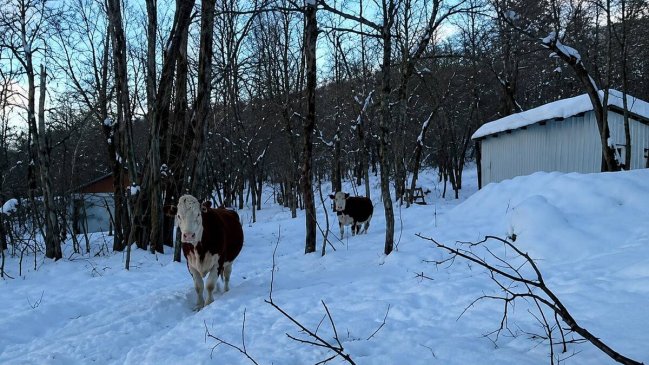
Alto Biobío: Communities seek support amid livestock deaths from snow
Translated from Spanish, summarized and contextualized by DistantNews.
At a glance
News
Named sources
Context piece
- Communities in Alto Biobío, Chile, are requesting urgent support due to livestock losses caused by heavy rains and snow.
- Families dependent on livestock and beekeeping are struggling to feed their animals and maintain access to their communities, with some areas isolated.
- A local congresswoman will formally request information from agricultural development agencies regarding preventative plans and aid delivery.
Indigenous communities in Alto Biobío, situated along the Queuco and Biobío rivers in Chile, are appealing for assistance as severe weather conditions threaten their livelihoods. Intense rains and heavy snowfall have created significant challenges for families reliant on livestock and apiculture, impacting their ability to feed animals and maintain essential connectivity.
With so much rain, they don't eat enough, and many people have no way to provide fodder. That's why we are requesting support as soon as possible, because it would be very regrettable if these ventures were lost.
Lonco Marcelino Queupil highlighted the critical role of livestock for the region's families, stating, "With so much rain, they don't eat enough, and many people have no way to provide fodder." He expressed concern that these vital enterprises could be lost without prompt support. Bernardo Maripil Gallina, president of the Cauñicú community, voiced feelings of abandonment, noting the absence of previous support for their animals and describing how some families are isolated, with access only possible by air.
We feel that we are abandoned because previously there was support for our animals and today we have received nothing. We even have families isolated, without bridges or access for vehicles or horses, who can practically only be reached by air.
Blanca Jara, president of the Quepuca Aukin Wallmapu indigenous community, echoed the urgent need for resources, specifically requesting fodder for animals, non-perishable food for residents, and machinery to clear access routes. "We don't need photographs or empty words; we need concrete facts, real answers, and for the aid to reach our communities," she stated, emphasizing the need for tangible action.
We need fodder for our animals, food baskets with non-perishables for our people, and machinery to open and clear neighborhood access roads. Our reality needs to be heard. We don't need photographs or empty words; we need concrete facts, real answers, and for the aid to reach our communities.
In response, District 21 Congresswoman Lilian Betancurt announced she will formally address the Institute of Agricultural Development (Indap) and the Ministry of Agriculture. She aims to understand the existing preventative planning, the aid that was committed, and the reasons for its delayed delivery. Betancurt stressed that Alto Biobío requires a response tailored to its unique geographical and climatic reality, emphasizing that prevention includes delivering aid before emergencies impact the communities.
Alto Biobío needs a different response, in line with its geographical and climatic reality. Prevention also means delivering fodder and aid before the emergency hits the communities.
DistantNews Editorial
Originally published by Cooperativa in Spanish. Translated, summarized, and contextualized by our editorial team with added local perspective. Read our editorial standards.
More Stories

From Our Blog

What Gets Lost (and Found) When News Is Translated

The Critical Role of Diaspora Media in Global News

What Travellers Should Know About Countries with Restricted Press

A Digital Nomad's Guide to Following Local News

How the Same Story Looks Different in Different Countries
