


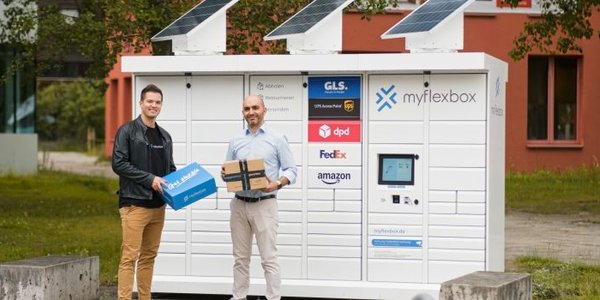
Amazon Taps Independent Parcel Machine Network myflexbox in Germany
Translated from Polish, summarized and contextualized by DistantNews.
At a glance
News
Named sources
Context piece
- Amazon is expanding its logistics network in Germany by partnering with the independent parcel machine network myflexbox.
- This collaboration integrates Amazon into a network of 1,480 parcel machines accessible to various logistics providers.
- The move signifies a growing trend towards open, collaborative infrastructure in e-commerce delivery, though competition with established players like DHL Packstation remains.
Amazon is set to enhance its delivery capabilities in Germany by integrating with myflexbox, an independent network of parcel machines. This strategic move will provide Amazon access to myflexbox's network of 1,480 machines across Germany, a significant step in the e-commerce giant's logistics strategy.
This is proof that open, operator-independent infrastructure can scale and create value for everyone involved: customers, logistics providers, sellers, and cities.
Peter Klima, founder and CTO of myflexbox, highlighted the significance of this partnership, stating, "This is proof that open, operator-independent infrastructure can scale and create value for everyone involved: customers, logistics providers, sellers, and cities." He added, "From day one, we believed that the future of last-mile delivery relies on cooperation, not on closed ecosystems."
From day one, we believed that the future of last-mile delivery relies on cooperation, not on closed ecosystems.
Germany's e-commerce market is substantial, with Amazon holding a 60% share, over 40,000 employees, and generating $45.9 billion in revenue. The country is experiencing a growing competition between open networks, which are independent of any single operator (like myflexbox, used by Amazon, DHL, DPD, FedEx, and Deinfach), and closed networks operated by a single entity. The adoption rate of parcel machines in Germany is still below 5%, leaving considerable room for growth.
Germany has a huge volume of packages, but also a very strong habit of delivery to the door and the dominant position of DHL Packstation.
Marek Różycki, president of Last Mile Experts, views Amazon's entry into the myflexbox network as a significant signal but cautions that it doesn't necessarily mean Germany will rapidly become the second-largest market for parcel machines after Poland. He points out that while Germany handles a vast number of packages, consumers have a strong preference for home delivery, and DHL Packstation holds a dominant position. However, Różycki anticipates increasing economic pressure from rising costs of labor, fuel, energy, regulations, and failed deliveries, which will push logistics operators to utilize automated parcel machines (APMs) and pick-up/drop-off (PUDO) points more actively. He stresses that machine availability alone is insufficient; checkout, pricing, returns, and a simple customer experience will be crucial.
Rising costs of labor, fuel, energy, regulations, and failed deliveries will force KEP operators to more actively direct volumes to APMs and PUDO points. But the availability of machines alone will not be enough; checkout, pricing, returns, and simple customer experience will be key.
DistantNews Editorial
Originally published by Rzeczpospolita in Polish. Translated, summarized, and contextualized by our editorial team with added local perspective. Read our editorial standards.
More Stories

From Our Blog

What Gets Lost (and Found) When News Is Translated

The Critical Role of Diaspora Media in Global News

What Travellers Should Know About Countries with Restricted Press

A Digital Nomad's Guide to Following Local News

How the Same Story Looks Different in Different Countries
