


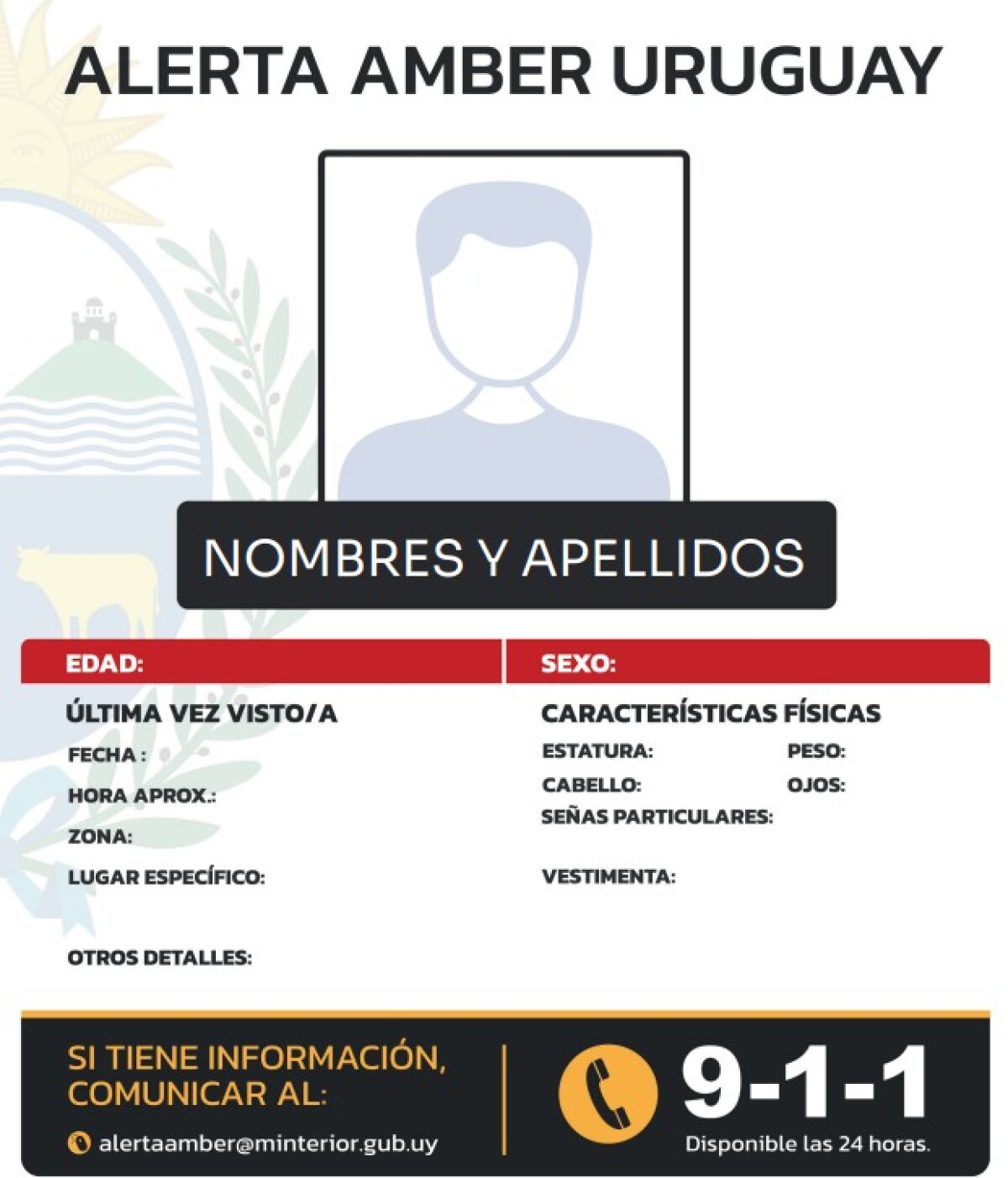
Amber Alert launches in Uruguay 30 years after Texas girl's unsolved murder
Translated from Spanish, summarized and contextualized by DistantNews.
At a glance
News
Named sources
Outcome reported
- Amber Alert was launched in Uruguay, thirty years after the kidnapping and murder of nine-year-old Amber Hagerman in Texas.
- The Amber Alert system was created after the crime, as no immediate public alert system existed in 1996 to share witness information about the abduction.
- The system, initially a local alliance, has expanded globally, now utilizing social media and mobile technology to aid in the search for missing children.
Thirty years ago, nine-year-old Amber Hagerman was kidnapped and murdered in Arlington, Texas. The crime, which remains unsolved, spurred the creation of the Amber Alert system, a vital tool now being launched in Uruguay.
Amber was riding her bicycle with her brother on January 13, 1996, when a stranger forced her into a black vehicle. A witness saw the abduction and provided a description of the suspect and the car to police. However, in 1996, there was no rapid system to disseminate this crucial information to the public. "As the kidnapping was witnessed, the police received very useful information that could have helped rescue her. But in 1996, there was no way to quickly share that information with the public," said Emily Vacher, global head of security at Meta, who previously worked as an FBI agent specializing in missing and kidnapped children cases.
Amber was a child like any other, with friends and a family who loved her. She was doing simply what millions of children do every day. She was riding her bike with her brother near her home.
Amber's body was found four days later, and her abductor was never identified. The tragedy prompted a Texas woman to question why emergency alerts could interrupt programming for weather but not for missing children. This led to a collaboration between media outlets and local law enforcement, establishing the Amber Alert system. The name honors Amber Hagerman and serves as an acronym for "America's Missing: Broadcast Emergency Response."
The system has since evolved significantly. Initially disseminated via radio and television, it now incorporates highway signs, mobile phone messages, applications, and social media platforms. Meta began distributing alerts on Facebook in 2015 and on Instagram in 2022, enabling targeted notifications to users near search areas. The launch in Uruguay marks a global expansion of this life-saving initiative, thirty years after the event that inspired it.
As the kidnapping was witnessed, the Police received very useful information that could have helped rescue her. But in 1996, there was no way to quickly share that information with the public.
DistantNews Editorial
Originally published by El País in Spanish. Translated, summarized, and contextualized by our editorial team with added local perspective. Read our editorial standards.
More Stories



From Our Blog

What Gets Lost (and Found) When News Is Translated

The Critical Role of Diaspora Media in Global News

What Travellers Should Know About Countries with Restricted Press

A Digital Nomad's Guide to Following Local News

How the Same Story Looks Different in Different Countries
