


America 500? What the U.S. will look like in another 250 years
Summarized and contextualized by DistantNews.
At a glance
In-depth
Named sources
Context piece
- Benjamin Franklin, writing in 1780, speculated about humanity's potential to conquer matter and disease within 1,000 years.
- His predictions included concepts resembling maglev trains and the eradication of all diseases, including aging.
- While Franklin envisioned a future beyond current technological capabilities like AI and space control, his foresight is being revisited as the U.S. approaches its 500th anniversary.
Benjamin Franklin, a true polymath of his time, was not only a statesman and inventor but also a visionary futurist. In a 1780 letter to his friend, scientist Joseph Priestley, Franklin expressed regret at being born too early to witness the full potential of scientific advancement.
The rapid Progress true Science now makes, occasions my Regretting sometimes that I was born so soon. It is impossible to imagine the Height to which may be carried in a 1000 Years the Power of Man over Matter.
He dreamed of a future 1,000 years hence, imagining humanity's profound control over the physical world. Franklin presciently wrote of possibilities akin to modern maglev trains, suggesting, "We may perhaps learn to deprive large Masses of their Gravity & give them absolute Levity, for the sake of easy Transport." He also held a remarkably optimistic view of medicine, believing all diseases, "not excepting even that of Old Age," would eventually be "prevented or cured."
We may perhaps learn to deprive large Masses of their Gravity & give them absolute Levity, for the sake of easy Transport.
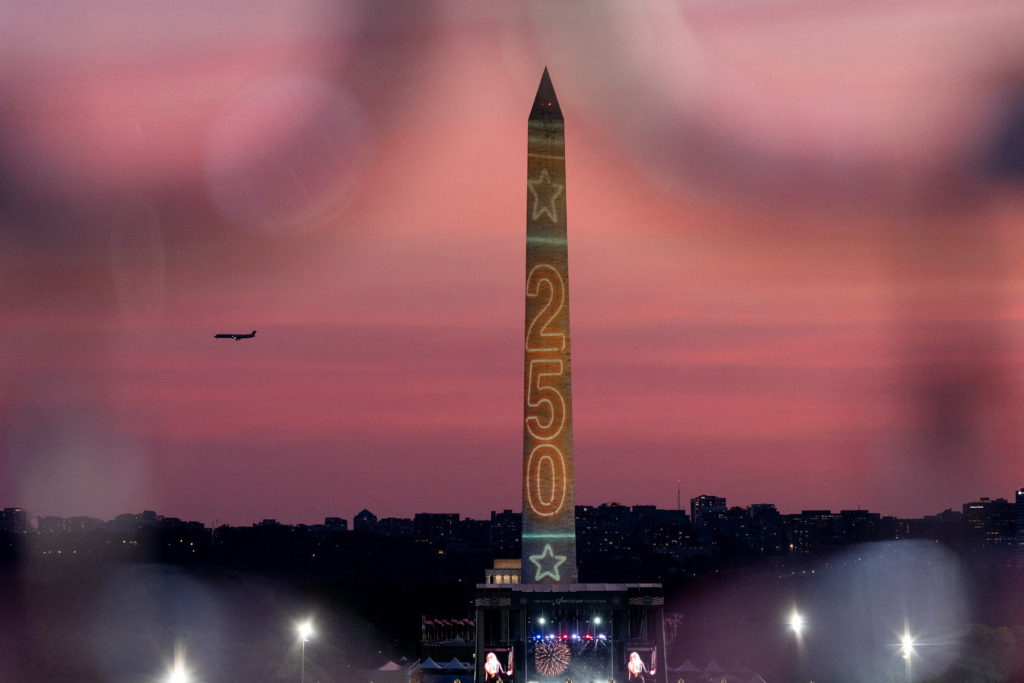
While Franklin's predictions did not encompass contemporary advancements like artificial intelligence, genetically engineered humans, or the battle for space dominance, his forward-thinking perspective is being re-examined as the United States, a nation he helped form, approaches its 250th anniversary. His thoughts offer a historical lens through which to consider the nation's trajectory.
prevented or cured, not excepting even that of Old Age.
As the U.S. navigates a period of significant internal division, some commentators draw parallels to past eras, suggesting that current challenges are not unprecedented. George Friedman, founder of Geopolitical Futures, notes that while the present may feel extraordinary, historical perspective reveals periods of similar or even greater turmoil, such as during Richard Nixon's presidency. This historical context suggests that the nation's capacity to overcome challenges remains a constant.
When you live during a time, it makes you feel that this is an extraordinary event in the United States as a nation. When you look back in history and take a look at the other times, this isn't anything much worse than Richard Nixon. So yeah, we get strange presidents, but the idea that we are in a uniquely divided position at this point is false.
DistantNews Editorial
Originally published by CBS News. Summarized and contextualized by our editorial team with added local perspective. Read our editorial standards.
More Stories

From Our Blog

How the Same Story Looks Different in Different Countries

What Gets Lost (and Found) When News Is Translated

The Critical Role of Diaspora Media in Global News

What Travellers Should Know About Countries with Restricted Press

A Digital Nomad's Guide to Following Local News
