

/s3/static.nrc.nl/wp-content/uploads/2026/05/08152631/150526LEV_2033594629_WEB_HP_Familie-Meeles.jpg)
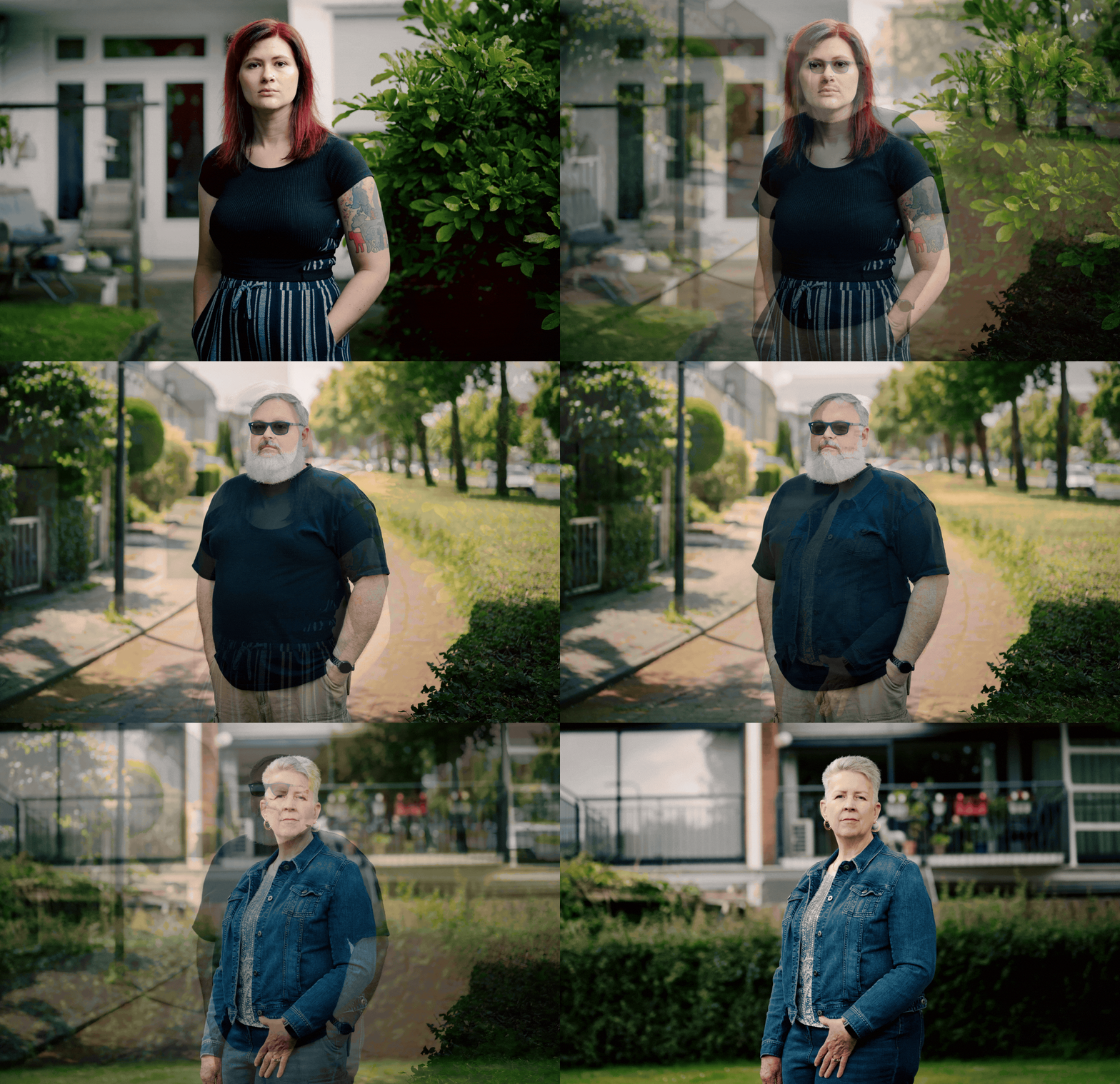
Americans Fleeing Trump's U.S. Seek New Life in Netherlands
Translated from Dutch, summarized and contextualized by DistantNews.
At a glance
News
Named sources
Context piece
- A growing number of Americans are moving to the Netherlands using the Dutch American Friendship Treaty (DAFT).
- The treaty allows Americans to obtain residency by investing 4,500 euros in a business, with permanent residency possible after five years.
- Some Americans are leaving the U.S. due to concerns about political issues, including abortion laws and the treatment of LGBTQ+ individuals.
The Netherlands is seeing a significant increase in American immigrants, with numbers rising from around 300 to 700 annually in the past five years. This surge is largely attributed to the Dutch American Friendship Treaty (DAFT), a little-known trade agreement from 1956. The treaty offers Americans a pathway to residency by establishing themselves as self-employed entrepreneurs in the Netherlands, requiring a modest investment of 4,500 euros.
America sometimes felt dystopian, like in The Handmaid's Tale.
Beyond entrepreneurial ambitions, the treaty is also attracting Americans disillusioned with their home country. Three individuals interviewed by NRC expressed a feeling of not belonging in the U.S. and voiced concerns for their future and safety. For them, the re-election of Donald Trump, stricter abortion laws, immigration policies, and the position of LGBTQ+ individuals were decisive factors in their decision to leave.
One such individual, a 30-year-old nurse named Caylie, moved to the Netherlands five months ago. Originally from West Texas, a deeply conservative region, she witnessed firsthand how increasingly stringent abortion laws impacted pregnant women. "As a nurse in obstetrics, I saw up close how complicated pregnancies can be," she stated. "That sometimes clashed with how abortion was discussed in my environment. There, the topic was often simple: abortion was wrong. But in the hospital, I encountered women with severe complications, non-viable pregnancies, or situations where doctors had to make difficult choices."
As a nurse in obstetrics, I saw up close how complicated pregnancies can be. That sometimes clashed with how abortion was discussed in my environment. There, the topic was often simple: abortion was wrong. But in the hospital, I encountered women with severe complications, non-viable pregnancies, or situations where doctors had to make difficult choices.
Caylie felt the political climate, particularly regarding abortion, was impossible to ignore, especially when considering her own future after becoming pregnant for the second time. "The abortion laws in Texas have become stricter in recent years," she explained. "Since 2022, the state has a so-called trigger law, making abortion punishable at any stage." This contrasted sharply with her upbringing in a predominantly Christian, conservative, Republican-voting community where religious beliefs heavily influenced daily life. She began questioning the unquestioned acceptance of certain viewpoints and the lack of space for diverse perspectives.
The abortion laws in Texas have become stricter in recent years. Since 2022, the state has a so-called trigger law, making abortion punishable at any stage.
DistantNews Editorial
Originally published by NRC Handelsblad in Dutch. Translated, summarized, and contextualized by our editorial team with added local perspective. Read our editorial standards.
More Stories
/s3/static.nrc.nl/wp-content/uploads/2026/07/16135853/5a938190-4a2b-4c47-b6a6-298c9977487a.jpg)
/s3/static.nrc.nl/wp-content/uploads/2026/07/06161654/100726CUL_2035012985_rood2.jpg)
/s3/static.nrc.nl/wp-content/uploads/2026/07/15183236/150726BIN_2035241528_DoorstroomToets02.jpg)
From Our Blog

What Gets Lost (and Found) When News Is Translated

The Critical Role of Diaspora Media in Global News

What Travellers Should Know About Countries with Restricted Press

A Digital Nomad's Guide to Following Local News

How the Same Story Looks Different in Different Countries
