


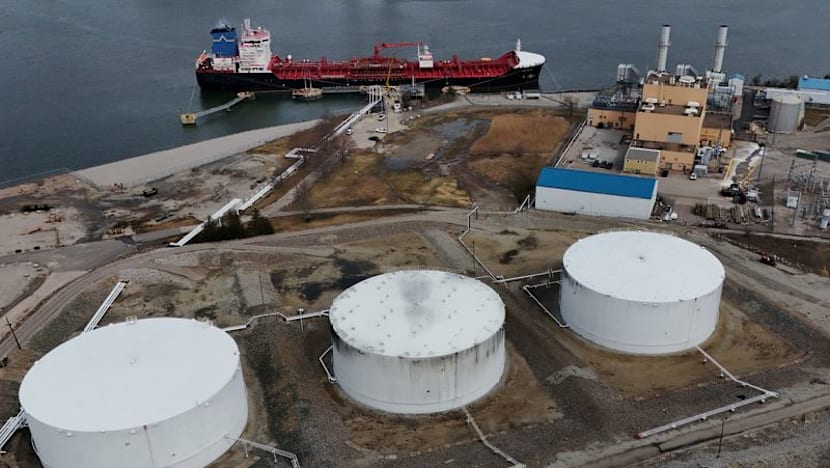
Ample Supply Buffers US Cargoes from Price Shock as Europe, Asia Prices Surge
Translated from English, summarized and contextualized by DistantNews.
TLDR
- U.S. crude oil prices have stabilized due to ample domestic supply, contrasting with record highs in Europe and Asia.
- Releases from the U.S. Strategic Petroleum Reserve and increased Venezuelan imports are buffering the impact of global supply disruptions caused by the war in Iran.
- While some U.S. oil grades have retreated, light-density WTI Midland delivered to Europe has reached an all-time high due to scarcity in that market.
The global oil market is experiencing a stark divergence, with U.S. crude cargo prices retreating from recent spikes while Europe and Asia grapple with record-high prices. This phenomenon, occurring nearly seven weeks into the conflict involving Iran, is largely attributed to the U.S.'s strategic management of its domestic supply.
Analysts and traders point to the U.S. Strategic Petroleum Reserve (SPR) releases and renewed imports from Venezuela as key factors cushioning American refiners. These measures have helped mitigate the impact of disrupted global oil flows, particularly the closure of the Strait of Hormuz, a critical chokepoint for international trade. The physical price of oil in Europe and the Middle East has consequently surged, with European prices nearing $150 a barrel and Middle Eastern benchmarks hitting nearly $170.
European and Asian buyers need prompt physical barrels. U.S. refiners sit on the supply side of that equation and are price-setters, not price-takers in the current crisis.
In contrast, U.S. refiners, benefiting from access to medium, sour crude grades like Mars, produced in the Gulf of Mexico, have seen prices around $97 a barrel. This is a significant drop from earlier peaks. As David Jorbenaze, global oil market leader at ICIS, noted, "European and Asian buyers need prompt physical barrels. U.S. refiners sit on the supply side of that equation and are price-setters, not price-takers in the current crisis."
The SPR release feeds into markets where Mars is going to directly compete, so an increase in its supply will have a downward impact on price, which we have seen historically when there is an SPR release.
The U.S. SPR release, part of a coordinated effort with International Energy Agency members, is injecting approximately 172 million barrels into the market. Gus Vasquez, Argus Media Americas crude editor, explained that this release directly competes with grades like Mars, leading to downward price pressure. Furthermore, the increase in Venezuelan crude imports, facilitated by recent geopolitical shifts, adds to the domestic supply of medium, sour quality oil, which is favored by many U.S. refiners.
However, not all U.S. oil prices are falling. Light-density, lower-sulfur WTI Midland delivered into Europe has reached an all-time high, trading at $22.80 over dated Brent. This surge highlights the desperate scramble for alternative supplies in Europe as Middle Eastern imports become scarce. Neil Crosby, an analyst at Sparta Commodities, summarized the situation: "The combination of SPR release, Venezuelan barrels, and high freight risk for Europeans and Asians is keeping a lid on the U.S. physical market."
The combination of SPR release, Venezuelan barrels, and high freight risk for Europeans and Asians is keeping a lid on the U.S. physical market.
DistantNews Editorial
Originally published by CNA in English. Translated, summarized, and contextualized by our editorial team with added local perspective. Read our editorial standards.
More Stories


From Our Blog

What Gets Lost (and Found) When News Is Translated

The Critical Role of Diaspora Media in Global News

What Travellers Should Know About Countries with Restricted Press

A Digital Nomad's Guide to Following Local News

How the Same Story Looks Different in Different Countries
