


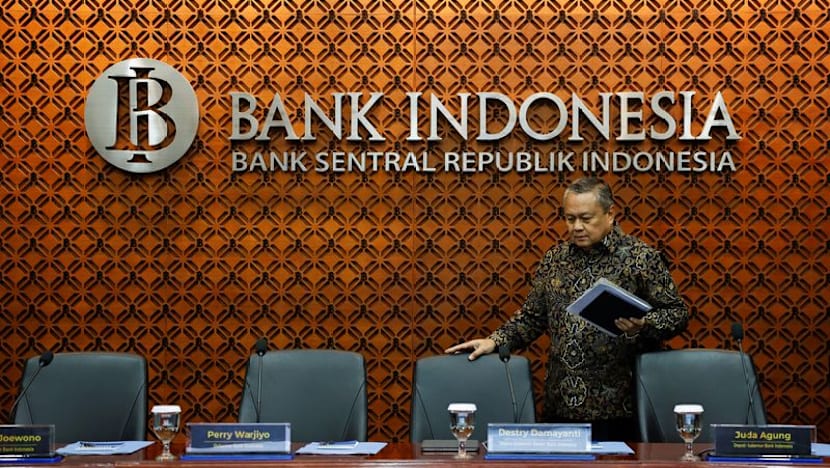
Bank Indonesia to Hold Rates as Iran War Fuels Inflation Risks: Reuters Poll
Translated from English, summarized and contextualized by DistantNews.
TLDR
- Bank Indonesia is expected to hold its key policy rate at 4.75% on Wednesday, with economists largely abandoning bets for cuts this year.
- Rising inflation, driven by energy shocks from the Iran conflict, and a weakening rupiah are pressuring the central bank to maintain its current stance.
- Inflation stood at 3.48% in March, near the upper limit of BI's target range, and the rupiah has depreciated against the dollar.
Bank Indonesia is poised to maintain its benchmark interest rate at 4.75% this week, a decision strongly anticipated by economists who have significantly scaled back expectations for policy easing in 2026. The escalating conflict involving Iran has sent shockwaves through global energy markets, fueling inflation risks and exerting downward pressure on the Indonesian rupiah.
Recent developments point increasingly towards no rate cut, driven by at least three factors: capital outflows that have pressured the rupiah, rising inflation expectations and higher government bond yields stemming from the war.
This shift in outlook marks a notable departure from earlier signals by the central bank, which had previously indicated potential room for rate cuts. However, the eruption of the U.S.-Iran conflict in late February and its subsequent escalation in March compelled Bank Indonesia to abandon its dovish stance. With inflation hovering near the upper bound of the bank's target range and the rupiah experiencing depreciation despite intervention efforts, maintaining the current rate appears to be the most prudent course of action.
Adding to this, markets now expect the Fed to keep rates on hold throughout the year.
Economists polled by Reuters overwhelmingly predict no change to the policy rate this quarter, a stark contrast to earlier forecasts. Several factors are contributing to this hawkish turn: capital outflows sensitive to global geopolitical tensions, rising inflation expectations, and increasing government bond yields. The anticipated stance of the U.S. Federal Reserve, which is expected to keep its rates steady, further complicates the monetary policy landscape for emerging markets like Indonesia, potentially exacerbating currency weakness and limiting easing options.
Should the government decide to raise subsidised fuel prices, inflation could surge to as high as 5 per cent.
DistantNews Editorial
Originally published by CNA in English. Translated, summarized, and contextualized by our editorial team with added local perspective. Read our editorial standards.
More Stories



From Our Blog

What Gets Lost (and Found) When News Is Translated

The Critical Role of Diaspora Media in Global News

What Travellers Should Know About Countries with Restricted Press

A Digital Nomad's Guide to Following Local News

How the Same Story Looks Different in Different Countries
