



Anak Krakatau’s history: A timeline of volcanic rebirth
Translated from Indonesian and summarized by DistantNews. Read the original for the full story.
At a glance
Explainer
Documents & data
Context piece
- Anak Krakatau formed after the 1883 collapse of Krakatoa and officially emerged above the Sunda Strait in 1929.
- The volcano went through repeated growth and collapse, including almost daily eruptions from 1992 to 2001 and 182 eruptions in one day in 2007.
- Its history includes major seismic activity and the deadly 2018 tsunami, while the volcano continues to rebuild itself.
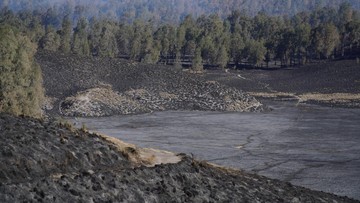
Mount Anak Krakatau has spent nearly a century repeatedly destroying and rebuilding itself in Indonesia’s Sunda Strait. Known as the “Child of Krakatoa,” it rose from the undersea caldera left by the catastrophic 1883 eruption of its parent volcano.
That eruption collapsed Krakatoa’s three volcanic peaks, Perbuwatan, Danan, and Rakata. It created a vast undersea caldera and triggered tsunamis reaching 30 meters, killing more than 36,000 people. The collapse left a hollow magma chamber beneath the ocean floor, where a new volcano would eventually form.
Undersea activity resumed after 44 years of dormancy. On Dec. 29, 1927, submarine eruptions began sending water and ash from a depth of 180 meters. Deposits gradually built up until a new crater wall broke through the surface. Geological authorities designate June 11, 1929, as the birth date of the island named Anak Krakatau.
The young volcano entered an intense growth phase from 1931 to 1960, recording at least 47 separate eruptions. Seawater filled its crescent-shaped crater and formed a lake, which eruptive deposits eventually sealed off and buried by 1961.
Anak Krakatau then entered one of its most active modern periods. Beginning in November 1992, it erupted almost daily, with peak intervals reaching one explosion every 15 minutes. Lava and pyroclastic material rapidly expanded the island’s coastline and raised its elevation. A Geological Agency study said the volcano grew by an average of four meters per year during its active centuries, with eruption cycles generally followed by resting periods.
The volcano’s activity intensified again in 2007. PVMBG raised its alert status to Level III in October, and Anak Krakatau recorded 182 eruptions on Nov. 9. Incandescent lava flowed down its slopes, while observation posts more than 40 kilometers away heard booming sounds. In October 2011, the Smithsonian Institution recorded 5,883 seismic events in a single day. Eruptions in September 2012 then pushed lava into the ocean.
About this summary
Originally published by Tempo in Indonesian. Translated, summarized, and contextualized automatically by DistantNews, with a note on how the source frames the story. Not individually reviewed before publishing. How this works.
More Stories


From Our Blog

News in Translation: What Gets Lost, and How We Keep the Framing

Diaspora Media: How Communities Follow News From Home

Traveling Where the Press Is Not Free: How to Read the News There

The Digital Nomad's Guide to Local News

The Same Story, Different Countries: How Coverage Changes at the Border
