


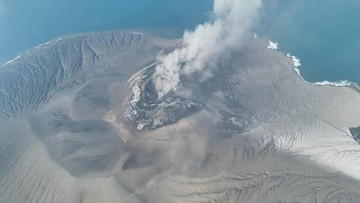

Anak Krakatau Volcanic Ash: Jakarta Broadcasting Watchdog Urges TV and Radio to Strengthen Public Information
Translated from Indonesian and summarized by DistantNews. Read the original for the full story.
At a glance
News
Named sources
Ongoing story
- Jakarta's regional broadcasting commission urged television and radio stations to provide fast, accurate and verified information after volcanic ash from Mount Anak Krakatau affected the city.
- The commission asked broadcasters to prioritize government and authorized agencies, use qualified sources and avoid speculative or sensational reports.
- Jakarta has responded with air-quality monitoring, water-mist spraying, distance learning, mask recommendations and limits on outdoor activity.
Television and radio should do more than report the arrival of volcanic ash in Jakarta. They should help residents stay calm, understand the risks and know what precautions to take, the Jakarta regional broadcasting watchdog said.
The Indonesian Broadcasting Commission's Jakarta branch, known as KPID DKI Jakarta, issued the appeal after ash from an eruption of Mount Anak Krakatau affected areas of the capital. Its chairman, Ahmad Sulhy, said broadcasters have a strategic role in ensuring that the public receives information that is fast, accurate and verified, especially during a disaster.
"In conditions like these, people need information that provides certainty and guidance. News must remain fast, but it must also be accurate and careful so that it does not cause panic," Sulhy said on Monday, September 7, 2026.
In conditions like these, people need information that provides certainty and guidance. News must remain fast, but it must also be accurate and careful so that it does not cause panic.
The appeal follows measures taken by the Jakarta provincial government to anticipate the ash's effects. These include monitoring air quality, spraying water mist on roads, implementing distance learning, urging people to wear masks and limiting outdoor activities.
KPID DKI told broadcasters to rely on information from the government and authorized agencies, invite competent sources and avoid speculation, sensational material and unverified social-media content. It also reminded stations to follow Indonesia's broadcasting conduct and program standards, particularly rules on accuracy and disaster coverage.
"Television and radio should not merely report the event, but also become part of mitigation. Broadcast space must provide education, build awareness and help maintain public calm," Sulhy said.
Television and radio should not merely report the event, but also become part of mitigation. Broadcast space must provide education, build awareness and help maintain public calm.
About this summary
Originally published by Republika in Indonesian. Translated, summarized, and contextualized automatically by DistantNews, with a note on how the source frames the story. Not individually reviewed before publishing. How this works.
More Stories


From Our Blog

News in Translation: What Gets Lost, and How We Keep the Framing

Diaspora Media: How Communities Follow News From Home

Traveling Where the Press Is Not Free: How to Read the News There

The Digital Nomad's Guide to Local News

The Same Story, Different Countries: How Coverage Changes at the Border
