


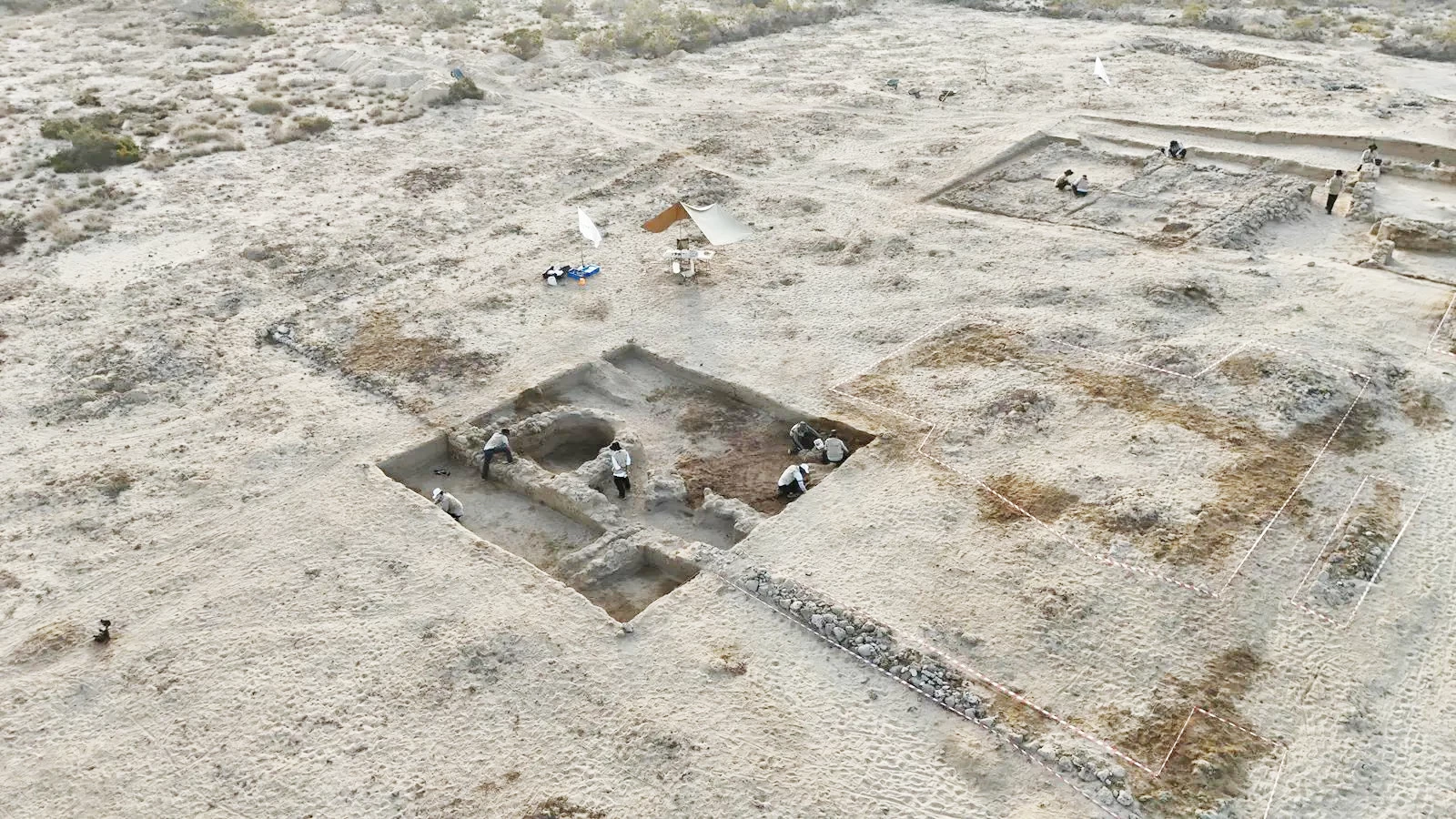
Ancient Port of Al-Sereen Reveals Rich History of Trade and Urban Life
Translated from Arabic, summarized and contextualized by DistantNews.
TLDR
- Joint Saudi-Chinese archaeological excavations at the Al-Sereen site in Al-Lith have revealed significant urban and commercial activity dating back to the 3rd century Hijri.
- Excavations uncovered residential units, service areas, storage facilities, and a surrounding wall, providing insights into the site's organization and daily life.
- Key finds include pottery, incense burners, stone tools, beads, glass, and a fragment of Chinese pottery from the Northern Song Dynasty, indicating extensive trade links.
The Saudi-Chinese joint archaeological mission has unveiled remarkable findings at the Al-Sereen site in Al-Lith, shedding light on a vibrant historical port that played a crucial role in maritime trade networks during the Islamic era. The 2025 excavation season, conducted by the Heritage Commission, has confirmed that Al-Sereen was a hub of urban and commercial activity from as early as the 3rd century Hijri. Its strategic location at the mouth of a seasonal valley facilitated its importance in connecting the Arabian Peninsula with East Africa and other Islamic ports, making it a vital node in the ancient world's trade routes.
The site witnessed urban and commercial activity since the third century Hijri, playing a pivotal role in linking maritime trade networks between the Arabian Peninsula, East Africa, and the ports of the Islamic world.
The unearthed architectural remains offer a detailed glimpse into the daily lives and urban planning of the time. Excavations have revealed extensive residential and service units, alongside storage facilities and pottery hearths that speak to the domestic activities of the inhabitants. The discovery of a surrounding wall on the southern, northern, and western sides provides a clearer understanding of the site's layout and defensive structures. Furthermore, the remnants of a mosque in the southwestern part of the site are currently under study, promising deeper insights into the religious life and urban organization of this ancient city.
Excavations have uncovered important architectural extensions, including residential, service, and storage units, and pottery hearths reflecting details of daily life.
Among the most compelling discoveries are the diverse artifacts recovered, including pottery, incense burners, stone tools, agate beads, and glass. Particularly significant is a fragment of Chinese pottery dating back to the Northern Song Dynasty (960-1127 AD), complete with a decorative seal bearing Chinese inscriptions. This artifact serves as tangible evidence of the robust commercial ties that existed between southern China and the Red Sea coast. The Heritage Commission's commitment to continued excavations in future seasons aims to build a comprehensive scientific understanding of Al-Sereen's historical significance as a major Red Sea port.
Among the most prominent discoveries is a fragment of Chinese ceramic jar dating back to the Northern Song Dynasty (960-1127 AD), bearing a decorative seal with Chinese inscriptions, considered archaeological evidence of the strong commercial connection between southern China and the Red Sea coasts.
DistantNews Editorial
Originally published by Okaz in Arabic. Translated, summarized, and contextualized by our editorial team with added local perspective. Read our editorial standards.
More Stories

From Our Blog

What Gets Lost (and Found) When News Is Translated

The Critical Role of Diaspora Media in Global News

What Travellers Should Know About Countries with Restricted Press

A Digital Nomad's Guide to Following Local News

How the Same Story Looks Different in Different Countries
