


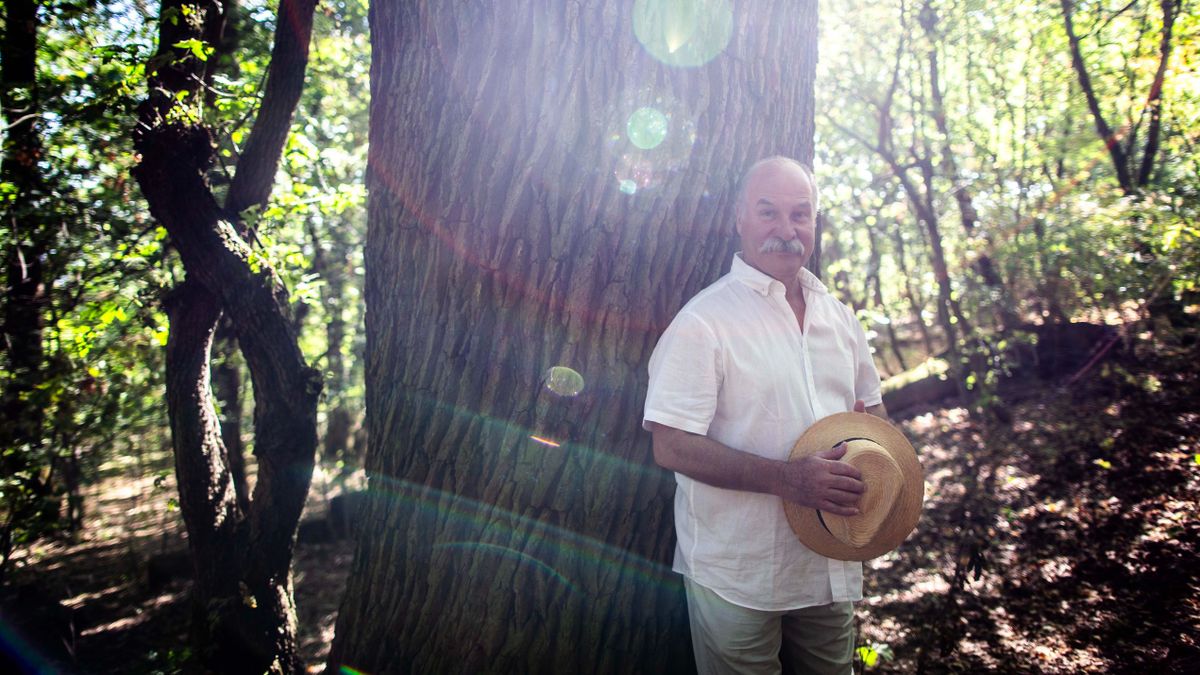
András Berecz: 'If we exist – let us exist!' on Bread, Tradition, and Folk Tales
Translated from Hungarian, summarized and contextualized by DistantNews.
At a glance
In-depth
Sources not specified
Context piece
- Hungarian artist András Berecz reflects on the cultural significance of bread, linking its breaking to community and divine creation.
- He discusses folk traditions and stories surrounding bread, emphasizing its role as a symbol of unity and respect.
- Berecz shares a tale where a specially baked bread protects a castle from a dragon, highlighting its protective and symbolic power.
Hungarian artist András Berecz views bread not merely as sustenance but as a profound communal act, deeply connected to creation and tradition. "Breaking bread is not just eating, but also a communal act," he stated, linking the act to celebrations and even historical pacts.
The breaking of this year's first bread praises not only the farmer but also the Creator, who gave the rain, sun, earth, and the joy of hard work.
Berecz elaborated on the significance of the first bread of the year, attributing its creation to both the farmer's labor and divine providence. "The breaking of this year's first bread praises not only the farmer but also the Creator, who gave the rain, sun, earth, and the joy of hard work," he told Magyar Nemzet. He noted that even city dwellers recognize the harvest and bread-making as major celebrations, symbolizing joy and the desire to reap what is sown.
The bread's best kneader is God, as a saying goes.
Reflecting on ethnographic research, Berecz highlighted ingrained respect for bread, citing traditions like making the sign of the cross on loaves and kissing bread dropped on the floor. He mentioned a custom among river people where a candle is placed in a loaf and floated downstream to find drowned individuals, further illustrating bread's role in community rituals and remembrance. He also touched upon the concept of "bread brothers" among close friends, reinforcing bread's function as a symbol of solidarity.
Breaking bread together is also a sign of togetherness. It is not very far from the blood pact or the communal eating of apple wedges at Christmas.
Berecz also recounted a folk tale where a seven-times baked bread protects a castle from a world-destroying dragon. In the story, the king's son bakes this special bread, which then speaks to the dragon, warning it against further aggression. The bread's power lies in its ability to invoke a sense of shared experience and consequence, a potent symbol against destructive forces.
The farmer sees the face of Jesus in the wheat seed. Viktor Tímár said in Gyimes, Hidegség, that one should not put bread down 'carelessly'.
DistantNews Editorial
Originally published by Magyar Nemzet in Hungarian. Translated, summarized, and contextualized by our editorial team with added local perspective. Read our editorial standards.
More Stories


From Our Blog

Countries Without a Free Press: What You Need to Know

What Press Freedom Means for the News You Read

What Gets Lost (and Found) When News Is Translated

The Critical Role of Diaspora Media in Global News

What Travellers Should Know About Countries with Restricted Press
