


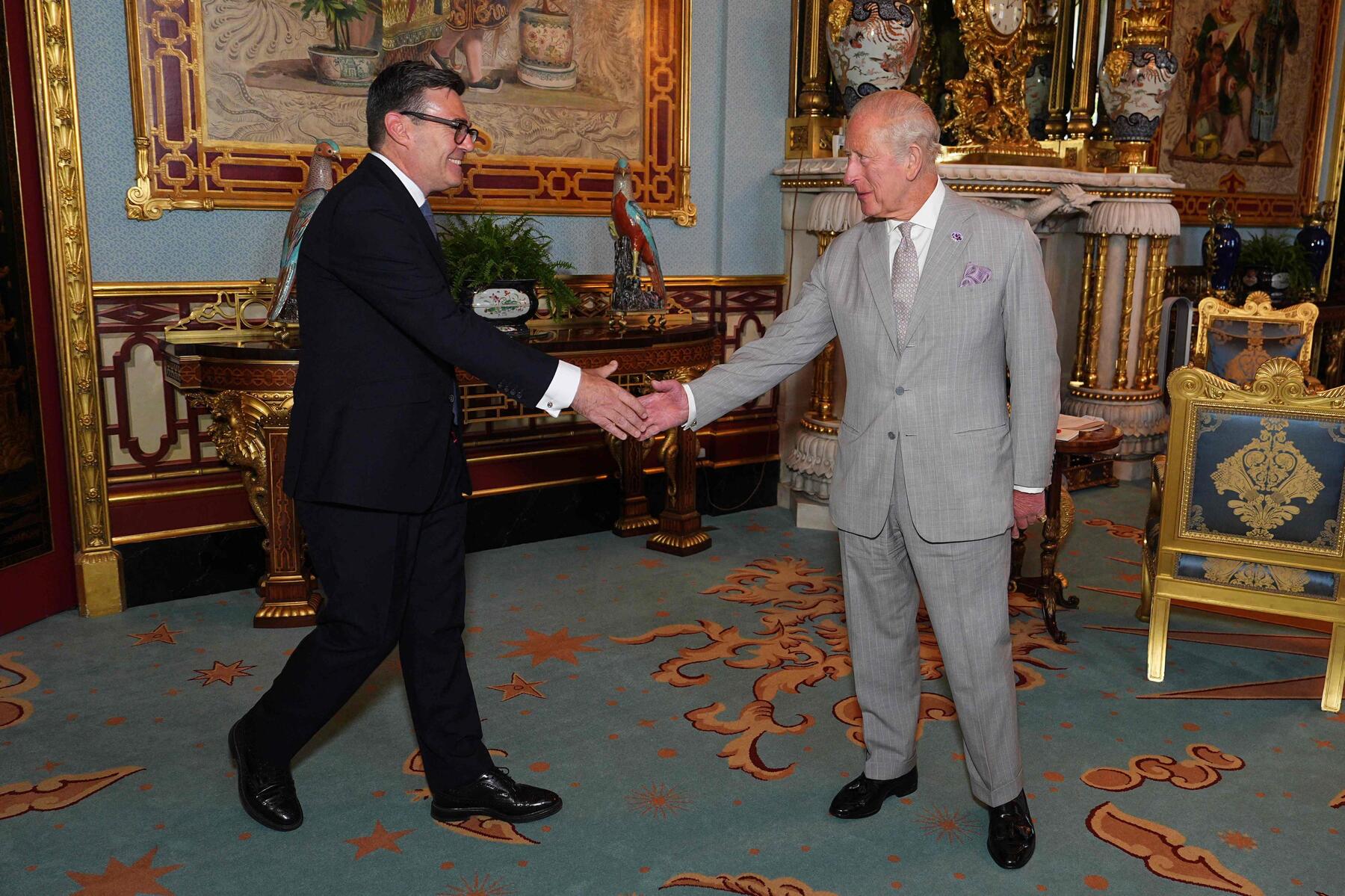
Andy Burnham becomes UK Prime Minister after King Charles III appointment
Translated from German, summarized and contextualized by DistantNews.
At a glance
News
Named sources
New plan
- Andy Burnham has been appointed the new Prime Minister of the United Kingdom after Keir Starmer's resignation.
- Burnham, leader of the Labour Party, faces significant challenges including a weak economy and social inequality.
- His agenda includes bringing key sectors like water, energy, and housing back under public control and decentralizing power from London.
Andy Burnham has officially become the new Prime Minister of the United Kingdom, following the resignation of Keir Starmer. King Charles III formally tasked the Labour Party leader with forming a government shortly after Starmer's departure.
Burnham, previously the Mayor of Greater Manchester and often dubbed the 'King of the North' for his popularity, steps into the role amid considerable political and economic pressure. Labour secured a significant election victory in the summer of 2024 under Starmer, but internal disputes hampered their ability to fully leverage their parliamentary majority. The party now faces a resurgent Reform UK, which has shown strong poll numbers.
Burnham, who was appointed Labour leader unopposed on Friday, positions himself as a politician of the people, rooted in traditional social democratic values. His stated priorities include reasserting public control over essential services such as water, energy, and housing, alongside a commitment to shifting political and economic power away from London and towards the regions. A return to the European Union appears unlikely under his premiership.
The new Prime Minister inherits a challenging landscape, grappling with many of the same issues that eluded Starmer. These include a sluggish economy, diminishing international influence, and pressing domestic concerns like social inequality, housing shortages, and high energy costs. Announcements regarding measures to stimulate the economy are expected imminently.
Burnham is no stranger to the intricacies of Westminster, having served as Secretary of State for Health under Prime Minister Gordon Brown in the 2000s. He made previous unsuccessful bids for the Labour leadership in 2010 and 2015. His appointment on Friday followed reports, including those cited by the BBC, that suggested his involvement in Starmer's downfall, though Starmer himself contributed significantly to his own departure.
DistantNews Editorial
Originally published by Die Presse in German. Translated, summarized, and contextualized by our editorial team with added local perspective. Read our editorial standards.
More Stories



From Our Blog

What Gets Lost (and Found) When News Is Translated

The Critical Role of Diaspora Media in Global News

What Travellers Should Know About Countries with Restricted Press

A Digital Nomad's Guide to Following Local News

How the Same Story Looks Different in Different Countries
