


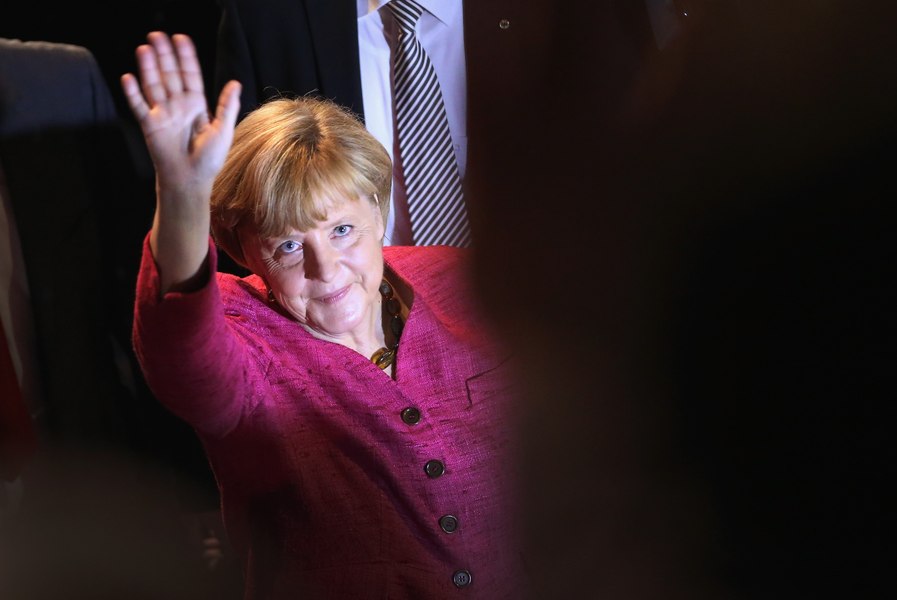
Angela Merkel tells Romania’s political class: “We cannot hold elections twice a year. They must compromise”
Translated from Romanian and summarized by DistantNews. Read the original for the full story.
At a glance
News
Named sources
Ongoing story
- Angela Merkel urged Romanian parties to cooperate and compromise rather than repeatedly hold elections.
- Speaking in Bucharest, she said fragmented democracies struggle to build majorities and reach consensus.
- Merkel also warned that social media and the digital environment amplify dissatisfaction and criticism, putting pressure on compromise.
Angela Merkel came to Bucharest with a message for Romania’s political class: stable government will require parties to find common ground, even when they hold sharply different views.
Speaking at the Romanian Athenaeum during the launch of her memoirs, “Freedom: Memories 1954-2021,” the former German chancellor avoided direct comment on Romania’s ongoing political negotiations. She said, however, that major Western democracies face a similar challenge as fragmented political landscapes make consensus harder to achieve.
I can only hope that in Romania there are enough people who respect the other parties enough to come together, because we cannot hold elections twice a year. Elections reflect the thoughts of citizens. They do not simply appear out of nowhere. Romania has achieved a great deal in recent decades. Perhaps not everything at the speed people wanted, but there are problems that must be addressed and we need people who are willing to compromise.
Merkel argued that important decisions in a democracy require majorities and negotiations between political forces. She recalled that she was often criticized during her time in office for the slow pace of some reforms, but said democratic politics involves balancing competing interests and building enough political support.
She also pointed to the influence of social media and the wider digital environment, saying they amplify dissatisfaction and criticism in particular. In her view, that dynamic places additional pressure on a political culture built around compromise.
I think you have a few. I wish you all the best!
Addressing Romania directly, Merkel said the country had made major progress over the past decades, even if not always at the speed citizens wanted. Repeating elections, she said, was not a solution. “I can only hope that in Romania there are enough people who respect the other parties enough to come together, because we cannot hold elections twice a year. Elections reflect the thoughts of citizens. They do not simply appear out of nowhere. Romania has achieved a great deal in recent decades. Perhaps not everything at the speed people wanted, but there are problems that must be addressed and we need people who are willing to compromise,” she said.
Merkel added that she believed Romanian politics included people capable of reaching such agreements, telling the audience: “I think you have a few. I wish you all the best!” Earlier on Tuesday, she met President Nicușor Dan, who said they discussed a more united European Union’s constructive role internationally and cooperation between Romania and Germany on European cohesion and defense within NATO.
We discussed the constructive role that a more united European Union can play in international affairs, as well as what Romania and Germany can do together to strengthen European cohesion and reinforce Europe’s position in defense.
About this summary
Originally published by Adevărul in Romanian. Translated, summarized, and contextualized automatically by DistantNews, with a note on how the source frames the story. Not individually reviewed before publishing. How this works.
More Stories
From Our Blog

What Gets Lost (and Found) When News Is Translated

The Critical Role of Diaspora Media in Global News

What Travellers Should Know About Countries with Restricted Press

A Digital Nomad's Guide to Following Local News

How the Same Story Looks Different in Different Countries
