

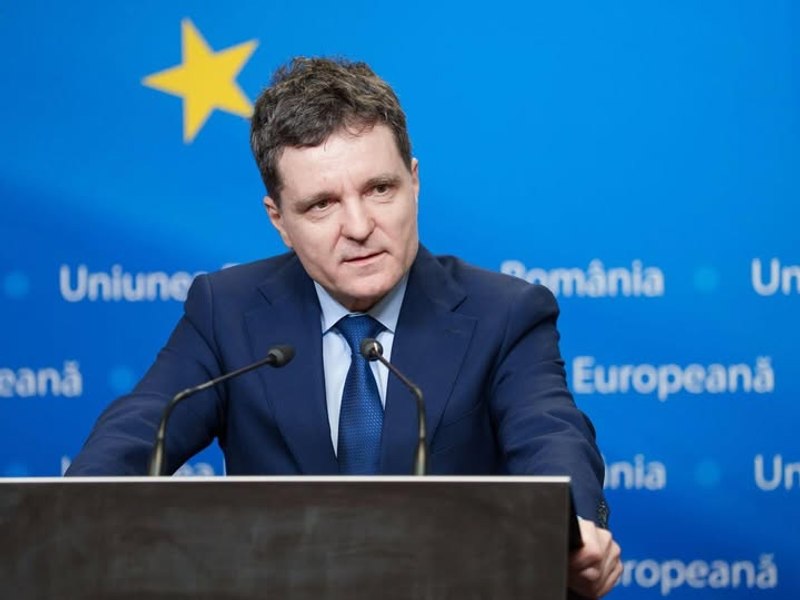

If the EU is heading for the wilderness, where could it begin? Who will say the words?
Translated from Romanian and summarized by DistantNews. Read the original for the full story.
At a glance
Analysis
Named sources
Ongoing story
- The article warns that the European Union faces accumulating political tensions and focuses on the Alternative for Germany’s rising support in national and regional polling.
- It says AfD co-leader Alice Weidel has backed Germany leaving the euro area, while concerns about the party’s position on Schengen remain less clear.
- The article presents developments in Germany as potentially important for the EU’s future political direction.
The European Union’s political troubles may no longer be something its leaders can dismiss as the product of hostile imaginations, the article argues. Warning signs are accumulating, and Germany could become the place where Europe’s next crisis takes shape.
The focus is the Alternative for Germany, or AfD. A national Polibarometer poll cited in the article gives the far-right party 27% support, ahead of the CDU/CSU at 22%. In Saxony-Anhalt, where regional elections are scheduled for Sept. 6, the AfD stands at 41% in a Reuters-cited poll, compared with 24% for the CDU.
The party won 20.8% of the vote in Germany’s Feb. 23, 2025 legislative election, finishing second nationally behind the CDU/CSU. The article says its current polling numbers make the party’s political messages particularly important to watch.
AfD co-leader Alice Weidel said in a ZDF interview on Aug. 23 that Germany should leave the euro area. The party’s programme describes the euro as a “flawed construction” and an “unstable” currency, and calls for an end to the single-currency experiment. It also says that if the Bundestag does not decide the issue, Germany should hold a referendum on remaining in the euro area.
The article also examines concerns that the AfD could seek to weaken or abandon the Schengen Agreement to tighten border controls. It notes that the party’s official position is more nuanced because its policy documents do not explicitly call for leaving Schengen. Instead, it suggests the party may seek longer periods for member states to close borders and much tougher rules. The article ends while discussing those proposals.
About this summary
Originally published by Adevărul in Romanian. Translated, summarized, and contextualized automatically by DistantNews, with a note on how the source frames the story. Not individually reviewed before publishing. How this works.
More Stories

From Our Blog

What Gets Lost (and Found) When News Is Translated

The Critical Role of Diaspora Media in Global News

What Travellers Should Know About Countries with Restricted Press

A Digital Nomad's Guide to Following Local News

How the Same Story Looks Different in Different Countries
