


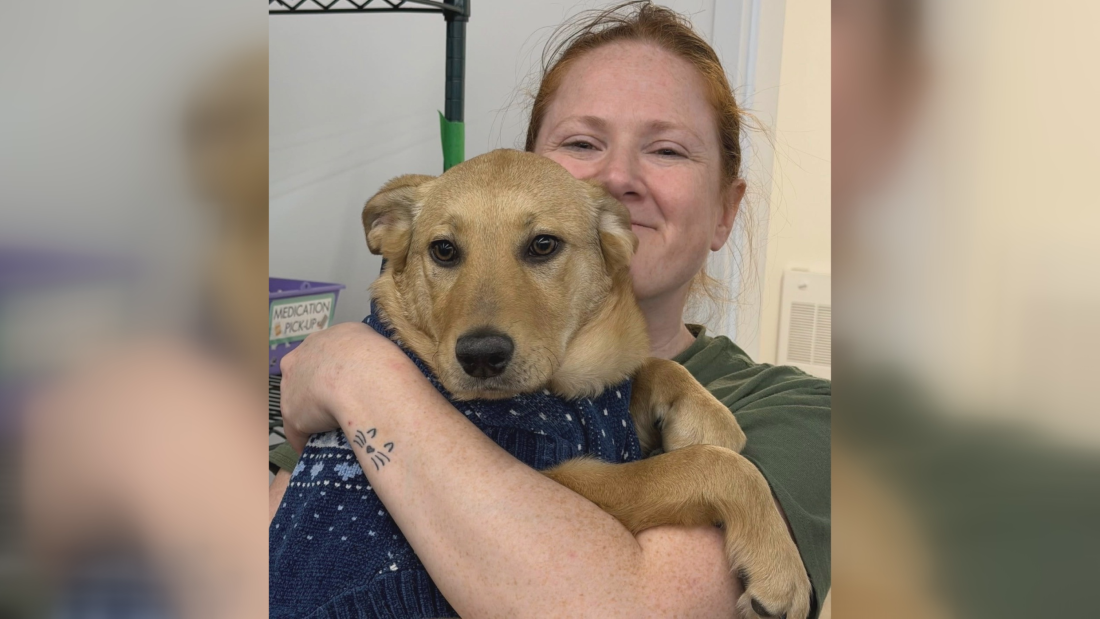
Animal advocacy groups to honour rescue volunteer who died with Winnipeg rally
Summarized and contextualized by DistantNews.
At a glance
News
Named sources
Context piece
- Animal advocacy groups are honoring Amanda Nobiss, a volunteer who died while assisting dogs, and are calling for government action on dog overpopulation in Manitoba.
- Nobiss, 37, was attacked by dogs on July 17 while picking up puppies for K9 Advocacy Manitoba on Sandy Bay Ojibwe First Nation.
- The groups are demanding increased funding for spay and neuter clinics and systemic solutions, arguing that the burden on rescues is unsustainable and that dog culls are not the answer.
Animal rescue advocates are gathering at the Manitoba legislature to honor the memory of Amanda Nobiss, a 37-year-old volunteer who died on July 17 while assisting with dog rescue efforts. Her death has intensified calls for government intervention to address what organizers describe as a critical dog overpopulation crisis in Manitoba.
The rally that’s happening is in honour of Amanda. She was (a) canine advocate volunteer for a number of years.
Nobiss, from Winnipeg, was on Sandy Bay Ojibwe First Nation picking up puppies for K9 Advocacy Manitoba when she was attacked by dogs, according to police. Kristy Zamonsky, director of Project Artemis Animal Advocates, stated that the rally aims to honor Nobiss, a dedicated canine advocate. "In rescue, you don’t even really need to know them because you’re all working for the same collaborative end," Zamonsky said, highlighting the shared mission among rescue groups.
I did know her. And I think in rescue, you don’t even really need to know them because you’re all working for the same collaborative end.
The rally is urging local, provincial, and federal governments to provide financial support for managing stray dog populations. Zamonsky emphasized that the responsibility cannot solely rest on rescues and volunteers to solve a systemic issue, particularly in light of ongoing dog maulings on reserves. She expressed opposition to dog culling as a response, advocating instead for proactive measures.
It can’t be on the rescues’ shoulders anymore. It can’t be on volunteers to change a systematic issue. There (are) dog maulings happening on the reserves, and then the response is the dog cullings, and we don’t want those anymore.
Christina Von Schindler, CEO of the Winnipeg Humane Society, called Nobiss's death a "tragedy" and stressed the need to find hope and prevent future occurrences. She noted that rescue organizations and communities have long pleaded for more resources, and warnings of such a tragedy had been issued. Von Schindler believes that collaboration among all levels of government, rescue groups, and Indigenous communities is essential to developing effective solutions. The groups are specifically calling for funding for spay and neuter clinics, as they are currently operating these services out of their own pockets and can no longer sustain the effort.
It’s the rescues that are on the reserves. It’s the rescues that are providing the spay and neuter clinics and they’re doing it out of their own pockets, and they can’t do it anymore.
DistantNews Editorial
Originally published by Global News. Summarized and contextualized by our editorial team with added local perspective. Read our editorial standards.
More Stories

From Our Blog

What Gets Lost (and Found) When News Is Translated

The Critical Role of Diaspora Media in Global News

What Travellers Should Know About Countries with Restricted Press

A Digital Nomad's Guide to Following Local News

How the Same Story Looks Different in Different Countries
