


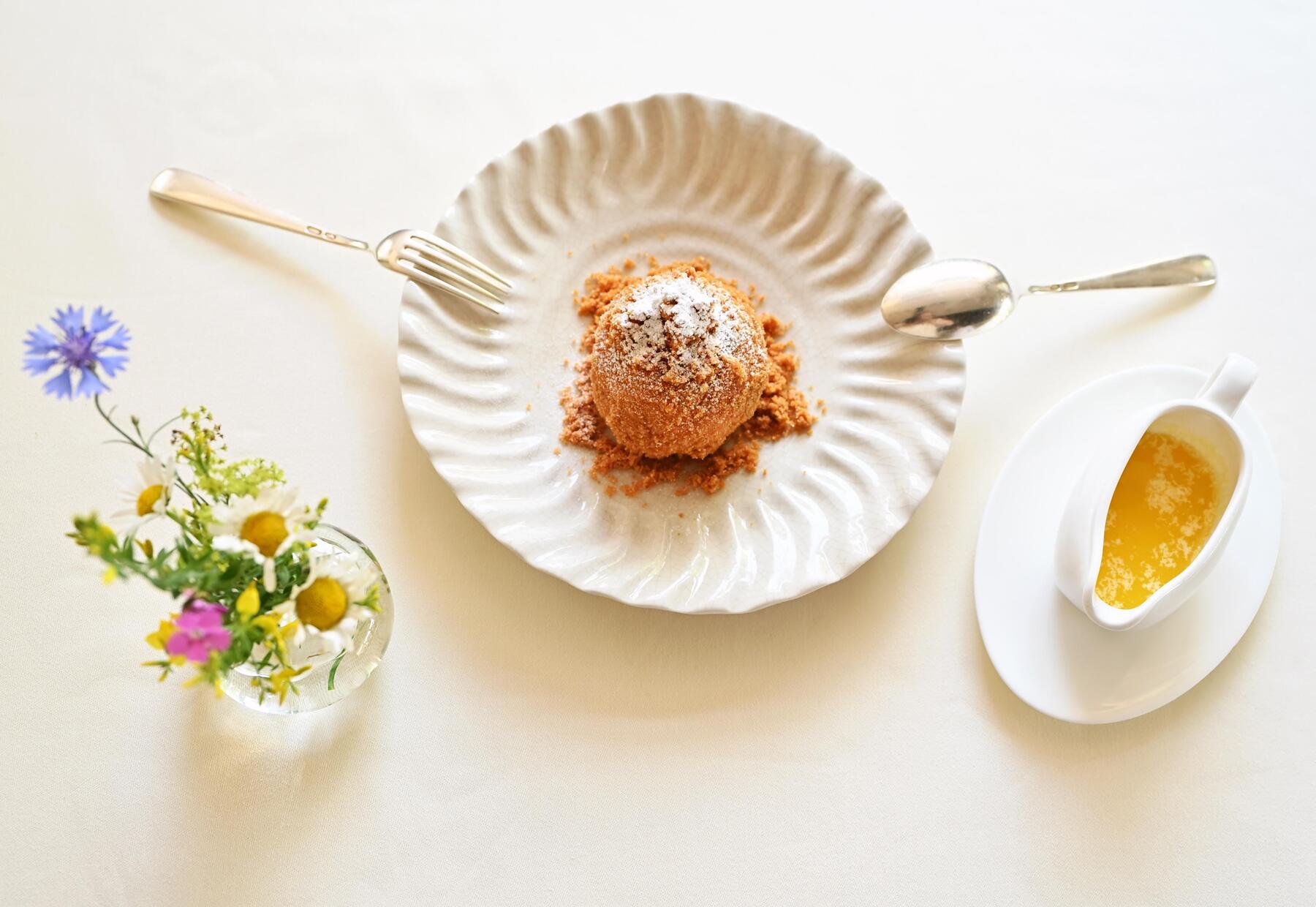
Apricot Dumplings: A Seasonal Delicacy Cherished by Austrian Chef
Translated from German, summarized and contextualized by DistantNews.
At a glance
In-depth
Sources not specified
Context piece
- Two-star chef Thomas Dorfer of Landhaus Bacher highlights the importance of the apricot itself for perfect apricot dumplings.
- The restaurant serves approximately 2,000 apricot dumplings per season, with guests eagerly awaiting the seasonal delicacy.
- Dorfer shares the traditional family recipe for apricot dumplings, emphasizing the quark dough and fresh, seasonal apricots.
The apricot dumpling, or Marillenknödel, is more than just a dessert for two-star chef Thomas Dorfer of Landhaus Bacher; it's an emotional experience.
Dorfer explains that the quality of the apricot is paramount to achieving the perfect dumpling. "You wouldn't believe how many people come to us just for the apricots," he says. "It's something emotional. We have regular guests who come every year to eat just two or three apricot dumplings."
You wouldn't believe how many people come to us just for the apricots. It's something emotional. We have regular guests who come every year to eat just two or three apricot dumplings.
Landhaus Bacher serves these seasonal dumplings for about five weeks each year, using apricots from local orchards. Dorfer, supplied by several farmers, can extend the season slightly by using different varieties. His team prepares around 2,000 dumplings annually, a treat even for the staff. "Apricot dumplings are simply part of Landhaus Bacher," he states.
Dorfer adheres to a traditional recipe passed down through generations, originally from his mother-in-law, Lisl Wagner-Bacher. The recipe calls for a quark dough, though Dorfer acknowledges other preferences like potato dough, he feels it's less fitting for the season. The process involves preparing the dough, pitting ripe apricots, stuffing them with sugar cubes, and carefully forming the dumplings before cooking them in lightly salted water with a touch of rum.
Apricot dumplings are simply part of Landhaus Bacher.
DistantNews Editorial
Originally published by Die Presse in German. Translated, summarized, and contextualized by our editorial team with added local perspective. Read our editorial standards.
More Stories



From Our Blog

What Gets Lost (and Found) When News Is Translated

The Critical Role of Diaspora Media in Global News

What Travellers Should Know About Countries with Restricted Press

A Digital Nomad's Guide to Following Local News

How the Same Story Looks Different in Different Countries
