


Archaeologists Uncover Church Linked to First Council of Nicaea in Turkey
Translated from Polish, summarized and contextualized by DistantNews.
At a glance
News
Named sources
Context piece
- Archaeologists in Turkey have uncovered remnants believed to belong to an earlier church predating a larger basilica at the site of the First Council of Nicaea.
- The discovery, led by Prof. Mustafa Şahin, suggests the existence of the Church of St. Neophitos, potentially the location where bishops convened in 325 AD.
- Findings include foundations and floor fragments, reinforcing the hypothesis that the later basilica was built directly over the original smaller church, with additional artifacts like a gold ring and thimble shedding light on the site's later history.
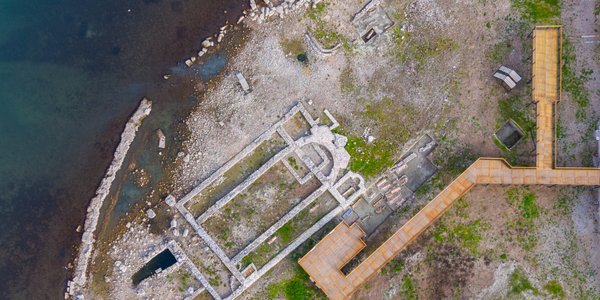
Archaeologists excavating in Turkey believe they have found the ruins of a church that hosted the First Council of Nicaea in 325 AD. The discovery, led by Professor Mustafa Şahin of Bursa Uludağ University, centers on remnants of an earlier church, identified as the Church of St. Neophitos, which existed before a larger basilica at the site.
The discovery confirms the hypothesis that the remains of the Church of St. Neophitos are located under the later basilica.
The current excavation season focused on locating the remains of a smaller church where the council's bishops allegedly convened. Researchers investigated whether a previously uncovered floor in a pastophorium, a room for liturgical items, extended beyond the later basilica. Digging a trench east of the pastophorium revealed that the floor did indeed continue, indicating an older building phase.
Professor Şahin explained that this discovery supports the theory that the Church of St. Neophitos lies beneath the later basilica. This earlier church was reportedly destroyed by an earthquake in 368 AD. Archaeologists suggest this finding strengthens the identification of the later structure as the Church of the Holy Fathers, built after 380 AD to honor the bishops of the First Council of Nicaea and the site of their deliberations.
Eusebius of Caesarea described the meeting place as a small house of prayer or a small church.
Further reinforcing the historical significance, the team found a gold ring and a thimble. The ring, decorated with palm and sword motifs, bears resemblance to items from the Umayyad and Abbasid periods. These artifacts offer insights into the site's subsequent history, including the Umayyad siege of Iznik in 729 AD, during which the Umayyad emir reportedly visited the Church of the Holy Fathers. The findings align with historical accounts, such as those by Eusebius of Caesarea, who described the council's meeting place as a small house of prayer or a small church.
The latest findings confirm that the later basilica was built directly on the site of an earlier temple.
DistantNews Editorial
Originally published by Rzeczpospolita in Polish. Translated, summarized, and contextualized by our editorial team with added local perspective. Read our editorial standards.
More Stories


From Our Blog

What Gets Lost (and Found) When News Is Translated

The Critical Role of Diaspora Media in Global News

What Travellers Should Know About Countries with Restricted Press

A Digital Nomad's Guide to Following Local News

How the Same Story Looks Different in Different Countries
