


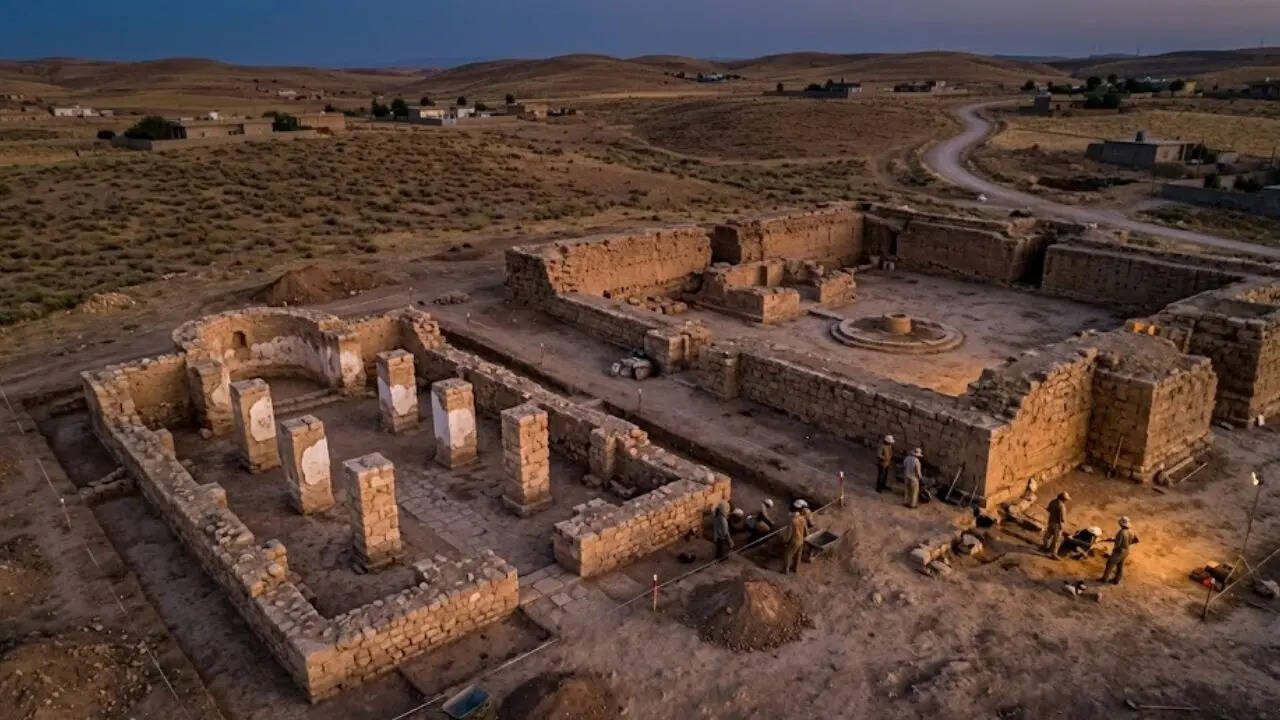
Archaeologists Unearth 1,500-Year-Old Church Alongside Zoroastrian Site in Iraq
Translated from English, summarized and contextualized by DistantNews.
TLDR
- Archaeologists in Iraqi Kurdistan have discovered a 1,500-year-old church adjacent to a Zoroastrian site of worship.
- The finding, made in the Gird-î Kazhaw area, provides evidence of religious pluralism during the 5th and 6th centuries AD.
- Researchers from Goethe University and Erlangen-Nuremberg University conducted the study, challenging previous assumptions of conflict between these religious groups.
This discovery in Iraqi Kurdistan, as reported by the Times of India, offers a significant glimpse into the region's rich and complex religious history. The uncovering of a 5th or 6th-century church next to a Zoroastrian site of worship directly challenges earlier historical narratives that posited constant conflict between these faiths. From an Indian perspective, which has its own long history of religious coexistence and occasional tension, this finding is particularly resonant. It underscores the idea that religious pluralism was not just an abstract concept but a lived reality in ancient Mesopotamia, even in rural settlements. The research, led by German universities, highlights the importance of archaeological endeavors in rewriting historical understanding. The focus on rural settlements, rather than solely imperial centers, aligns with a broader academic trend to understand the social and cultural fabric of everyday life in antiquity. This discovery in Iraq is more than just an archaeological find; it's a testament to a past where different religious communities could, and did, coexist, offering a valuable counterpoint to narratives that emphasize division.
This archaeological discovery provides another example of the recent focus in academia on looking at rural settlements that provided the social and cultural bases for economic prosperity, rather than focusing solely on the imperial centres.
DistantNews Editorial
Originally published by Times of India in English. Translated, summarized, and contextualized by our editorial team with added local perspective. Read our editorial standards.
More Stories



From Our Blog

What Press Freedom Means for the News You Read

What Gets Lost (and Found) When News Is Translated

The Critical Role of Diaspora Media in Global News

What Travellers Should Know About Countries with Restricted Press

A Digital Nomad's Guide to Following Local News
