

Architect's photos help identify soldiers' mass grave in Le Thi Rieng Park
Translated from Vietnamese, summarized and contextualized by DistantNews.
At a glance
News
Sources not specified
Context piece
- Architect Nguyen Xuan Thang used valuable photos to help identify remains of soldiers buried in Le Thi Rieng Park.
- The photos aided authorities in locating mass graves from the 1968 Spring offensive.
- Thang's research began with a black and white photo and progressed with digital analysis to pinpoint the burial site.
Architect Nguyen Xuan Thang has compiled a database of valuable photographs and information, assisting authorities in their search for the remains of soldiers buried in Le Thi Rieng Park. These efforts are crucial for identifying and locating mass graves from the historic 1968 Spring offensive.
Thang's work began in 2016-2017 while searching for martyrs' remains at Bien Hoa Air Base. This experience highlighted the significant casualties among liberation forces in urban battles, particularly during the 1968 Tet Offensive. He recognized that many fallen soldiers' bodies could not be recovered and were buried in unconfirmed locations by the South Vietnamese government. This realization motivated him to collect archival images to pinpoint these burial sites.
The first clue I found was a black and white photo on Getty Images, showing a boy standing by a mass grave. Although the Vietnamese attire was clear, the photo lacked geographical data. I kept it with a heavy heart for many years.
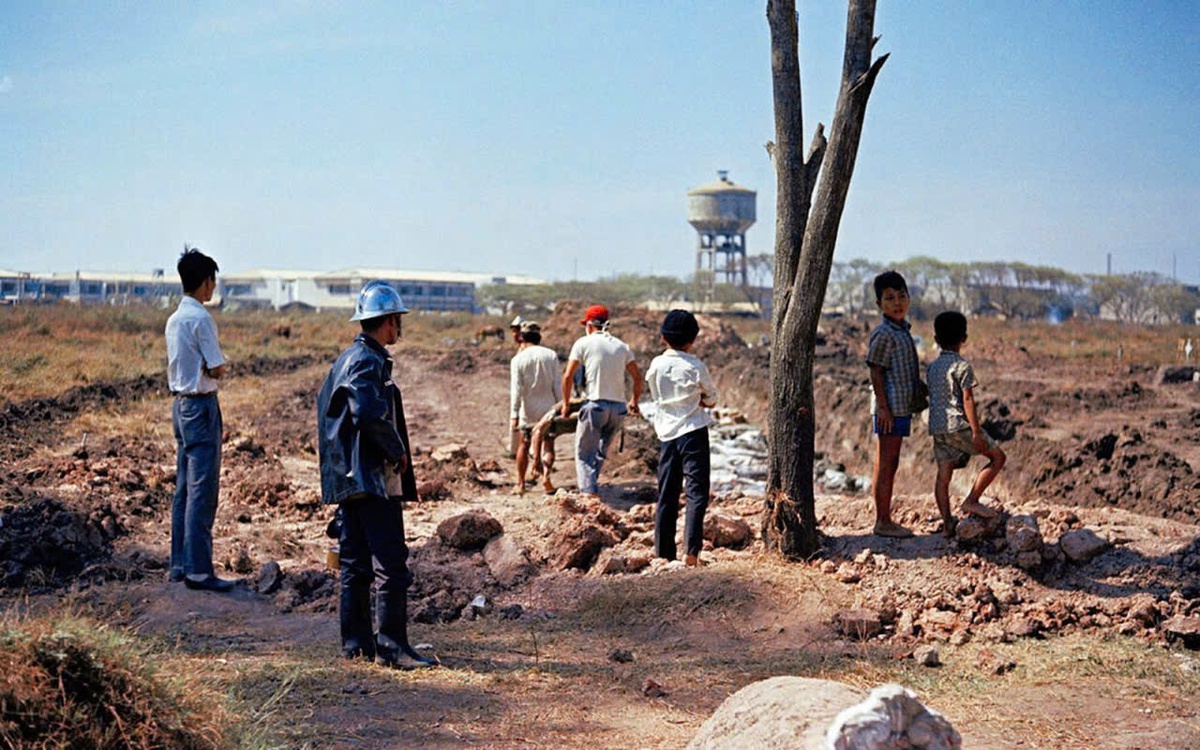
The first crucial clue was a black and white photograph found on Getty Images, showing a boy next to a mass grave. Despite the Vietnamese attire, the photo lacked geographical data. Later, around 2020-2021, Thang discovered another image on a war photo forum depicting a man with a disinfectant spray and a boy herding cattle. The background of this second photo featured a distinctive water tower and a residential complex.
Through on-site investigations and cross-referencing water towers in Ho Chi Minh City, Thang identified the location in the photograph as matching the architecture of a water tower in Bac Hai residential area. Comparing aerial photos and older images confirmed that the grave site was located at the Chi Hoa-Cho Quan cemetery, now the site of Le Thi Rieng Park. Although the area was identified, crucial details like the date of the photos and the identities of the deceased and witnesses were missing, preventing a formal report to authorities. The Chi Hoa-Cho Quan cemetery was cleared in the late 1970s, and the park was built in 1983.
The key point of the second photo was the background, which showed a water tower with a typical design and a residential area. By visiting the site and checking water towers in Ho Chi Minh City, I identified the area in the photo matched the architecture of the water tower in Bac Hai Residential Area.
DistantNews Editorial
Originally published by Tuổi Trẻ in Vietnamese. Translated, summarized, and contextualized by our editorial team with added local perspective. Read our editorial standards.
More Stories



From Our Blog

What Gets Lost (and Found) When News Is Translated

The Critical Role of Diaspora Media in Global News

What Travellers Should Know About Countries with Restricted Press

A Digital Nomad's Guide to Following Local News

How the Same Story Looks Different in Different Countries
