

Architects of the Micro-World
Translated from Polish, summarized and contextualized by DistantNews.
At a glance
In-depth
Sources not specified
Context piece
- The article traces the evolution of atomic models, starting with J.J. Thomson's "plum pudding" model after the discovery of the electron.
- It highlights Marie Skłodowska-Curie's pioneering research on radioactivity and her isolation of polonium and radium.
- Curie's work provided Ernest Rutherford with crucial alpha particle sources, enabling his groundbreaking experiments on atomic structure.
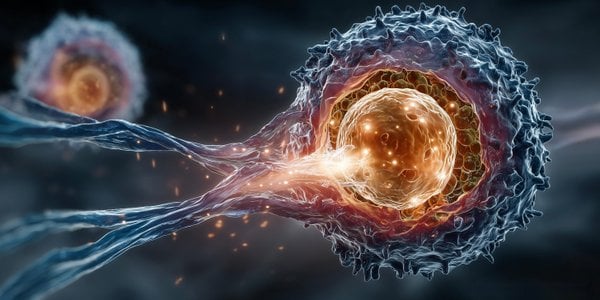
The understanding of the atom underwent a radical transformation following J.J. Thomson's discovery of the electron in 1897, which challenged classical physics. Thomson's 1904 "plum pudding" model proposed that atoms consisted of negatively charged electrons embedded within a sphere of uniform positive charge, much like raisins in a pudding.
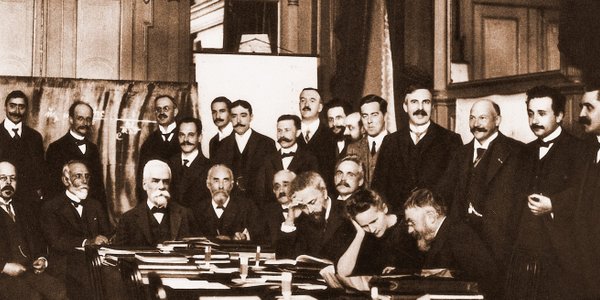
However, a true revolution in atomic theory emerged from the work of Marie Skłodowska-Curie. Her pioneering research into the mysterious radiation emitted by uranium and thorium, which she termed "radioactivity," opened up a new scientific frontier. Curie's meticulous work, conducted under challenging conditions in Paris, led to the isolation of two new elements: polonium and radium.
Crucially, Curie's discovery provided Ernest Rutherford and his colleagues with a powerful tool: highly active sources of alpha particles, particularly from radium chloride. These precise instruments were essential for Rutherford's subsequent experiments, which aimed to penetrate the atom's electron cloud and probe its core.
Curie's fundamental hypothesis was that radioactivity was an intrinsic property of the atom itself, independent of its chemical or physical state. The radium she isolated exhibited an activity millions of times greater than uranium, emitting alpha, beta, and gamma rays. Unknowingly, Marie Skłodowska-Curie had created the world's most potent source of subatomic projectiles, laying the groundwork for Rutherford's exploration of nuclear structure.
Maria zauważyła, że preparaty radowe emitują ciągły strumień energii oraz trzy różne rodzaje promieniowania, które roboczo sklasyfikowano ze względu na ich zdolność penetracyjną i zachowanie w polu magnetycznym na promienie alfa, beta i gamma.
DistantNews Editorial
Originally published by Rzeczpospolita in Polish. Translated, summarized, and contextualized by our editorial team with added local perspective. Read our editorial standards.
More Stories

From Our Blog

What Gets Lost (and Found) When News Is Translated

The Critical Role of Diaspora Media in Global News

What Travellers Should Know About Countries with Restricted Press

A Digital Nomad's Guide to Following Local News

How the Same Story Looks Different in Different Countries
