


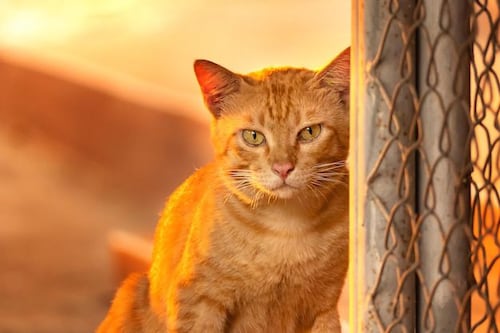
Are Orange Cats Naturally Mischievous? Science Reveals the Secret in Their DNA
Translated from Spanish, summarized and contextualized by DistantNews.
At a glance
News
Sources not specified
Context piece
- Orange cats are often perceived as mischievous due to cultural stereotypes and social media trends, but scientific explanations point to genetic factors and human perception biases.
- The orange color in cats is linked to the Pheomelanin gene on the X chromosome, making orange males significantly more common than females.
- Animal behavior specialists attribute the perception of mischievousness to human biases, the exploratory nature of males, and socialization, rather than an inherent behavioral trait.
The common perception of orange cats as inherently mischievous is a notion deeply ingrained in popular culture, often fueled by anecdotes and social media portrayals. However, veterinary science and animal behavior experts offer a more nuanced explanation rooted in genetics and human psychology.
The distinctive orange hue in feline coats is directly tied to the Pheomelanin gene, which resides exclusively on the X chromosome. This genetic link explains why male cats, possessing an XY chromosome pair, are far more likely to be orange, accounting for approximately 80 percent of orange felines. Female cats, with their XX chromosome pairing, require the orange gene to be present on both chromosomes to display the full orange coloration, making them a rarer sight.
The gene responsible for the orange pigment is located on the X chromosome, which conditions the biological proportion between males and females.
While the idea of the "troublemaker" orange cat persists, scientific analysis suggests this is largely a human perception bias. Studies, including those from the University of California, Davis, indicate that people often project personalities onto pets based on their appearance, a phenomenon known as color prejudice. Furthermore, research cited by scientific publications notes that male cats, being genetically predisposed to slightly larger body sizes and more exploratory behaviors, might contribute to this perception.
Animal behavior specialists emphasize that a cat's temperament is primarily shaped by early upbringing, environmental enrichment, and proper socialization, rather than its coat color. The perceived "mischievousness" is more likely a result of these environmental factors and human interpretation than any specific gene dictating aggressive or restless behavior.
The idea that orange cats are more mischievous responds mainly to a human perception bias and stories shared on social media, rather than to a gene for aggressive or restless behavior.
DistantNews Editorial
Originally published by El Universal in Spanish. Translated, summarized, and contextualized by our editorial team with added local perspective. Read our editorial standards.
More Stories


From Our Blog

What Press Freedom Means for the News You Read

What Gets Lost (and Found) When News Is Translated

The Critical Role of Diaspora Media in Global News

What Travellers Should Know About Countries with Restricted Press

A Digital Nomad's Guide to Following Local News
