


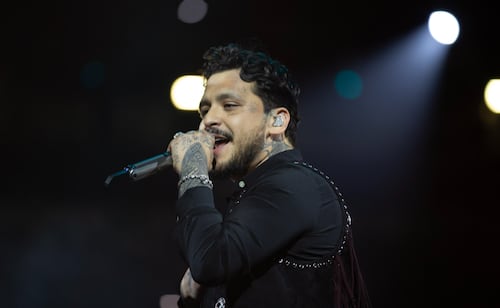
Women's groups protest Christian Nodal's performance at Mexico's Balloon Festival, citing violence accusations
Translated from Spanish, summarized and contextualized by DistantNews.
At a glance
News
Sources not specified
Context piece
- Women's rights groups in Guanajuato, Mexico, are protesting the inclusion of singer Christian Nodal in the International Balloon Festival.
- They accuse Nodal of economic and vicarious violence, arguing his participation normalizes such behavior.
- The groups cite Guanajuato's high rates of child support non-payment and call for social responsibility from event organizers.
Women's rights organizations in Guanajuato, Mexico, have voiced strong opposition to the planned performance of singer Christian Nodal at the International Balloon Festival (FIG) in November 2026. Ley Sabina Guanajuato and the Feminist Network of León are protesting his inclusion, citing his public reputation for "vicarious and economic violence."
The collectives argue that supporting a performer accused of such acts, particularly at a family event, perpetuates the normalization of paternal abandonment. They have urged the state government and FIG organizers to implement social responsibility criteria and human rights perspectives in their selection processes.
These groups highlight that Guanajuato ranks high nationally in complaints regarding unpaid child support, according to national security data. They find it contradictory for a major state event to promote figures facing public accusations of economic and vicarious violence while many women endure lengthy legal battles for their children's rights.
The Feminist Network of León echoed these concerns, stating that the decision by FIG and municipal authorities sends a political and institutional message. They emphasized that this occurs while women continue to face feminicides, disappearances, and various forms of violence, including familial, digital, vicarious, economic, political, and institutional. The organizations question the values endorsed by the state when providing platforms to individuals with controversial public images, especially when women's voices remain ignored.
DistantNews Editorial
Originally published by El Universal in Spanish. Translated, summarized, and contextualized by our editorial team with added local perspective. Read our editorial standards.
More Stories

From Our Blog

What Press Freedom Means for the News You Read

What Gets Lost (and Found) When News Is Translated

The Critical Role of Diaspora Media in Global News

What Travellers Should Know About Countries with Restricted Press

A Digital Nomad's Guide to Following Local News
