


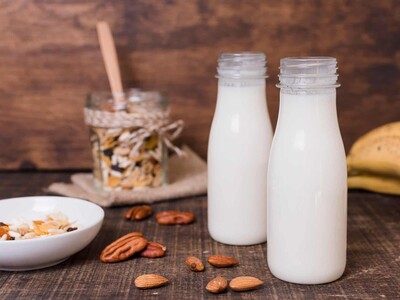
Are plant-based milks truly milk? Nutritionist clarifies differences
Translated from Spanish, summarized and contextualized by DistantNews.
At a glance
News
Named sources
Context piece
- Plant-based drinks, such as almond, oat, or soy, are not nutritionally equivalent to animal milk, according to a clinical nutrition specialist.
- Animal milk contains unique components like lactose, fats, proteins, minerals, and vitamins not found in plant-based alternatives.
- While plant-based drinks may resemble milk in appearance, they often lack essential nutrients like high-quality proteins, B12, zinc, and iron, impacting optimal health and growth.
Plant-based beverages, widely promoted in wellness circles, are not nutritionally the same as animal milk, explains Dr. Ideiny Matías, a clinical nutrition specialist. These drinks, prepared from sources like cereals, legumes, and nuts, may appear similar to cow's milk but lack its essential nutritional profile.
The plant-based products, white and dense in appearance, correspond to heterogeneous drinks prepared from various plant-based raw materials, such as cereals like rice and oats, legumes like soy, and/or nuts like almonds.
Animal milk is a liquid produced by mammals, containing lactose, fats, proteins, and vital minerals and vitamins. In contrast, plant-based drinks like almond, oat, and soy are considered nutritionally inferior. Dr. Matías notes that only soy beverages approach the protein content of milk, and even then, animal milk offers higher quality and more absorbable proteins.
Animal milk is a liquid food produced in the mammary glands and contains particular elements that differ from plant compositions, including lactose, fats and lipids, proteins (whey and casein), minerals such as calcium, phosphorus, potassium, magnesium and zinc, as well as vitamins such as B, A, D and E.
For children, animal milk is associated with reduced cardiometabolic risk, providing essential calcium and proteins that improve glucose and insulin levels. Plant-based alternatives often contain added sugars, salt, or lack crucial nutrients like B12, which is only found in fortified soy milk. The doctor emphasizes that consumers should understand these differences to ensure they meet their nutritional needs for optimal health.
Plant-based drinks are nutritionally inferior to milk, which provides more energy, useful in growth stages. Only soy approaches the protein content of milk. Milk has higher quality and absorbable proteins.
DistantNews Editorial
Originally published by Diario Libre in Spanish. Translated, summarized, and contextualized by our editorial team with added local perspective. Read our editorial standards.
More Stories



From Our Blog

What Gets Lost (and Found) When News Is Translated

The Critical Role of Diaspora Media in Global News

What Travellers Should Know About Countries with Restricted Press

A Digital Nomad's Guide to Following Local News

How the Same Story Looks Different in Different Countries
