

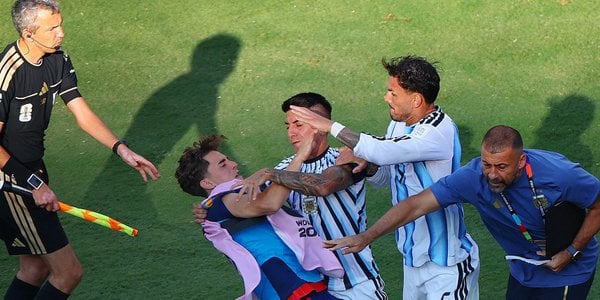
Argentina and Spain players involved in post-World Cup final brawl; FIFA to investigate
Translated from Polish, summarized and contextualized by DistantNews.
At a glance
News
Sources not specified
Under investigation
- The World Cup final was marred by a brawl involving players and staff from Argentina and Spain.
- The referee, Slavko Vinčić, is criticized for being too lenient, allowing aggressive play from Argentina.
- FIFA is reportedly launching an investigation into the post-match incident that disrupted the ceremony.
The final whistle of the World Cup did not bring an end to the on-field hostilities, as a significant brawl erupted between players and staff from Argentina and Spain, overshadowing the championship match. The referee, Slavko Vinčić, has drawn heavy criticism for his perceived leniency throughout the game, which critics argue allowed tensions to escalate.
Reports suggest Vinčić's performance was subpar, particularly his decisions regarding fouls and disciplinary actions against the Argentinian team. Early in the match, he failed to award Spain a free kick near the penalty area and did not issue a yellow card to Gonzalo Montiel. Subsequent incidents, including a dangerous tackle by Alexis Mac Allister and a foul by Nicolas Tagliafico, also went unpunished or resulted in lenient cards, according to the report.
The situation reportedly worsened in the second half, with Leandro Paredes receiving a yellow card only after committing multiple aggressive fouls. The article details numerous instances of rough play and provocation from Argentinian players, including Enzo Fernandez, who was sent off in extra time for a second yellow card. Lionel Messi was also noted for demanding a red card for a Spanish player.
Following the final whistle, the confrontation intensified. Reports indicate that Argentinian player Nahuel Molina struck Rodri, sparking a larger melee involving substitutes and team staff. Paredes allegedly pushed and tackled a Spanish player to the ground. The post-match chaos, which disrupted the trophy ceremony, has prompted FIFA to announce an investigation into the incident.
DistantNews Editorial
Originally published by Rzeczpospolita in Polish. Translated, summarized, and contextualized by our editorial team with added local perspective. Read our editorial standards.
More Stories
From Our Blog

What Gets Lost (and Found) When News Is Translated

The Critical Role of Diaspora Media in Global News

What Travellers Should Know About Countries with Restricted Press

A Digital Nomad's Guide to Following Local News

How the Same Story Looks Different in Different Countries
