


Argentina's Patagonia reveals three 50-million-year-old petrified forests
Translated from Spanish, summarized and contextualized by DistantNews.
At a glance
News
Official statement
Context piece
- Paleontologists in Argentina's Río Negro province discovered three petrified forests estimated to be 50 million years old.
- The fossils, found in a rural area near Pilcaniyeu, include conifer and angiosperm species.
- Provincial authorities are protecting the sites, aiming to study them and use them for economic development.
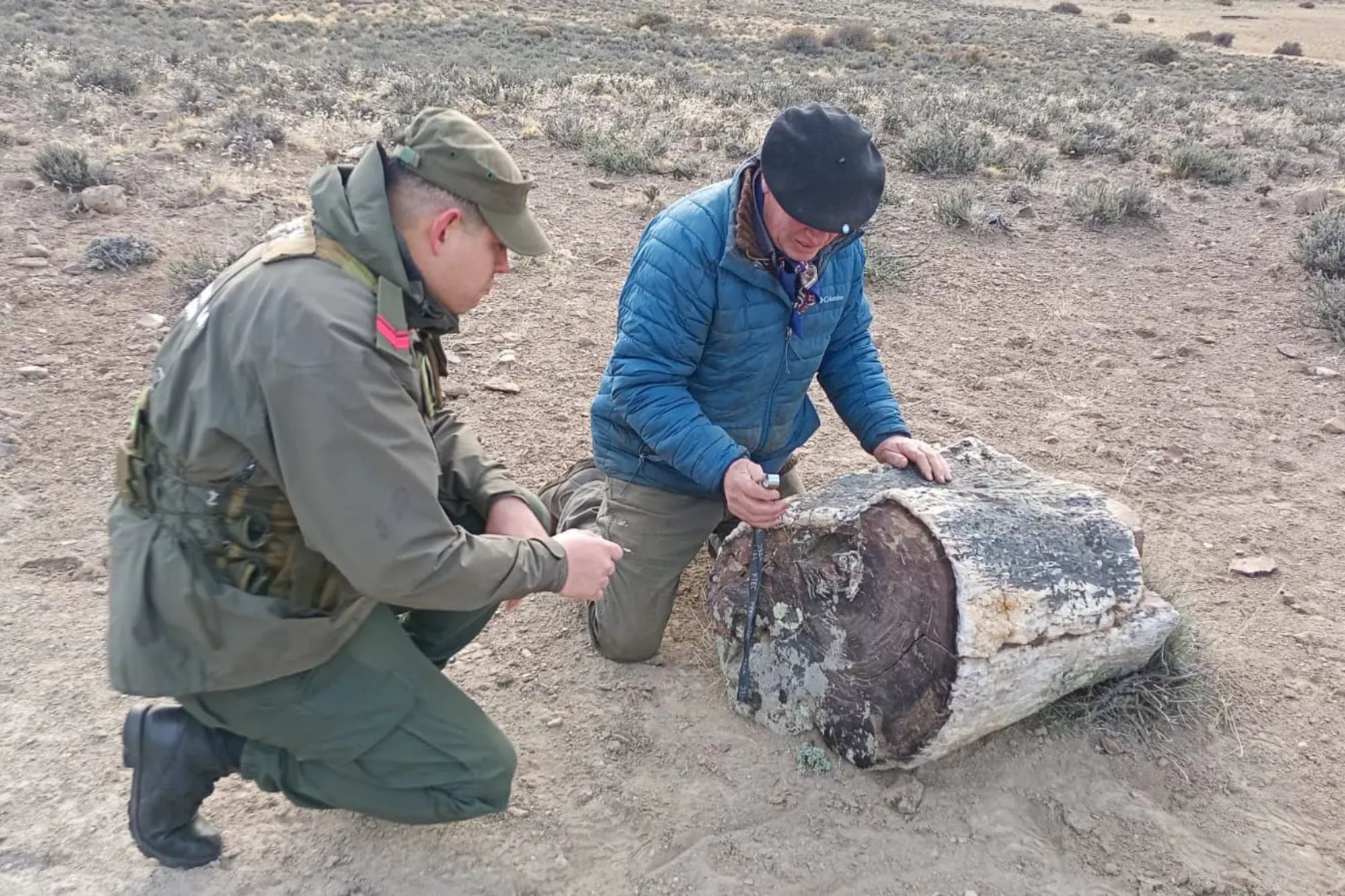
Three distinct petrified forests, dating back approximately 50 million years, have been identified in a rural area of Argentina's Río Negro province. The discovery was made near Pilcaniyeu after a ranch owner reported finding scattered ancient trees.
Provincial authorities, through the Secretariat of Culture's Directorate of Heritage and Museums, have moved to protect the paleontological sites. The effort involves collaboration with the Environmental Patrol of Gendarmerie National, local educational personnel, and paleontological specialists.
During the expedition, paleontologists identified three separate sites containing over thirteen petrified tree specimens. These ancient trees belong to conifer and angiosperm species, originating from the Eocene period. This geological era is known for significant volcanic activity, which likely contributed to the petrification process by burying vast areas under ash.
Represents a significant opportunity to expand knowledge about the natural history of Río Negro and demonstrates the immense heritage wealth our territory preserves.
Pablo Chafrat, Director of Heritage and Museums, highlighted the discovery's importance. "This represents a significant opportunity to expand knowledge about the natural history of Río Negro and demonstrates the immense heritage wealth our territory preserves," he stated. He added that such findings strengthen the ongoing work to identify, protect, and value the province's cultural and natural heritage, with the goal of conservation, research, and transmission to future generations as a key part of the provincial identity and a driver for economic development.
Scientists have extracted samples for scientific analysis, following conservation protocols for fossilized remains. The collected material has been transferred to the Paleontological Museum of Bariloche for further study. Petrified forests are not uncommon in the Argentine Patagonia region, with other significant sites found in areas like Valcheta and Sarmiento, some dating back to the Cretaceous period when the region had a subtropical climate.
Each new finding strengthens the work we are doing to identify, protect, and value the cultural and natural heritage of Río Negro. Our goal is that these assets are conserved, studied, and passed on to future generations as part of the province's identity and as a strategic asset and engine for economic development.
DistantNews Editorial
Originally published by La Nación in Spanish. Translated, summarized, and contextualized by our editorial team with added local perspective. Read our editorial standards.
More Stories



From Our Blog

What Gets Lost (and Found) When News Is Translated

The Critical Role of Diaspora Media in Global News

What Travellers Should Know About Countries with Restricted Press

A Digital Nomad's Guide to Following Local News

How the Same Story Looks Different in Different Countries
