


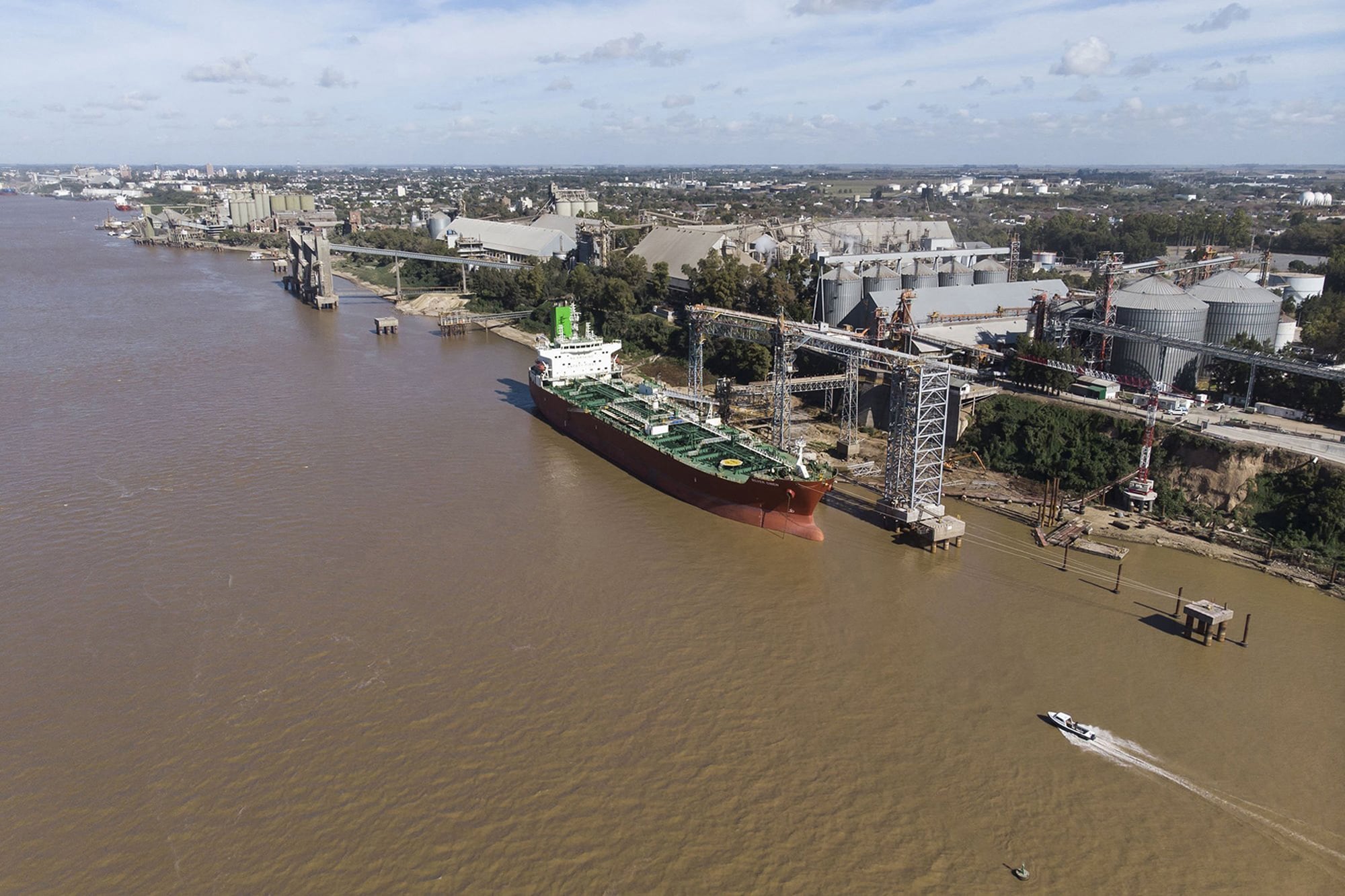
Argentina signs Hidrovía concession contract with Belgian firm Jan De Nul
Translated from Spanish, summarized and contextualized by DistantNews.
At a glance
News
Official statement
New plan
- Argentina's government has signed a concession contract for the Hidrovía waterway, transferring its management to a Belgian consortium led by Jan De Nul.
- This move is expected to significantly impact Argentina's foreign trade logistics, with a 13.5% reduction in toll fees anticipated.
- The concession aims to modernize and secure navigation, reduce export costs, and enhance the competitiveness of Argentine industries.
Argentina's government has officially signed a concession contract for the Hidrovía, a vital waterway for the nation's foreign trade. The management of this key logistical corridor will now be handled by a Belgian consortium, primarily comprising companies Jan De Nul and Servimagnus.
The Ministry of Economy announced the signing on its X account, emphasizing the significant impact this will have on the logistical corridor where a large portion of national exports flow. A key benefit highlighted is the automatic activation of a 13.5% reduction in the waterway's toll fees. This change is expected to enable "more modern and secure navigation," allowing ships to depart from ports with greater cargo capacity in less time.
Beyond the toll reduction, the government anticipates a substantial decrease in export costs, directly boosting the competitiveness of Argentina's productive and industrial sectors. Structural changes, such as deepening the navigable channel, are also projected to lower costs for companies using the Hidrovía. Estimates suggest this could lead to the use of up to 230 fewer ships annually.
Jan De Nul, which has been involved in the maintenance of the waterway for 30 years, secured the 25-year concession. This decision was formalized through Resolution 36/2026, published in the Official Gazette. The measure is expected to facilitate increased cargo loads per vessel, with each additional foot of depth potentially allowing for approximately 2,200 more tons of cargo, depending on the product.
DistantNews Editorial
Originally published by La Nación in Spanish. Translated, summarized, and contextualized by our editorial team with added local perspective. Read our editorial standards.
More Stories



From Our Blog

What Gets Lost (and Found) When News Is Translated

The Critical Role of Diaspora Media in Global News

What Travellers Should Know About Countries with Restricted Press

A Digital Nomad's Guide to Following Local News

How the Same Story Looks Different in Different Countries
