

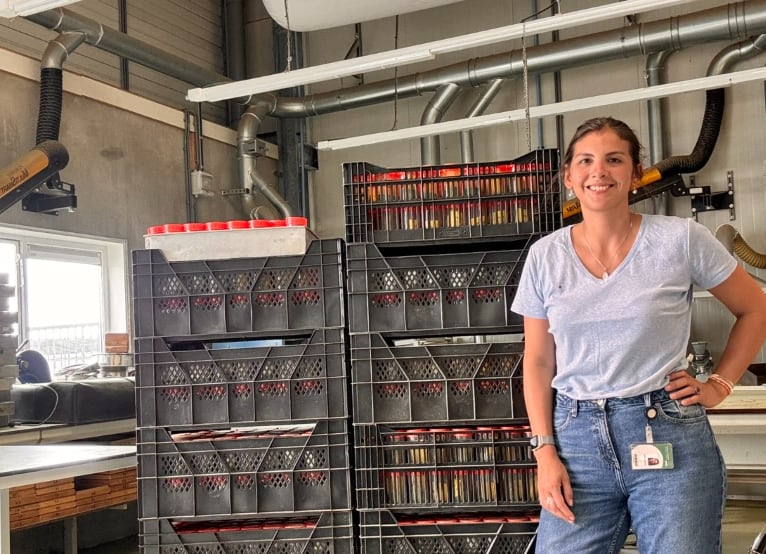
Argentine agronomist pioneers research into plant waste as protein source in Europe
Translated from Spanish, summarized and contextualized by DistantNews.
At a glance
In-depth
Named sources
Context piece
- Argentine agronomist Sofía Cano Alfañar, 34, is conducting promising research at a prestigious European university.
- Her work focuses on transforming plant waste into new protein sources for human consumption.
- Cano Alfañar's career path includes studies and work in the US, Hungary, and Spain, stemming from her early fascination with plants.
Sofía Cano Alfañar, a 34-year-old agronomist from Mercedes, Corrientes, Argentina, is making significant strides in food research at a leading European academic institution. Her current doctoral work in the Netherlands focuses on an innovative approach to protein production: transforming plant waste into viable sources for human consumption.
My father and uncles always had a relationship with the sector, but as mechanics; they repaired machinery for the field.
Cano Alfañar's journey is marked by a diverse international experience, including studies and work in the United States, Hungary, and Spain. This global perspective complements her deep-rooted passion for agriculture, which began in the rural landscapes of her hometown. Her family, though not landowners, maintained close ties to the agricultural sector through mechanics, fostering her early connection to the land.
I always wanted to work in the field because I really liked plants, walking through the rice paddies and contact with nature. The biological part was what interested me.
Her academic path was solidified during her high school years after a transformative experience at the National Institute of Agricultural Technology (INTA) in Mercedes. This exposure confirmed her desire to pursue Agronomy, a field she was drawn to by her love for plants and the natural environment. University life at the National University of the Northeast (UNNE) remains a cherished memory, characterized by a strong sense of camaraderie among her peers.
When I was in school, we did some practical work at INTA and I loved it, and it confirmed that my career was Agronomy, I had no doubts.
Cano Alfañar's research aims to revalue plant waste, particularly from tomatoes, turning what is often discarded into valuable protein. This endeavor aligns with a growing global need for sustainable and alternative food sources. Her dedication and international trajectory underscore a promising future for innovative solutions in the agri-food sector, driven by scientific curiosity and a commitment to sustainability.
Of all the experiences I have from all the places I have lived, university life was by far the best.
DistantNews Editorial
Originally published by La Nación in Spanish. Translated, summarized, and contextualized by our editorial team with added local perspective. Read our editorial standards.
More Stories

From Our Blog

What Gets Lost (and Found) When News Is Translated

The Critical Role of Diaspora Media in Global News

What Travellers Should Know About Countries with Restricted Press

A Digital Nomad's Guide to Following Local News

How the Same Story Looks Different in Different Countries
