

Artist Rubén Ortiz Torres Imagines the Apocalypse of the Trump Era
Translated from Spanish, summarized and contextualized by DistantNews.
At a glance
In-depth
Sources not specified
Context piece
- Artist Rubén Ortiz Torres reimagines the apocalypse using traditional Mexican talavera mosaics, incorporating contemporary elements like tanks and drones.
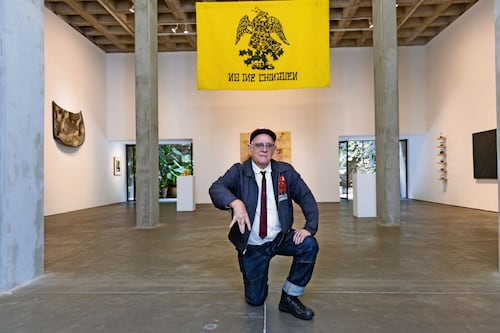
- His exhibition "Repatriación voluntaria" at OMR gallery features works that critique xenophobic policies, particularly Donald Trump's "voluntary repatriation" program.
- The exhibition also explores Ortiz Torres's artistic journey, reflecting on his shift from digital technologies to traditional Mexican crafts like ceramics and textiles.
Rubén Ortiz Torres, a prominent figure in contemporary art since the mid-1980s, transforms the forgotten "Apocalypse" mural by José Clemente Orozco into a modern-day collage of destruction. His work, "Apocalipsis ahora (2024)," displayed at the OMR gallery, uses talavera mosaics to depict a contemporary apocalyptic landscape. This scene includes Russian tanks, missiles on the Ukrainian border, a destroyed mosque in Gaza, and the bombed ruins of that territory. Replacing the biblical demons of Babylon are figures like Donald Trump and Vladimir Putin, creating a visual chronicle of our era with nods to Picasso's "Guernica."
The current administration invented this idea of voluntary repatriation to deport people, which is a xenophobic bribe in which the U.S. government pays you $2,500 and you leave. Instead of paying that money to immigration so they can chase you, they give you that money to go back. In reality, it's not exactly voluntary repatriation, it's a bribe.
The exhibition, titled "Repatriación voluntaria," runs until August 20 and delves into themes of transit and displacement, reflecting Ortiz Torres's own experience as an artist working between Mexico and the United States. The title directly references the xenophobic policies of the Trump administration, specifically the "voluntary repatriation" program. Ortiz Torres explains that this program, which offers migrants $2,500 to leave the U.S., is essentially a "xenophobic bribe" rather than a true repatriation. For himself, as a dual citizen, exhibiting in Mexico is a genuine "voluntary repatriation."
In my case, I have the good fortune of having dual nationality, coming to exhibit in Mexico is a voluntary repatriation, I come of my own will to present work.
Across the nearly 20 works in the exhibition, the theme of repatriation is explored through both subject matter and materiality. Ortiz Torres, who moved to the U.S. in 1990 to study digital art, initially viewed traditional Mexican crafts like ceramics and textiles with prejudice, considering them merely artisanal. However, he has since returned to Mexico to produce work using these very techniques, recognizing their enduring relevance compared to the obsolescence of early digital technologies. He now regrets his earlier dismissal, acknowledging that "these technologies do last."
When I was in Mexico, I never did ceramics or textiles. I understood these media as artisanal, I saw them with a certain prejudice, I must confess, but I am very sorry because these technologies do last.
DistantNews Editorial
Originally published by El Universal in Spanish. Translated, summarized, and contextualized by our editorial team with added local perspective. Read our editorial standards.
More Stories

From Our Blog

What Press Freedom Means for the News You Read

What Gets Lost (and Found) When News Is Translated

The Critical Role of Diaspora Media in Global News

What Travellers Should Know About Countries with Restricted Press

A Digital Nomad's Guide to Following Local News
