

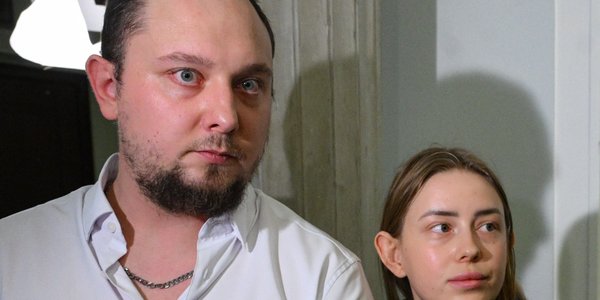
Artur Bartkiewicz: Łukasz Mejza and Daniel 'Magical' in the Sejm. I am not worried at all.
Translated from Polish, summarized and contextualized by DistantNews.
At a glance
Opinion
Sources not specified
Context piece
- Polish lawmaker Łukasz Mejza, known for his involvement in freak fight events, continues to serve in parliament, drawing criticism for his past actions and association with controversial figures.
- The author argues that while figures like Mejza and patstreamer Daniel Magical appearing in parliament is concerning, it is an unavoidable consequence of positive societal trends like democracy and technological advancement.
- Mejza's election is seen as a sign that democracy offers opportunities to everyone, a contrast to historical systems that excluded many based on arbitrary factors, and Magical's online presence highlights the reach of the information revolution.
Polish parliamentarian Łukasz Mejza's continued presence in the Sejm, the lower house of parliament, is a cause for concern for many, especially given his past involvement in freak fight events and association with controversial figures like patstreamer Daniel Magical.
When I think that Mejza, in between planning his participation in a freak fight gala, breaking traffic laws, and walking around the Sejm with a patstreamer, has a greater or lesser influence on the laws being made in Poland, I get goosebumps.
Mejza, now serving his second term, has drawn sharp criticism for his actions, which the author describes as including participation in freak fight galas, traffic violations, and associating with patstreamers. The idea that such an individual influences Polish law is deeply unsettling, prompting a grim comparison to a circus.
Similarly, Daniel Magical's appearance in parliament, even if brief, is seen as a waste of youth's time and a platform for promoting harmful content. The author firmly believes that freedom of speech should not extend to protecting the broadcast of drunken brawls and vulgarity, especially when it negatively impacts young people.
I really regret wasting life on this – both on various "Magicals" who could be doing something useful in this time, and especially on young people, whom such perversion unfortunately often attracts.
Despite these concerns, the author refrains from despair. They argue that the presence of figures like Mejza and Magical in parliament, while troubling, is an inevitable byproduct of positive societal shifts. Mejza's election, despite starting from a low position on the ballot, is a testament to democracy's ability to give everyone a chance. This is viewed as a more equitable system than historical periods marked by "glass ceilings" and "censuses," where potential was lost due to factors like gender, race, or birthright. Mejza, in this light, is the price paid for a world with more leveled opportunities.
And despite everything, I wouldn't wring my hands over the fact that Łukasz Mejza is in the Sejm, nor over the fact that "Magical" was there.
Magical's situation is also framed within a technological context. While in the past his influence might have been limited to a small group, the information revolution has amplified his reach. This broader audience, however, also presents an opportunity for positive change, as the author suggests that the same technology that amplifies negative influences can also be used for beneficial purposes.
Mejza ended up in the Sejm because we have democracy. He ran from a distant spot on the list, but he still managed to convince 10,000 people. And that's sad on the one hand, because he was able to do it. But on the other hand, it's optimistic – because if Mejza could do it, then really anyone has a chance.
DistantNews Editorial
Originally published by Rzeczpospolita in Polish. Translated, summarized, and contextualized by our editorial team with added local perspective. Read our editorial standards.
More Stories

From Our Blog

What Gets Lost (and Found) When News Is Translated

The Critical Role of Diaspora Media in Global News

What Travellers Should Know About Countries with Restricted Press

A Digital Nomad's Guide to Following Local News

How the Same Story Looks Different in Different Countries
