


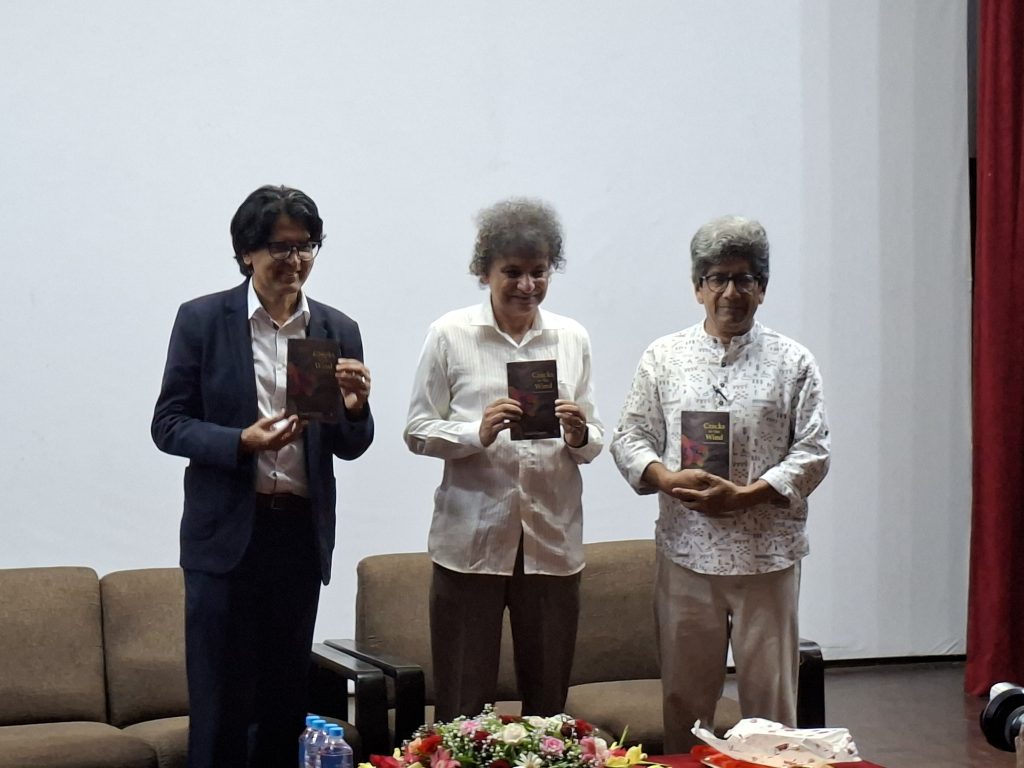
Arun Gupto's Memoir 'Cracks in the Wind' Launches, Celebrated for Unique Perspective
Translated from English, summarized and contextualized by DistantNews.
At a glance
In-depth
Named sources
New plan
- Professor Arun Gupto launched his autofiction memoir, "Cracks in the Wind: Memoirs from Lumbini," after decades of work.
- The book is characterized as a paradigm-shifting work in Nepali literature, focusing on "who I am" rather than "what I am."
- It highlights "subaltern heroes" from the margins of society, portraying them with dignity and agency, and explores cultural and religious harmony.
Professor Arun Gupto's highly anticipated autofiction memoir, "Cracks in the Wind: Memoirs from Lumbini," has officially launched, marking the culmination of a project decades in the making. The launch event featured reflections from guest speaker Professor/Author Bishnu Sapkota and an intimate conversation between Gupto and his friend, Professor/Author Sanjeev Uprety.
Mainstream autobiographies talk about what I am. On the contrary, Cracks in the Wind is about who I am, why I am… It is not about the Arun Gupto we meet at the university; it is about the sources that made him.
Sapkota described the book as a powerful, paradigm-shifting entry into Nepali biographical literature. He characterized "Cracks in the Wind" as an "autofiction memoir" that moves beyond traditional autobiographies, which often focus on external achievements. Instead, Sapkota explained, Gupto's work delves into the deeper question of "who I am, why I am… It is not about the Arun Gupto we meet at the university; it is about the sources that made him." Sapkota playfully likened the memoir to "The Arun Gupta Code," noting its intricate personal history and calling it both a "personal gift" to those who know Gupto and a stunning standalone work of art.
A defining aspect of the memoir, according to Sapkota, is its portrayal of characters from the margins of society, such as Sukhi, Bimala, Khema, Uma, and Rahmat. Gupto's literary restraint and ethical sensitivity are evident in how he depicts these individuals not as figures of pity, but as complex, dignified people with their own agency. Sapkota referred to them as "subaltern heroes" who shaped Gupto's imagination and worldview.
personal gift
The book also beautifully captures cultural and religious diversity through the intimate relationships among its characters, presenting a tender picture of coexistence across faiths and social backgrounds. Ultimately, Sapkota concluded, "Cracks in the Wind" tells a story of harmony, between different cultures and religions, and between humans, nature, animals, and the mysteries of everyday life. Sapkota shared a personal anecdote from 2001, recalling a trip where he met Rahmat, a central character in the book, highlighting the deep personal connections that inspired Gupto's work.
subaltern heroes
DistantNews Editorial
Originally published by OnlineKhabar English in English. Translated, summarized, and contextualized by our editorial team with added local perspective. Read our editorial standards.
More Stories


From Our Blog

What Gets Lost (and Found) When News Is Translated

The Critical Role of Diaspora Media in Global News

What Travellers Should Know About Countries with Restricted Press

A Digital Nomad's Guide to Following Local News

How the Same Story Looks Different in Different Countries
