

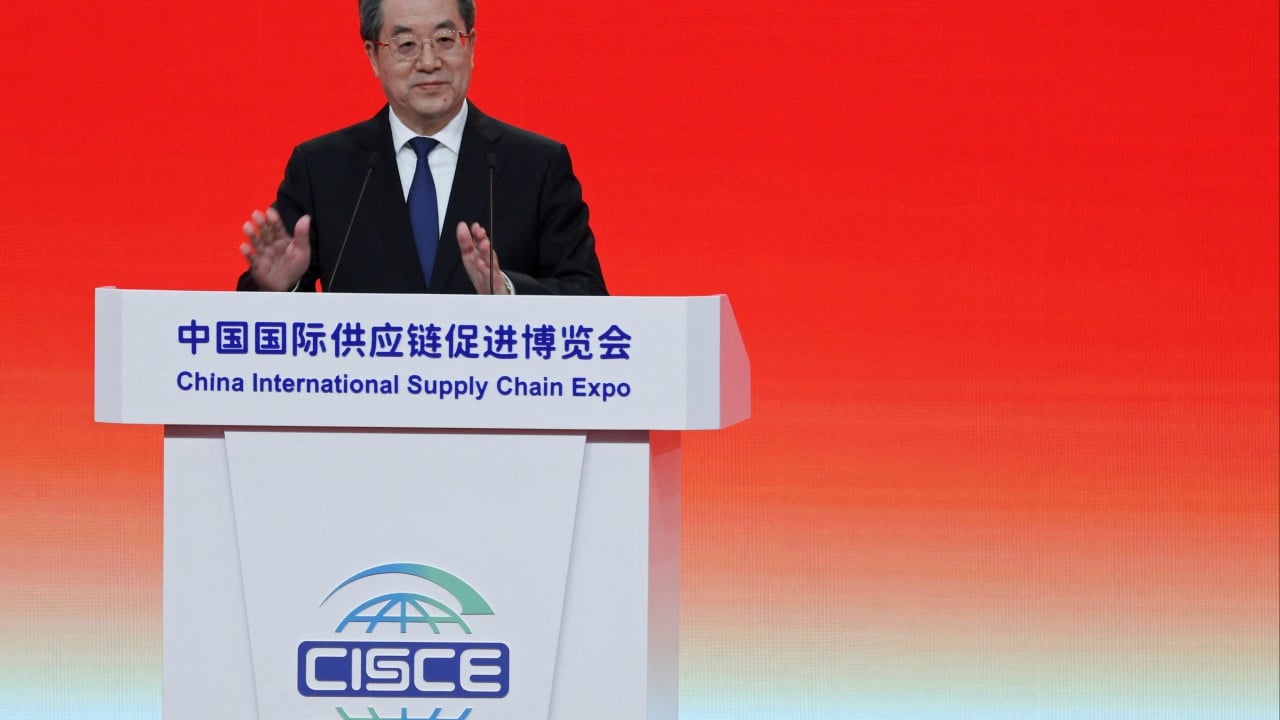

As Europe rearms, it aims to reduce, not fully decouple, military supply chains from China
Translated from English, summarized and contextualized by DistantNews.
At a glance
News
Named sources
Context piece
- European nations are gradually reducing, not completely decoupling, their reliance on China for military supply chains during a rearmament drive.
- G7 leaders agreed to significantly reduce dependency on single non-G7 suppliers for rare earths and permanent magnets.
- China dominates global supply of these critical minerals, essential for advanced military systems.
As Europe rearms, its defense industry is set to gradually reduce its reliance on China for critical minerals rather than completely decouple, according to analysts. This strategic shift is part of the continent's ongoing rearmament drive.
During the Group of Seven summit in Evian-les-Bains, France, leaders from France, Germany, the UK, Italy, the US, Canada, and Japan signed a declaration aimed at securing supply chains for critical minerals. While China was not explicitly named, the leaders committed to "significantly reduce" their dependency on any single supplier outside the G7 for rare earths and permanent magnets. Their goal is to bring this dependency below 60 percent by 2030, with an ultimate aim of reaching 50 percent as soon as possible.
The declaration stated, "We will work together with partners to reduce critical dependencies and ensure that attempts or threats to weaponise economic dependencies fail." China currently holds a dominant position as the world's largest producer of rare earths and other critical minerals like gallium, accounting for over 90 percent of the global supply. These materials are indispensable for the manufacturing of advanced military systems, including radars, missile guidance components, and propulsion systems.
We will work together with partners to reduce critical dependencies and ensure that attempts or threats to weaponise economic dependencies fail.
DistantNews Editorial
Originally published by South China Morning Post in English. Translated, summarized, and contextualized by our editorial team with added local perspective. Read our editorial standards.
More Stories

From Our Blog

Countries Without a Free Press: What You Need to Know

What Press Freedom Means for the News You Read

What Gets Lost (and Found) When News Is Translated

The Critical Role of Diaspora Media in Global News

What Travellers Should Know About Countries with Restricted Press
