

As hot summer, blackouts loom, Iraq looks to solar power
Summarized and contextualized by DistantNews.
At a glance
News
Named sources
Context piece
- Iraqis are increasingly considering solar panels to combat frequent summer blackouts, exacerbated by reduced Iranian gas supplies for power stations.
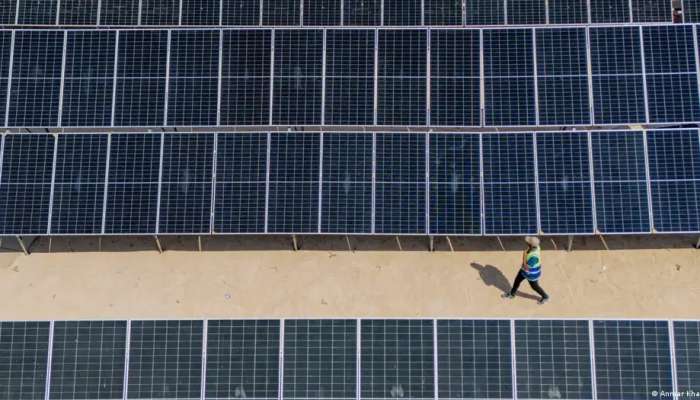
- Installing solar panels is a significant investment, costing between $3,800-$7,600, but offers long-term savings compared to expensive and unreliable generator subscriptions.
- Despite Iraq's high solar radiation potential and past research, wars and sanctions have hindered the development of its solar energy sector, though rising generator costs are now driving interest.
Baghdad: Scorching Iraqi summers are a familiar hardship, but the country's struggling national electricity grid has pushed residents like Hiba al-Amiri to seriously consider solar power. Recent disruptions to Iranian gas supplies, which fuel a significant portion of Iraq's power stations, have intensified the problem, leading to prolonged blackouts.
In the war, Iranian gas was cut and for four days, we had no electricity. We were only using the generator. After that, a lot of our neighbors were also talking about this [solar]. Everybody is really starting to think about it seriously.
"In the war, Iranian gas was cut and for four days, we had no electricity," said al-Amiri, a Baghdad-based teacher. "We were only using the generator." This experience, shared by many neighbors, has spurred serious discussions about installing solar panels. The investment, estimated between 5 and 10 million Iraqi dinars ($3,800-$7,600), is seen as a worthwhile long-term solution. "The thinking is that we will pay for this project in one year but then after that we won’t need to pay for the generator power again," al-Amiri explained.
The thinking is that we will pay for this project [solar panels] in one year but then after that we won’t need to pay for the generator power again.
The national grid typically provides only eight to 12 hours of electricity daily. To compensate, ordinary Iraqis pay substantial monthly fees, ranging from $100 to $300, for generator subscriptions. While the generator system was once familiar and flexible, rising fees and dwindling state-subsidized diesel are making it less viable. Harry Istepanian, an energy expert, notes that solar power is gaining appeal not due to novelty, but because the cost of the old system has become too high.
But the generator system was familiar, flexible and required no large upfront investment. Solar, by contrast, requires capital, reliable equipment, batteries, technical installation and after-sales support.
Iraq possesses some of the world's highest levels of solar radiation, making it ideal for solar energy. Despite opening its first solar energy research center in the 1980s, decades of wars and sanctions have significantly slowed progress in the sector. However, energy experts and researchers are actively working to educate the public about renewable energy options, hoping to harness the country's natural potential amidst growing energy challenges.
As a result, solar is gaining appeal. Not because Iraqis have suddenly discovered it but because the cost of relying on the old system has become higher.
DistantNews Editorial
Originally published by Times of Oman. Summarized and contextualized by our editorial team with added local perspective. Read our editorial standards.
More Stories
From Our Blog

What Gets Lost (and Found) When News Is Translated

The Critical Role of Diaspora Media in Global News

What Travellers Should Know About Countries with Restricted Press

A Digital Nomad's Guide to Following Local News

How the Same Story Looks Different in Different Countries
