

Asia can step up as humanitarian aid sees ‘biggest contraction’ in recent history: IFRC
Summarized and contextualized by DistantNews.
At a glance
News
Sources not specified
Context piece
- Asia could significantly increase its role in global humanitarian aid as traditional Western donors reduce funding.
- The International Federation of Red Cross and Red Crescent Societies (IFRC) notes a historic contraction in humanitarian funding due to economic pressures.
- Declining aid impacts vulnerable communities like those in Afghanistan and Myanmar, while some Asian nations are increasingly self-sufficient.
Asian countries are urged to step up their contributions to global humanitarian aid as traditional donors in North America and Europe significantly cut funding, leading to the "biggest contraction" of aid in recent history. Alexander Matheou, the IFRC's Asia Pacific director, highlighted the vulnerability of the current humanitarian system, which relies heavily on a small number of donors.
The global humanitarian system has a major vulnerability – it's primarily funded by a small handful of donors, most of whom are from North America and Europe. Now, all of those have cut back on financing, which is why we're seeing the biggest contraction of aid in recent history.
"The global humanitarian system has a major vulnerability – it's primarily funded by a small handful of donors, most of whom are from North America and Europe. Now, all of those have cut back on financing, which is why we're seeing the biggest contraction of aid in recent history," Matheou stated. He added that Asia has the potential to play a "huge role" in sustaining the global capacity to respond to crises.
While some Asian nations are increasing their humanitarian support and beginning to shoulder more of the burden, their overall contribution remains relatively low. Matheou pointed out that countries like China, Indonesia, and Vietnam are increasingly self-sufficient and no longer require international humanitarian assistance for their crises. This growing domestic capacity in disaster management allows some nations to "graduate from dependence on aid."
Asia can play a huge role in terms of growing commitments to try to sustain a global capacity to respond to people in crisis.
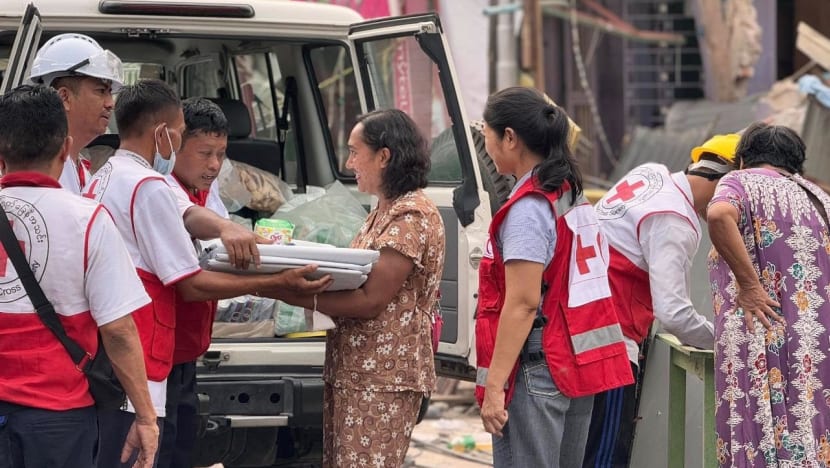
However, the impact of declining international aid is starkly different in regions with severe humanitarian needs, such as Afghanistan and Myanmar. In Afghanistan, approximately half of the primary health clinics supported by the Afghan Red Crescent have faced funding cuts, severely impacting healthcare access for remote populations, particularly women and girls. Similarly, in Cox's Bazar, Bangladesh, home to the world's largest refugee camp, cuts have affected essential services like food rations, medical care, and education for the Rohingya population. The ongoing civil war and displacement in Myanmar also contribute to a high reliance on humanitarian aid.
When those clinics close, the consequences to people's health and ultimately to their life is dramatic.
DistantNews Editorial
Originally published by CNA. Summarized and contextualized by our editorial team with added local perspective. Read our editorial standards.
More Stories


From Our Blog

What Gets Lost (and Found) When News Is Translated

The Critical Role of Diaspora Media in Global News

What Travellers Should Know About Countries with Restricted Press

A Digital Nomad's Guide to Following Local News

How the Same Story Looks Different in Different Countries
