


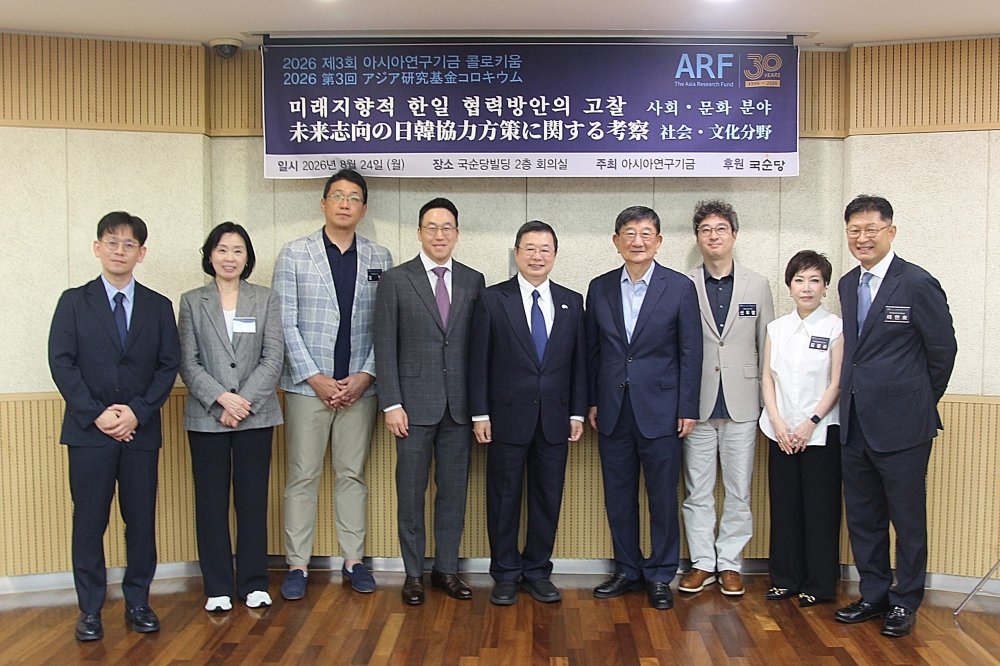
Asia Research Foundation fosters future-oriented Korea-Japan cooperation through traditional liquor culture
Translated from Korean, summarized and contextualized by DistantNews.
At a glance
News
Sources not specified
Context piece
- The Asia Research Foundation (ARF) held its third colloquium in Seoul, focusing on future-oriented cooperation between South Korea and Japan.
- The event explored the social and cultural significance of traditional Korean rice wine (takju) and Japanese sake (nihonshu) as cultural mediators.
- Combining academic discussion with cultural experiences like pansori and traditional liquor tasting, the colloquium aimed to foster mutual trust and exchange between the two nations.
The Asia Research Foundation (ARF) hosted its third colloquium in Seoul, aiming to foster future-oriented cooperation between South Korea and Japan through a focus on social and cultural exchange. Titled "Considering Future-Oriented Korea-Japan Cooperation: Social and Cultural Fields," the event, subtitled "Connecting Understanding Over Shared Drinks: Empathy and Future of Korea-Japan Culture," delved into the commonalities and differences between the two nations' cultures.
The colloquium specifically examined the cultural significance of traditional rice wines: Korean takju (makgeolli) and Japanese sake (nihonshu). These beverages were presented not merely as drinks but as cultural mediums embodying community culture, human relationships, and rituals within each society. The ARF sought to leverage this understanding to build a foundation of trust and mutual respect between South Korea and Japan.
During the first part of the event, academics and experts engaged in multifaceted discussions on cultural characteristics and cooperative strategies. Presenters analyzed the differences in traditional liquors, reflecting the distinct societal structures of South Korea's horizontal, open "garo-society" and Japan's etiquette- and cohesion-focused "seroh-society," despite both being made from rice. They emphasized how these cultural differences can complement each other, driving synergistic cooperation.
Subsequent presentations explored communication patterns in the beverage industry, historical reflections embedded in food culture, and the value and vision of Korean fermentation culture. The second part of the event featured a pansori performance and a traditional liquor tasting session. Attendees experienced and understood each other's ways of life through cultural elements like food, drink, and performances, facilitating natural communication.
Approximately 80 participants, including representatives from the Japanese Embassy in Korea, academia, public diplomacy, and businesses, attended the event. The ARF, celebrating its 30th anniversary this year, plans to view Korea-Japan relations from the perspective of citizen exchange. Beyond academic exchanges and joint research, the foundation intends to expand its role as a knowledge platform connecting East Asian talent and the future through youth exchange and leadership development programs.
DistantNews Editorial
Originally published by Dong-A Ilbo in Korean. Translated, summarized, and contextualized by our editorial team with added local perspective. Read our editorial standards.
More Stories


From Our Blog

What Gets Lost (and Found) When News Is Translated

The Critical Role of Diaspora Media in Global News

What Travellers Should Know About Countries with Restricted Press

A Digital Nomad's Guide to Following Local News

How the Same Story Looks Different in Different Countries
