


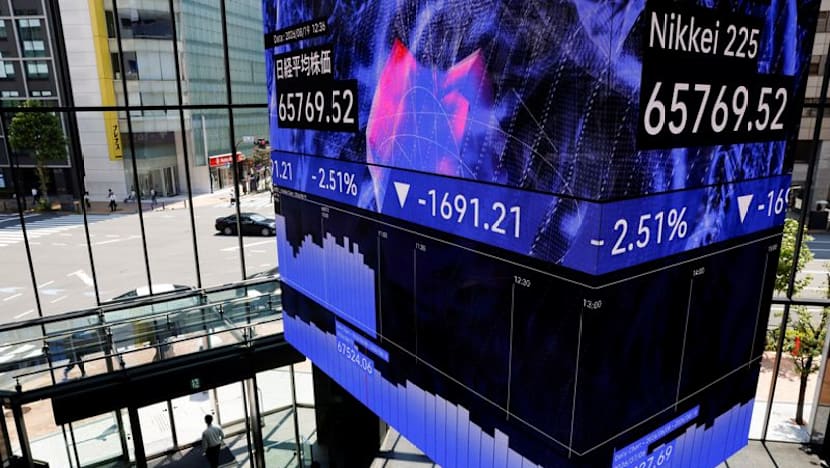
Asian shares slide as oil prices and bond yields rise amid U.S.-Iran fighting
Translated from English and summarized by DistantNews. Read the original for the full story.
At a glance
Newswire
Named sources
Ongoing story
- Asian share markets declined after renewed U.S.-Iran fighting lifted oil prices and added to inflation concerns.
- Investors raised the implied probability of a September Federal Reserve rate increase to 57% after Chair Kevin Warsh stressed the need to control inflation.
- Japan's Nikkei fell 2.1%, South Korean stocks dropped 2.4% and the broadest Asia-Pacific share index outside Japan lost 0.7%.
Renewed fighting between the United States and Iran sent a fresh warning through Asian markets on Monday. Oil prices rose, bond yields stayed high and investors increased bets that the U.S. Federal Reserve could raise interest rates as soon as September.
Brent crude futures climbed 1.4% to $89.38 a barrel after U.S. forces struck two Iranian launchers on Larak island on Sunday. Iran responded by attacking U.S. forces stationed in Jordan, Fox News reported.
We continue to expect that a hike won't come until December, though agree that the September meeting is live.
The conflict added to inflation concerns already weighing on bond markets. After Federal Reserve Chair Kevin Warsh said the central bank still had work to do to control inflation, markets put the probability of a September rate increase at 57%. JPMorgan chief U.S. economist Michael Feroli said the bank still expected a hike in December, but acknowledged that the September meeting remained possible.
Moreover, regardless of the exact timing of hikes, Warsh's speech suggested a chair more willing to translate his concern about inflation into a policy tightening.
Investors are watching Friday's August payrolls report and consumer price data due on Sept. 11. Analysts expect employment to rebound by 58,000 after July's decline of 23,000, with unemployment holding at 4.1%. A much weaker jobs result would likely be needed to significantly reduce expectations of a September move.
Japan's Nikkei dropped 2.1%, South Korean shares fell 2.4% and MSCI's broadest Asia-Pacific index outside Japan lost 0.7%. The dollar held near 160 yen, while two-year U.S. Treasury yields remained at 4.36% after a sharp rise on Friday. New Zealand's central bank is expected to raise rates for a second consecutive meeting, while Canada's central bank is seen holding steady.
pretty well contained
About this summary
Originally published by CNA in English. Translated, summarized, and contextualized automatically by DistantNews, with a note on how the source frames the story. Not individually reviewed before publishing. How this works.
More Stories

From Our Blog

What Gets Lost (and Found) When News Is Translated

The Critical Role of Diaspora Media in Global News

What Travellers Should Know About Countries with Restricted Press

A Digital Nomad's Guide to Following Local News

How the Same Story Looks Different in Different Countries
