


At IFA 2026, robots move into everyday life with deft hands and piano skills
Translated from Korean and summarized by DistantNews. Read the original for the full story.
At a glance
News
Named sources
Context piece
- Humanoid robots took center stage at IFA 2026 in Berlin, where demonstrations included dancing, object handling, sandwich preparation and piano playing.
- Chinese companies accounted for 932 of more than 1,900 participating companies and brands, while South Korean exhibitors numbered 79.
- South Korean and European appliance makers focused mainly on adding artificial intelligence to established home appliances rather than presenting robots as standalone products.
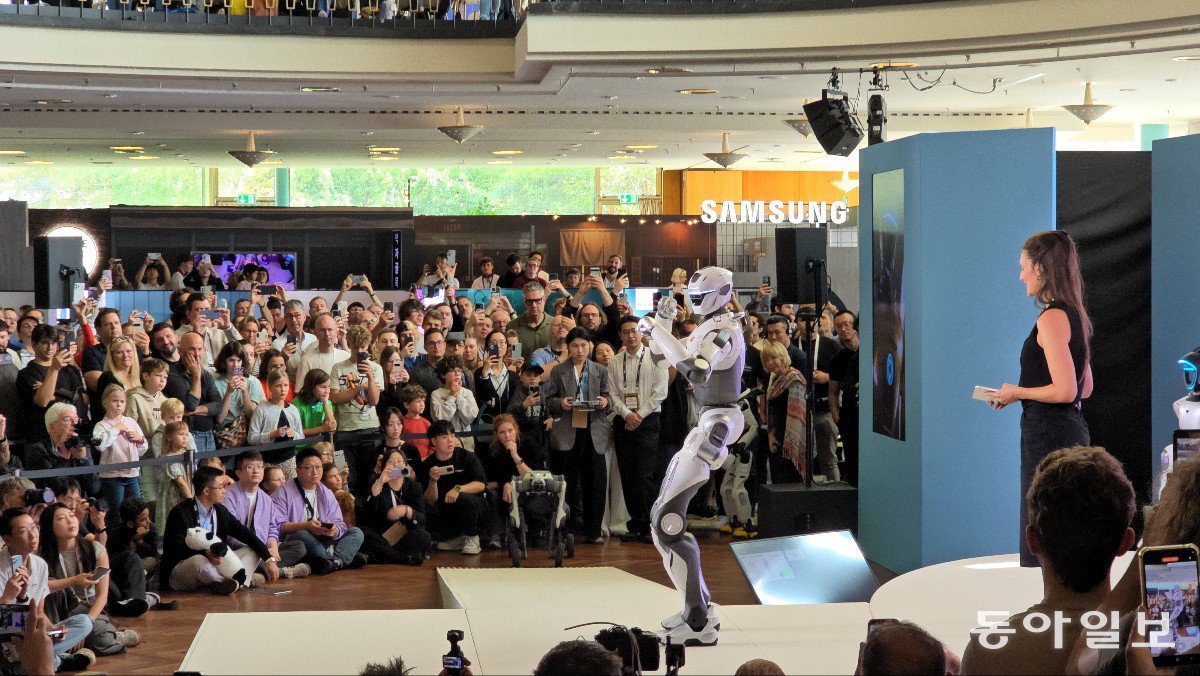
A humanoid robot waved to the crowd, another danced to a presenter’s introduction, and visitors shouted the machines’ names as they filmed on their phones. At IFA 2026 in Berlin, the main event looked less like a traditional home-appliance show than a contest in robotics.
The strongest presence came from Chinese companies. Robots from Unitree, Engine AI, Agibot, Deep Robotics and Dobot appeared on the “Robot on the Runway” stage, while Chinese exhibitors filled displays across the fairgrounds. Of more than 1,900 companies and brands from 49 countries, 932 were Chinese. South Korean companies and institutions numbered 79, down by 27 from the previous year. German media reported that China had moved toward the center of the exhibition and that humanoid robots had taken over IFA Berlin.
The demonstrations showed both progress and limitations. Unitree presented a robot making a sandwich by taking bread from a toaster and adding lettuce, although its movements remained less than smooth. Mova’s Knot80 robot arm, designed with a humanlike arm and hand, moved a plastic ball, a glass bottle and a paper cup of coffee. Its soft finger joints handled the objects steadily. Chinese robotics startup TermiTech displayed a robot pianist.
Chinese companies’ share is increasing every year.
Xiaomi made its first appearance at IFA and placed its CyberOne humanoid robot at the front of its presentation. It completed a heart gesture when a visitor made half of one, returned fist bumps and formed a V sign. Xiaomi said tests of nut-tightening work in its electric-vehicle production process raised the success rate from 90% to 98% over about four months.
Chinese robots also filled the IFA Next future-technology area. Booster Robotics’ K1 performed synchronized dancing to a Michael Jackson song, while TCL showed Amy, a small family robot that laughed when visitors stroked it. Traditional South Korean and European appliance makers responded differently. LG Electronics emphasized its connected LG AI Home and autonomous AI agent ThinQ Cloi, while Samsung showcased a refrigerator that recognizes ingredients and recommends recipes. Germany’s Miele introduced an AI camera in its G8 dishwasher to identify dishes and loading conditions, and an AI cooking assistant that recommends oven settings.
We are strengthening our differentiation by combining our competitiveness in producing core components such as motors and compressors in-house with software capabilities. We are currently working with several big tech companies.
About this summary
Originally published by Hankyoreh in Korean. Translated, summarized, and contextualized automatically by DistantNews, with a note on how the source frames the story. Not individually reviewed before publishing. How this works.
More Stories


From Our Blog

News in Translation: What Gets Lost, and How We Keep the Framing

Diaspora Media: How Communities Follow News From Home

Traveling Where the Press Is Not Free: How to Read the News There

The Digital Nomad's Guide to Local News

The Same Story, Different Countries: How Coverage Changes at the Border
