

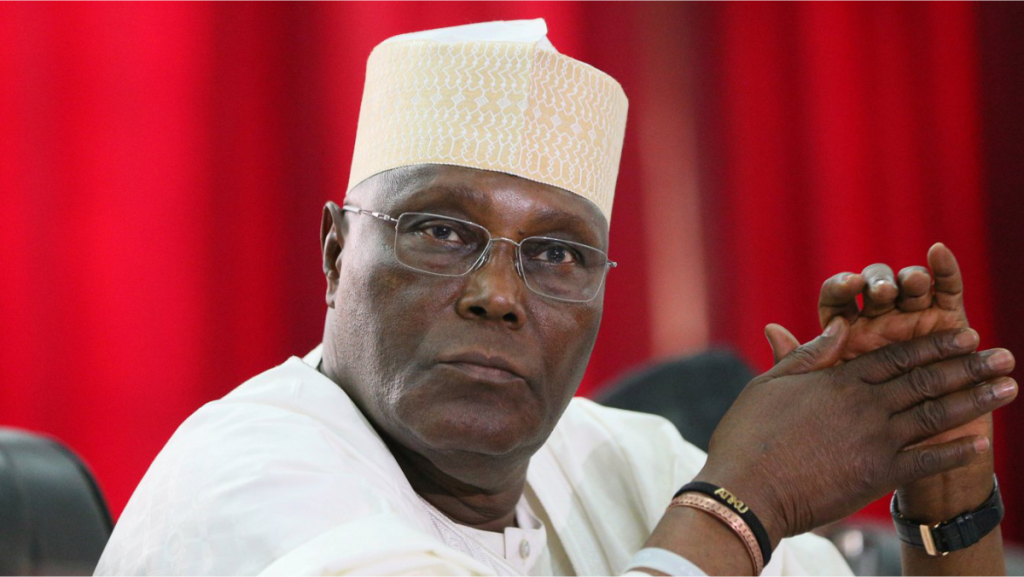

Atiku's fuel subsidy pledge shows serious ignorance of governance, economy, Tinubu
Translated from English, summarized and contextualized by DistantNews.
At a glance
News
Named sources
Context piece
- President Bola Tinubu criticized Atiku Abubakar's pledge to reinstate the fuel subsidy, calling it a sign of "serious ignorance" of governance and the economy.
- Tinubu argued that removing the subsidy has enabled states to fund essential services and infrastructure, benefiting ordinary Nigerians.
- He urged Governor Ademola Adeleke to focus on governance and unity following his re-election, using his own presidency as an example of divine and popular will.
President Bola Tinubu has sharply criticized a pledge by his political opponent, Atiku Abubakar, to restore the fuel subsidy if elected in 2027. Tinubu described the promise as a demonstration of "serious ignorance" regarding the complexities of governance and the Nigerian economy. The President made these remarks while receiving Osun State Governor Ademola Adeleke at the Presidential Villa in Abuja, following Adeleke's recent re-election victory.
I saw one of my opponents now say he will go back to subsidy. I read it. That is a demonstration of a serious ignorance on governance and economy.
Tinubu highlighted the dire fiscal situation of many Nigerian states prior to the subsidy's removal, noting that 27 states struggled to pay salaries, let alone pensions. He recounted instances of states needing federal assistance, with some governors earning the moniker 'half salary.' The President asserted that the subsidy removal has directly benefited ordinary Nigerians by freeing up funds for states and local governments to meet their basic obligations and invest in crucial areas.
Before I came here, 27 states are unable to pay salaries, not to even talk of pensioners, salary of workers. I know a man in your state that I raised who is nicknamed ‘half salary.’ They come to the federal, capping hand, unable to do anything.
"Salary you pay for each family, they were at the local governments, they are in the states," Tinubu stated, emphasizing that the resources now allow for investments in infrastructure, education, and healthcare. He urged Governor Adeleke, using his re-election as a case study, to translate the electoral mandate into tangible governance rather than mere triumphalism. Tinubu advised Adeleke to focus on reconciliation and expanding his influence, suggesting that true gratitude to the people is shown through action and effective governance.
All for the reconciliation, expand your coast. That is the only way you can give thanks to our people. Not the way you sang it or celebrated it. It’s the way you act it.
President Tinubu positioned his own presidency as an example of divine and popular will, not just political maneuvering. He encouraged Adeleke to leverage his unique position to foster unity, peace, and stability, and to consolidate his electoral momentum into democratic values. "Promote democracy. Promote stability. Promote rule of law," Tinubu advised the governor, stressing the importance of shaping a lasting legacy beyond the immediate electoral win.
You are in a very, very unique position to make history, promote unity, peace and stability. Use it.
DistantNews Editorial
Originally published by The Punch in English. Translated, summarized, and contextualized by our editorial team with added local perspective. Read our editorial standards.
More Stories


From Our Blog

How the Same Story Looks Different in Different Countries

What Gets Lost (and Found) When News Is Translated

The Critical Role of Diaspora Media in Global News

What Travellers Should Know About Countries with Restricted Press

A Digital Nomad's Guide to Following Local News
