


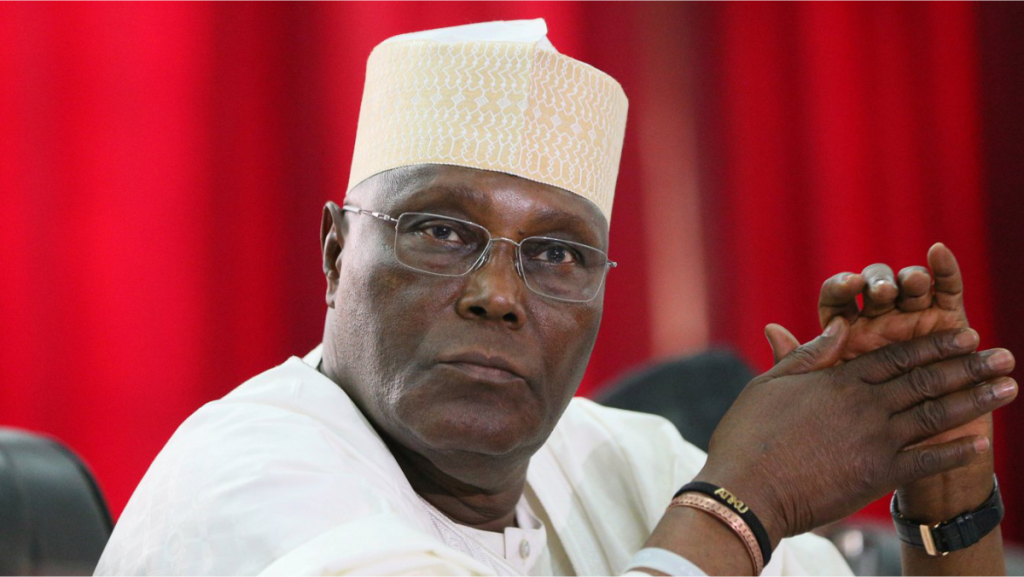
Subsidy removal: Atiku is a hypocrite, renegade - Presidency
Summarized and contextualized by DistantNews.
At a glance
News
Official statement
New plan
- Nigeria's Presidency criticized former Vice President Atiku Abubakar's promise to restore fuel subsidies if elected in 2027.
- The Presidency accused Atiku of hypocrisy and a regressive volte-face, arguing he previously supported subsidy removal.
- Officials stated restoring subsidies is fiscally irresponsible, citing the Petroleum Industry Act and the NNPC's existing liabilities.
Nigeria's Presidency has strongly criticized former Vice President Atiku Abubakar's recent pledge to reinstate fuel subsidies if elected in 2027. The Presidency labeled Abubakar's comment as a "desperate and regressive volte-face," accusing him of opportunistically recanting his previous stance on subsidy removal just five months before the election.
Against expectations that he would announce a more creative and ingenious alternative to the programme being executed by the Tinubu administration, Atiku Abubakar behaved like a man from an archaic past who least comprehends the present economic dynamics and suggested that he would restore the much-abused, wasteful, pillaged, corruption-ridden fuel subsidy regime, which the Petroleum Industry Act made illegal from the end of June, 2023.
In a statement issued by Bayo Onanuga, Special Adviser to the President on Information and Strategy, the Presidency argued that Abubakar's proposal demonstrates a lack of understanding of current economic dynamics. They asserted that restoring the "much-abused, wasteful, pillaged, corruption-ridden fuel subsidy regime" would be a step backward. The Presidency highlighted that the Petroleum Industry Act made fuel subsidies illegal from June 2023, and noted that Abubakar himself had previously advocated for their elimination.
Even though he used to believe that the subsidy regime must be eliminated, a point he canvassed in the run-up to his defeat in the 2023 election, he has now opportunistically recanted the major plank of his economic doctrine and turned a renegade.
The Presidency suggested Abubakar's promise is a desperate electoral tactic, lacking fiscal sense and running counter to the genuine interests of Nigerians. They emphasized that restoring the subsidy regime is not a simple or cost-free endeavor. Officials explained that the subsidy was not a direct disbursement from the treasury but represented massive discounts offered by the Nigerian National Petroleum Corporation (NNPC), selling petrol below cost and creating significant unpaid liabilities on the NNPC's books.
Desperate for power, he needed to make a promise that he knew, if he were candid with our people, does not make fiscal sense, is retrogressive, and is against the genuine interest of the people.
Dismissing Abubakar's claim of a N30 trillion subsidy windfall as "imaginary," the Presidency reiterated that the Petroleum Industry Act dismantled the subsidy framework. They clarified that the subsidy represented under-recoveries and massive losses for the NNPC, with trillions of Naira in subsidy costs still unpaid and sitting on the corporation's balance sheet.
It is not some money sitting in the treasury to be disbursed to offer cheap fuel to Nigerians. It is the massive discount the NNPC offered the Nigerian government: selling fuel it bought at N100 at N50 at the pump, leading to under-recovery of costs and massive losses.
DistantNews Editorial
Originally published by Vanguard. Summarized and contextualized by our editorial team with added local perspective. Read our editorial standards.
More Stories


From Our Blog

How the Same Story Looks Different in Different Countries

What Gets Lost (and Found) When News Is Translated

The Critical Role of Diaspora Media in Global News

What Travellers Should Know About Countries with Restricted Press

A Digital Nomad's Guide to Following Local News
