

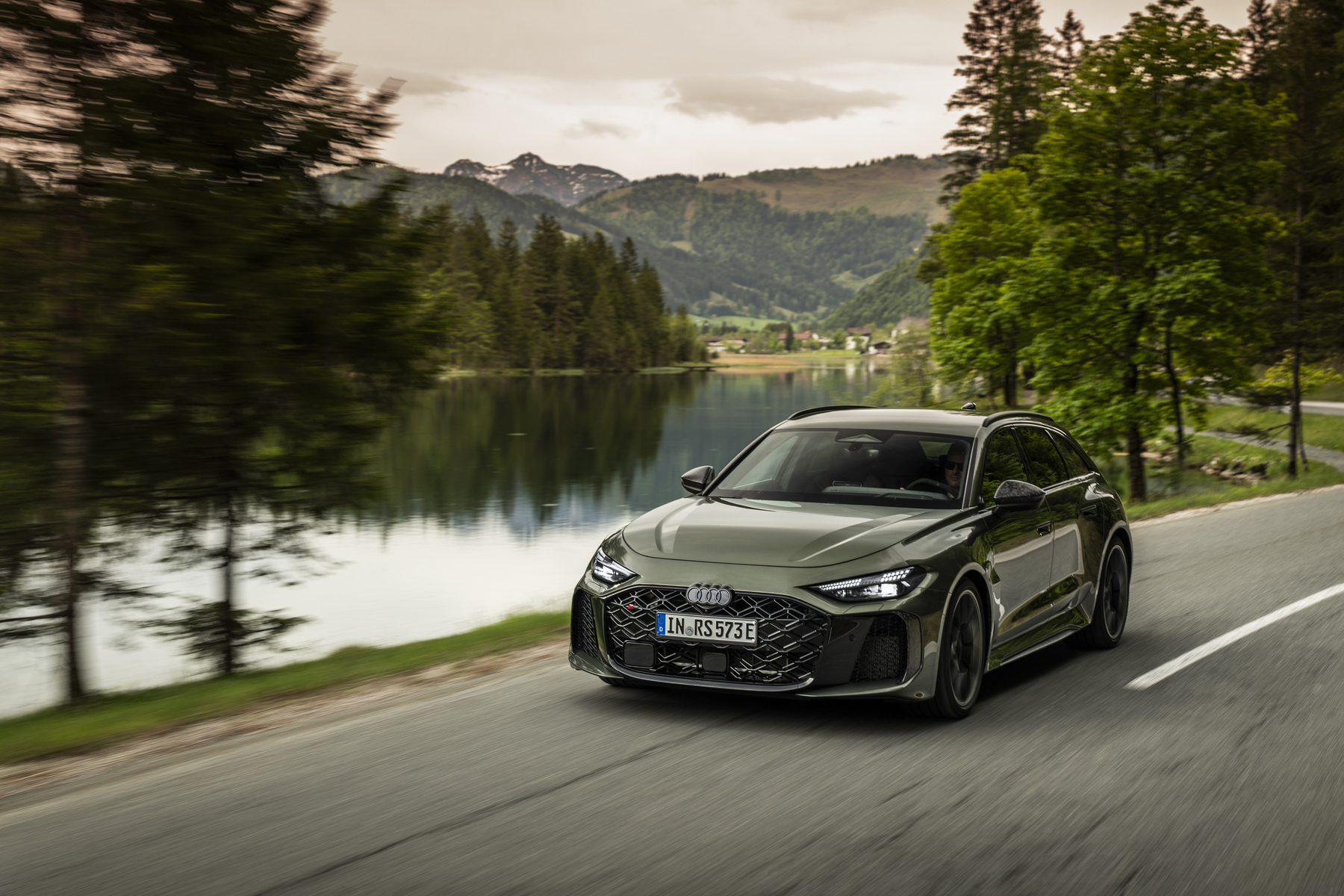
Audi RS 5 goes plug-in hybrid amid CO2 pressure
Translated from German, summarized and contextualized by DistantNews.
At a glance
News
Sources not specified
Context piece
- Audi has released a new RS 5 generation that is a plug-in hybrid, continuing a trend for performance car labels to use this technology to meet CO2 regulations.
- The new RS 5's plug-in hybrid system adds significant weight, pushing its curb weight close to two and a half tons, a substantial increase from its predecessor.
- Despite the added weight, engineers have worked to improve handling with a new rear-axle transmission, though the car's weight still impacts braking and cornering dynamics.
Audi's performance division, known for its "RS" models, is embracing plug-in hybrid technology with the new RS 5. This move aligns with industry trends where brands like BMW's "M" and Mercedes' "AMG" use PHEVs to balance high horsepower figures with increasingly strict CO2 emissions standards. In regions like Austria, where CO2 penalties are significant, the tax advantages of PHEVs offer a clear benefit.
For the rabid labels from Audi (RS), BMW (M) and Mercedes (AMG), PHEV has now become the standard solution to be able to present mighty PS on paper without CO2 excess.
However, this technological shift comes with a considerable drawback: added weight. The RS 5, especially when equipped with optional extras, now approaches a curb weight of 2.5 tons, a figure more commonly associated with large SUVs. This represents a 620-kilogram increase compared to its predecessor, the RS 4. While Audi engineers have strived to mitigate the perceived weight through chassis refinements and a new quattro rear-axle transmission, the substantial mass remains a challenge.
The downside is the considerable additional weight that one brings with it, which weighs all the heavier, especially in a very sporty car.
The advanced rear-axle transmission features an electromechanical torque vectoring system, capable of distributing torque between the left and right rear wheels. This system, utilizing an 8 kW/40 Nm high-voltage actuator, a superimposed gearbox, and a conventional differential, operates even without throttle input, influencing dynamics during braking. The goal is to enhance rear-axle agility and allow for greater, more controllable lateral movement.
Compared to the RS 4 as the predecessor, that is plus 620 kilograms.
Initial road tests suggest the car eagerly tackles corners, gripping tenaciously. Yet, the significant weight becomes apparent during hard braking. Drivers may find themselves braking too late for clean turn-in, leading to pronounced understeer. It remains to be seen how keenly the target customer base will engage with these nuanced dynamic capabilities, though straight-line performance is unlikely to be an issue.
The rear axle is more agilely involved in the action and allows for more, but better controllable, lateral dynamics.
DistantNews Editorial
Originally published by Die Presse in German. Translated, summarized, and contextualized by our editorial team with added local perspective. Read our editorial standards.
More Stories


From Our Blog

What Gets Lost (and Found) When News Is Translated

The Critical Role of Diaspora Media in Global News

What Travellers Should Know About Countries with Restricted Press

A Digital Nomad's Guide to Following Local News

How the Same Story Looks Different in Different Countries
