

Audi Unveils Nuvolari: The 1001 HP Successor to the R8
Translated from Hungarian, summarized and contextualized by DistantNews.
At a glance
News
Named sources
New plan
- Audi has unveiled the Nuvolari, the successor to its R8 supercar.
- The Nuvolari boasts 1001 horsepower and accelerates from 0-100 km/h in 2.6 seconds.
- It features a new 'Quattro Predictive Ride' all-wheel-drive system and a lightweight carbon-fiber construction.
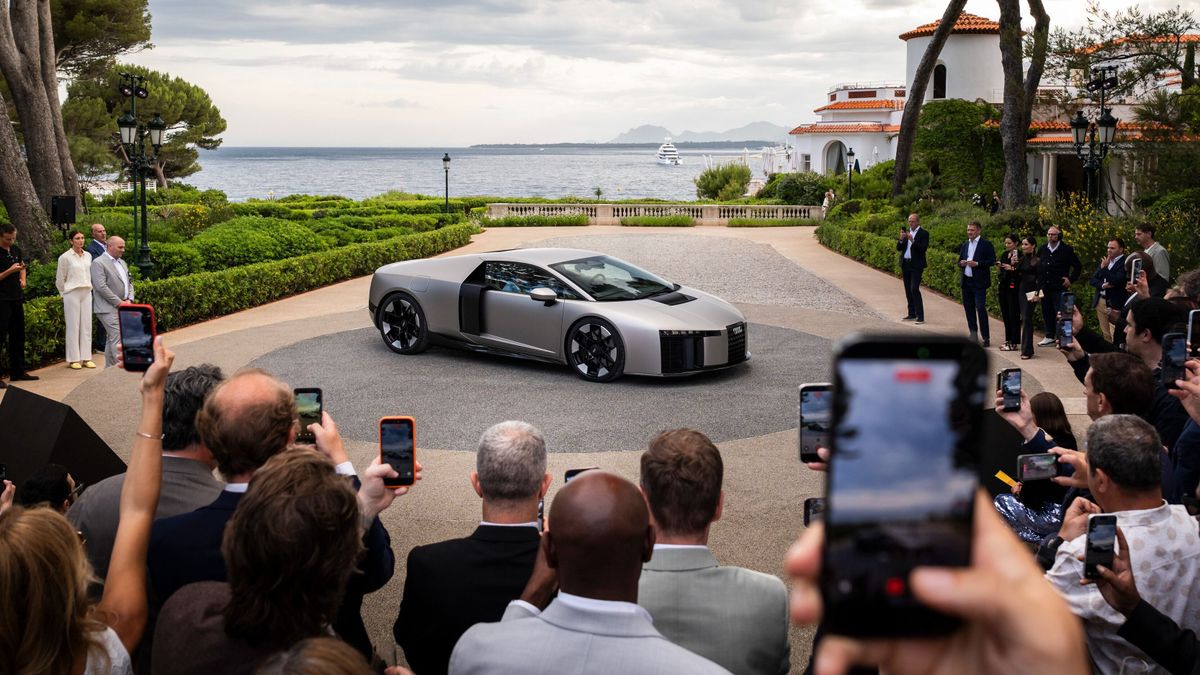
Audi has officially revealed the Nuvolari, the highly anticipated successor to its R8 supercar, showcasing a significant leap in performance and technology. The Nuvolari commands an impressive total system output of 1001 horsepower, an increase of 80 horsepower over its predecessor, attributed to custom software and a larger battery. This power enables the approximately 1.7-ton vehicle to accelerate from 0 to 100 km/h in a mere 2.6 seconds, and reach 200 km/h in 6.8 seconds, surpassing the R8's figures. The car's top speed is rated at 350 km/h. Central to its performance is the new 'Quattro Predictive Ride' all-wheel-drive system, which Audi describes as next-generation. This system continuously monitors steering angle, acceleration, yaw rate, and grip to dynamically distribute torque to the wheels. It independently controls the front electric motors and can utilize braking and active aerodynamics to enhance traction. Drivers can select from various modes, including E-Hybrid, Balanced, Dynamic, Dynamic+, and Track, via a steering wheel control. The Nuvolari rides on 21-inch wheels fitted with Bridgestone Potenza tires. Braking is handled by a system featuring ten-piston fixed calipers with 420 mm carbon-ceramic discs at the front and four-piston calipers with 410 mm discs at the rear. This model marks Audi's first production car to utilize a spaceframe structure combined with carbon-fiber exterior panels, employing carbon-fiber reinforced polymer (CFRP) extensively, similar to Formula 1 cars. Aerodynamic elements, including a movable rear wing with three settings and an active drag reduction system (DRS), are designed to optimize downforce, drag, and balance. Audi F1 drivers Gabriel Bortoleto and Nico Hülkenberg provided feedback for the aerodynamic package's fine-tuning. The car also incorporates large front air intakes for cooling the brakes and electric motors, along with an S-channel for downforce and drivetrain cooling at high speeds.
DistantNews Editorial
Originally published by Magyar Nemzet in Hungarian. Translated, summarized, and contextualized by our editorial team with added local perspective. Read our editorial standards.
More Stories



From Our Blog

Countries Without a Free Press: What You Need to Know

What Press Freedom Means for the News You Read

What Gets Lost (and Found) When News Is Translated

The Critical Role of Diaspora Media in Global News

What Travellers Should Know About Countries with Restricted Press
