


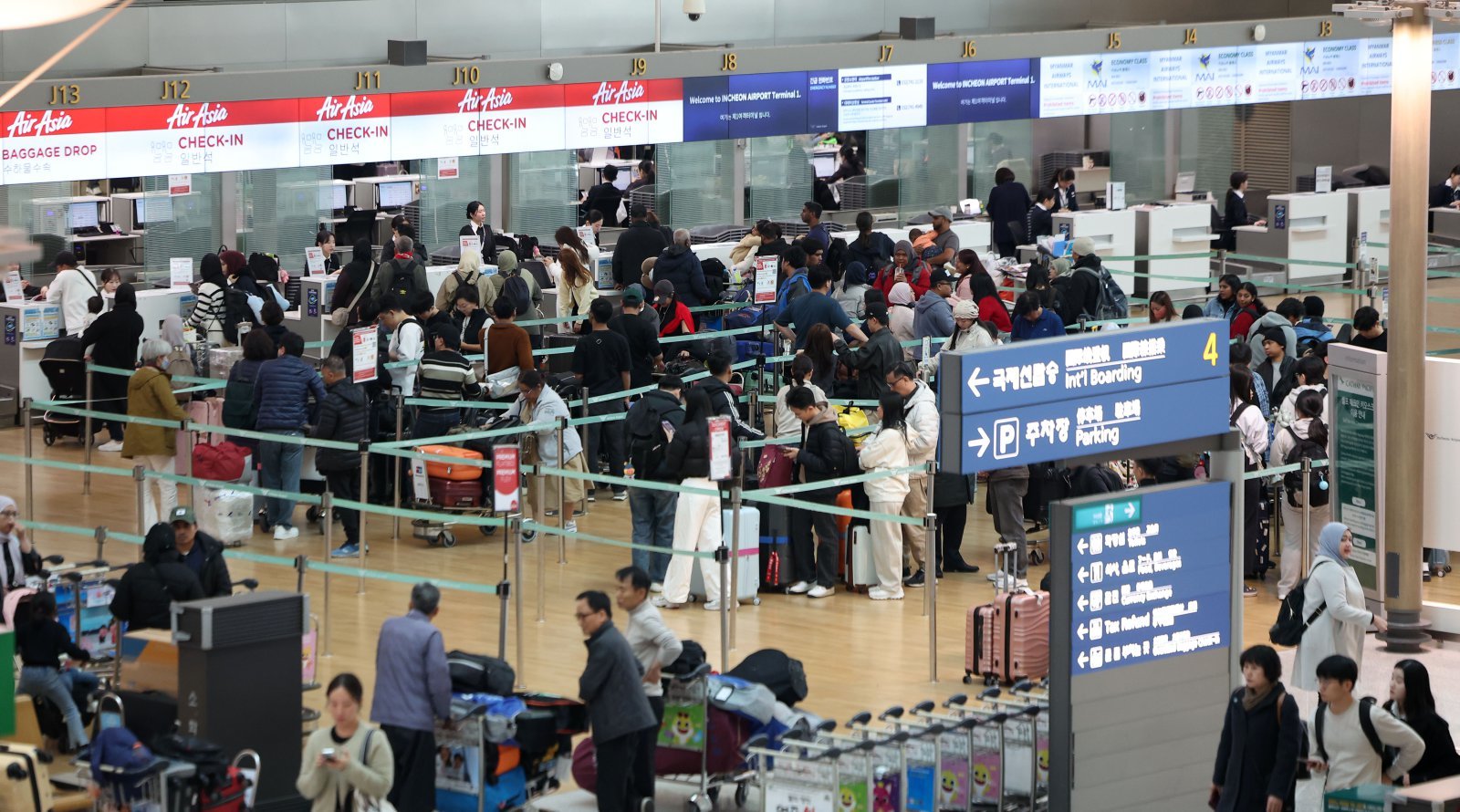
Audit: 13 Incheon Airport facilities risk collapse in 6.1-6.5 magnitude earthquakes
Translated from Korean, summarized and contextualized by DistantNews.
At a glance
News
Official statement
Under investigation
- An audit revealed that 13 facilities at Incheon International Airport are at risk of collapse during earthquakes of magnitude 6.1-6.5.
- The Board of Audit and Inspection found that the airport authority failed to properly assess the seismic resistance of existing structures.
- Some facilities do not meet current seismic design standards, posing a significant safety risk.
A recent audit has exposed a critical safety flaw at Incheon International Airport, revealing that 13 of its facilities are at risk of collapse during earthquakes measuring between 6.1 and 6.5 magnitude. The Board of Audit and Inspection (BAI) conducted an investigation into the airport's seismic safety measures.
The BAI's report indicates that the Incheon International Airport Corporation did not adequately assess the seismic resistance of its existing structures. This oversight means some facilities fail to meet current seismic design standards, creating a potential hazard for passengers and staff.
As the responsible disaster management agency, the airport authority is obligated to evaluate and reinforce existing facilities. The audit noted that seismic design standards were strengthened following the 2016 Gyeongju and 2017 Pohang earthquakes. However, the corporation only assessed 40 structures built without seismic considerations at the time of completion, neglecting the remaining 142 facilities based on the assumption they met older standards.
During the audit, the BAI, in conjunction with the Korea Infrastructure Safety & Technology Agency, conducted a preliminary seismic performance assessment of 23 airport facilities that have been in operation for over 20 years. The findings confirmed that 13 of these structures do not meet the required seismic resistance, highlighting a serious deficiency in the airport's safety infrastructure.
DistantNews Editorial
Originally published by Dong-A Ilbo in Korean. Translated, summarized, and contextualized by our editorial team with added local perspective. Read our editorial standards.
More Stories


From Our Blog

What Gets Lost (and Found) When News Is Translated

The Critical Role of Diaspora Media in Global News

What Travellers Should Know About Countries with Restricted Press

A Digital Nomad's Guide to Following Local News

How the Same Story Looks Different in Different Countries
