


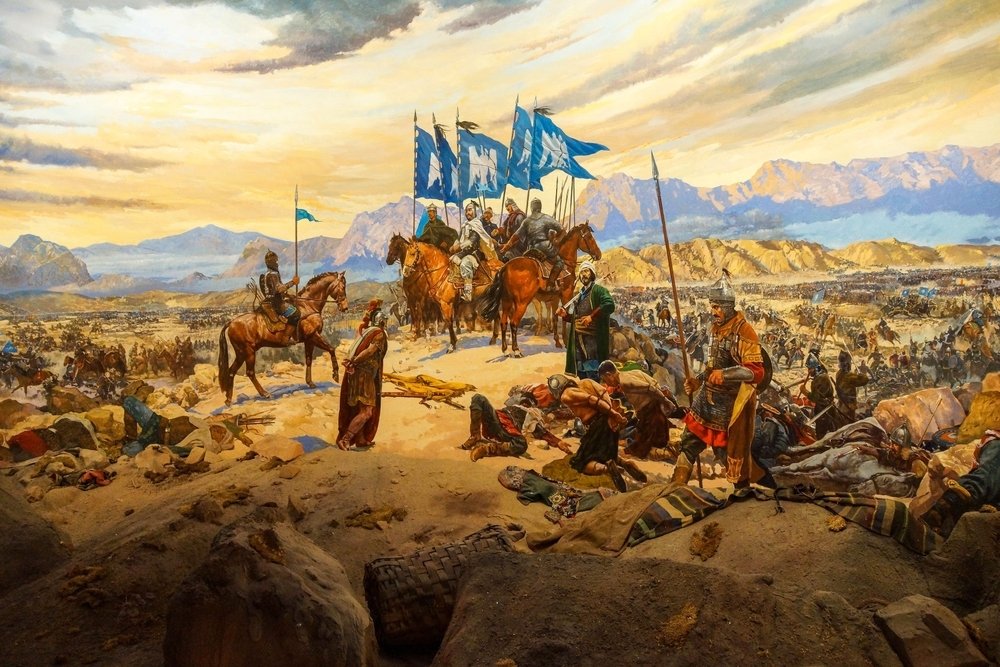
Aug. 26: Day Turks made Anatolia their homeland and protected it
Summarized and contextualized by DistantNews.
At a glance
In-depth
Sources not specified
Context piece
- August 26 holds immense historical significance for Türkiye, commemorating two pivotal events: the 1071 Battle of Manzikert and the 1922 Great Offensive.
- The Battle of Manzikert marked the beginning of Turkish entry into Anatolia, while the Great Offensive consolidated the Turkish presence in the region.
- The article details the historical context and military strategies of both battles, highlighting their role in shaping Turkish national identity.
August 26 is a date of profound historical weight in Türkiye, symbolizing the nation's enduring presence in Anatolia through two defining moments: the Battle of Manzikert in 1071 and the Great Offensive of 1922. These events transcend mere historical markers, serving as cornerstones of Turkish national identity.
The Battle of Manzikert, a clash between the Seljuk Turks led by Sultan Alp Arslan and the Byzantine Empire under Emperor Romanos IV Diogenes, was a watershed moment. Despite being outnumbered, Alp Arslan's forces employed a strategic feigned retreat, luring the overconfident Byzantine army into a trap. This decisive victory opened the doors for Turkish migration and settlement in Anatolia, initiating a process that would transform the region into the Turkish homeland.
Centuries later, on August 26, 1922, the Great Offensive began. This military campaign was the decisive phase of the Turkish War of Independence, solidifying Turkish sovereignty and presence in Anatolia. The victory ensured the consolidation of the Turkish nation-state, building upon the historical foundations laid by earlier migrations and battles.
DistantNews Editorial
Originally published by Daily Sabah. Summarized and contextualized by our editorial team with added local perspective. Read our editorial standards.
More Stories

From Our Blog

What Gets Lost (and Found) When News Is Translated

The Critical Role of Diaspora Media in Global News

What Travellers Should Know About Countries with Restricted Press

A Digital Nomad's Guide to Following Local News

How the Same Story Looks Different in Different Countries
