


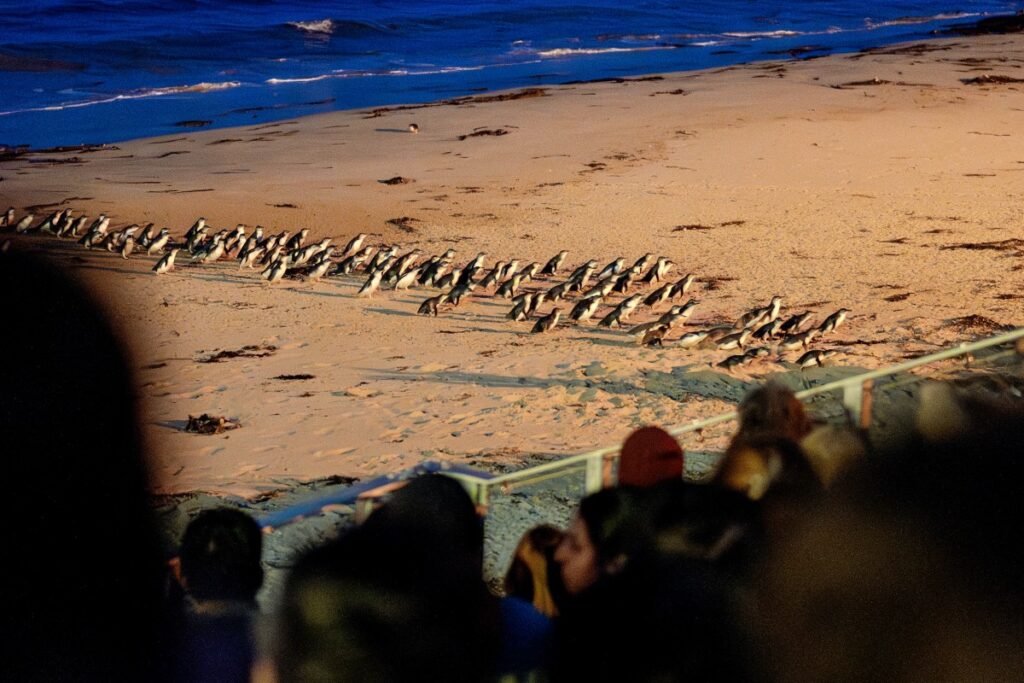
Australia races to vaccinate wild penguins against bird flu
Translated from English, summarized and contextualized by DistantNews.
At a glance
News
From a news agency
Ongoing story
- Australian wildlife workers are vaccinating wild little penguins against the H5N1 avian influenza virus.
- The effort is unprecedented, aiming to protect the world's largest colony of little penguins on Phillip Island from the virus, which recently infected a penguin there.
- The vaccination program faces challenges due to the need for two doses per bird but utilizes the penguins' familiarity with human presence for the procedure.
Wildlife workers in Australia have initiated a large-scale vaccination campaign for wild little penguins, a measure described as "unprecedented" globally. The effort targets the H5N1 avian influenza virus, which has recently been detected in a penguin on Phillip Island, home to the world's largest colony of these birds.
The little penguins, also known as fairy penguins, are the smallest penguin species and are a major tourist attraction on Phillip Island, where up to 40,000 seabirds gather during the breeding season. The virus's presence in the colony poses a significant threat to their survival.
This is unprecedented. There has been no vaccination of this scale in a wild population anywhere in the world.
James Todd, chief biodiversity officer for the state of Victoria, highlighted the challenges of vaccinating wild populations, particularly the need for two doses per bird. However, he noted that experts are familiar with the penguins' burrows and their tolerance for human presence, aided by the existing "penguin parade" tourist setup. The vaccination teams aim to inoculate approximately 5,000 penguins near visitor areas over several weeks or months.
Trying to vaccinate wild populations is almost impossible, partly because you need two doses of the vaccine.
DistantNews Editorial
Originally published by Jamaica Observer in English. Translated, summarized, and contextualized by our editorial team with added local perspective. Read our editorial standards.
More Stories
From Our Blog

What Gets Lost (and Found) When News Is Translated

The Critical Role of Diaspora Media in Global News

What Travellers Should Know About Countries with Restricted Press

A Digital Nomad's Guide to Following Local News

How the Same Story Looks Different in Different Countries
