


Austria Defeats Germany for UN Security Council Seat, Hailed as Diplomatic Triumph
Translated from German, summarized and contextualized by DistantNews.
At a glance
Analysis
Named sources
Outcome reported
- Austria secured a seat on the UN Security Council, defeating Germany in the first round of voting.
- Germany's loss is attributed to a late campaign start, perceived entitlement to a semi-permanent seat, and potential alienation of Global South members over its stance on Ukraine and Israel.
- The article criticizes the lengthy and resource-intensive election process, urging European nations to coordinate better in the future.
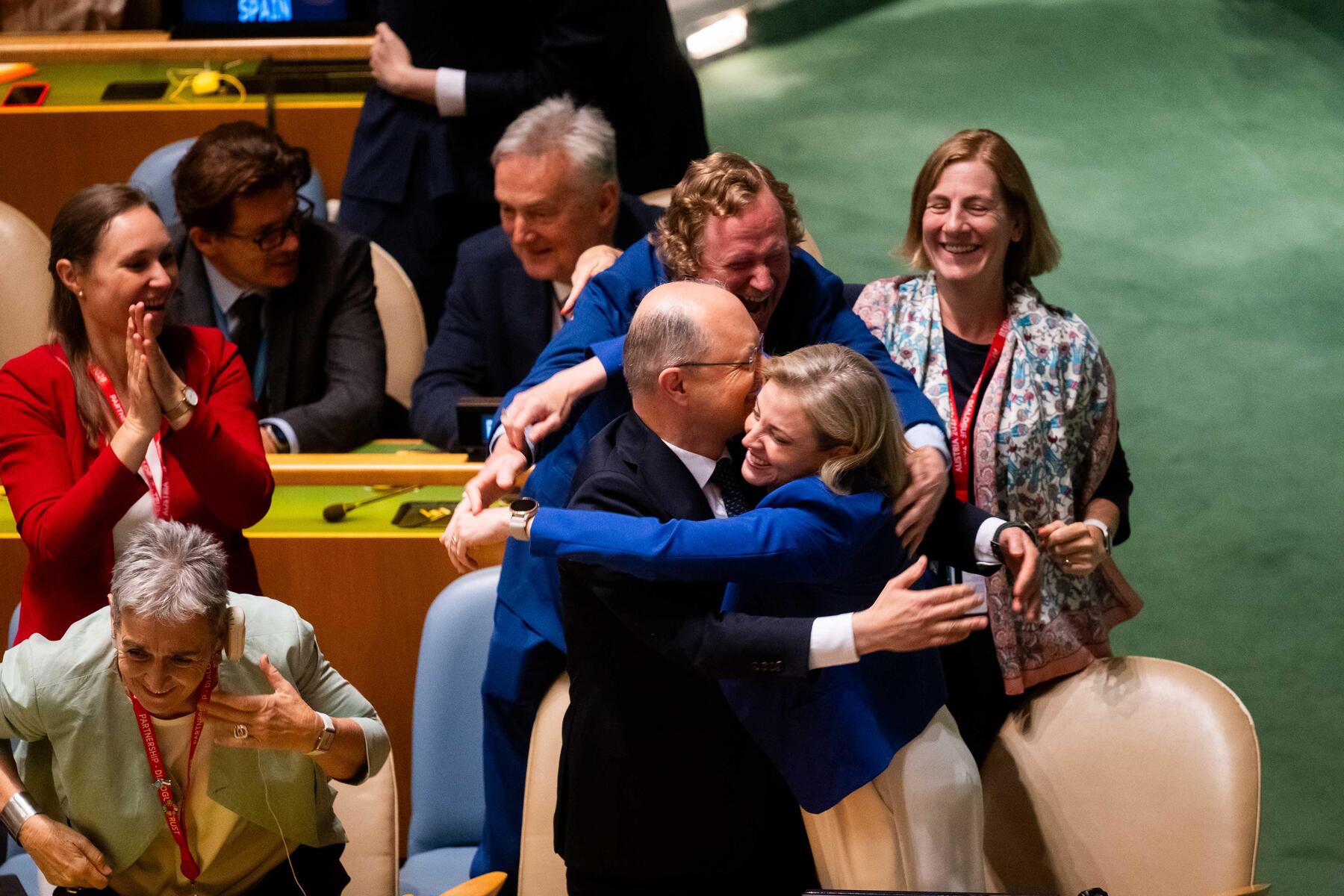
Austria celebrated a significant diplomatic victory as it secured a non-permanent seat on the United Nations Security Council, decisively defeating Germany in the first round of voting. The triumph, marked by jubilant scenes involving Austrian Foreign Minister Beate Meinl-Reisinger and her team at UN headquarters, saw Austria and Portugal achieve the necessary two-thirds majority against Germany.
The joy was unmistakable. Foreign Minister Beate Meinl-Reisinger and her team celebrated at the United Nations headquarters as if they had won a world championship.
Germany's defeat is described as a "bitter embarrassment," attributed to several factors. These include a significantly later start to their campaign compared to their European rivals, an inability to overcome the deficit despite financial arguments, and a perception among some member states that Germany seeks a semi-permanent position on the council. Furthermore, Chancellor Friedrich Merz's absence from the previous year's UN General Assembly was noted as a sign of "arrogance."
The article also suggests that Germany's strong solidarity with Ukraine and Israel may not resonate well with certain member states in the Global South. Johann Wadephul, Germany's CDU Foreign Minister, cited Russian efforts to campaign against Germany following the vote. The defeat is also framed as a "dwarf revolt," with Austria successfully appealing to the 108 UN members belonging to smaller states with populations under ten million, as well as non-aligned nations.
For Germany, the defeat is a bitter embarrassment. The second-largest contributor to the United Nations failed clearly.
Despite Austria's strategic success, the author criticizes the 15-year duration of the election campaign as an "absurd waste of time, energy, and resources." The piece calls for greater coordination among European countries in future Security Council bids, suggesting that Austria should actively engage and advocate for international law, not just occupy a seat passively.
This is an absurd waste of time, energy, and resources.
DistantNews Editorial
Originally published by Die Presse in German. Translated, summarized, and contextualized by our editorial team with added local perspective. Read our editorial standards.
More Stories


From Our Blog

What Gets Lost (and Found) When News Is Translated

The Critical Role of Diaspora Media in Global News

What Travellers Should Know About Countries with Restricted Press

A Digital Nomad's Guide to Following Local News

How the Same Story Looks Different in Different Countries
