


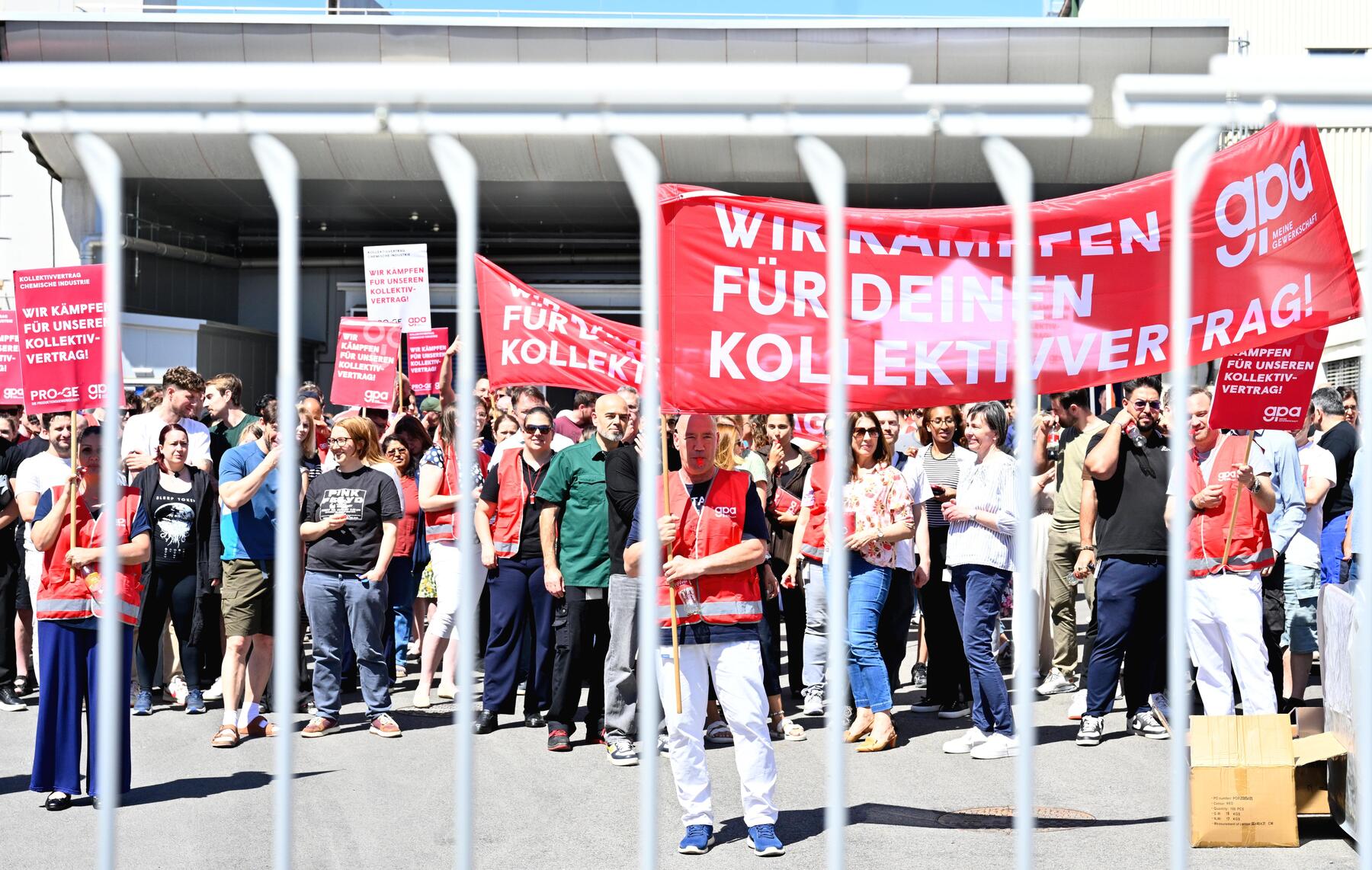
Austrian chemical industry faces strikes amid wage deadlock
Translated from German, summarized and contextualized by DistantNews.
At a glance
News
Named sources
Ongoing story
- Austrian chemical industry unions and employers are in a stalemate over wage negotiations, with strikes planned.
- Employers offer a 0.79% annual wage increase, while unions demand at least inflation-level raises (3.35%).
- Austria's competitiveness has been weakened by higher wage growth than the Eurozone average since 2022, but economists see a trend reversal with recent wage hikes below inflation.
Wage negotiations for approximately 50,000 employees in Austria's chemical industry have broken down, leading to planned strikes. Employers have proposed an average annual wage increase of just 0.79%, a figure significantly below the current inflation rate of 3.35%. Unions, however, insist that wage hikes should at least match inflation, deeming the employers' offer insufficient.
The dispute highlights a broader economic concern in Austria: the impact of wage growth on national competitiveness. From 2022 to 2025, wages in Austria rose eight percentage points more than in the Eurozone, and unit labor costs increased six percentage points more. This trend weakened the price competitiveness of Austrian companies, particularly concerning for a nation where exports account for nearly 60% of its GDP.
Strikes harm the location, but excessively high settlements harm it even more.
However, economists observe a potential shift. Since late 2025, wage increases have largely fallen below the inflation rate. The Austrian National Bank (OeNB) notes in a recent study that this trend could help dampen inflation's second-round effects, where rising wages fuel further price increases. This moderation is crucial for an economy susceptible to imported inflation, especially after events like the Russian invasion of Ukraine significantly impacted energy prices and, consequently, production costs.
This contributes to the relative unit labor cost position against the Eurozone not worsening further, and could dampen second-round effects on inflation.
DistantNews Editorial
Originally published by Die Presse in German. Translated, summarized, and contextualized by our editorial team with added local perspective. Read our editorial standards.
More Stories

From Our Blog

What Gets Lost (and Found) When News Is Translated

The Critical Role of Diaspora Media in Global News

What Travellers Should Know About Countries with Restricted Press

A Digital Nomad's Guide to Following Local News

How the Same Story Looks Different in Different Countries
