


Austrian Government's Reforms Questioned on TV: Critics Advise Prayer, Proponents Defend Actions
Translated from German, summarized and contextualized by DistantNews.
At a glance
Analysis
Sources not specified
Context piece
- Austrian coalition government's reform efforts are debated, with critics questioning their boldness and impact.
- Government officials defend their actions, citing measures to combat inflation and take responsibility during a difficult economic period.
- Analysts express skepticism, suggesting prayers might be more effective than current policies for significant national progress.
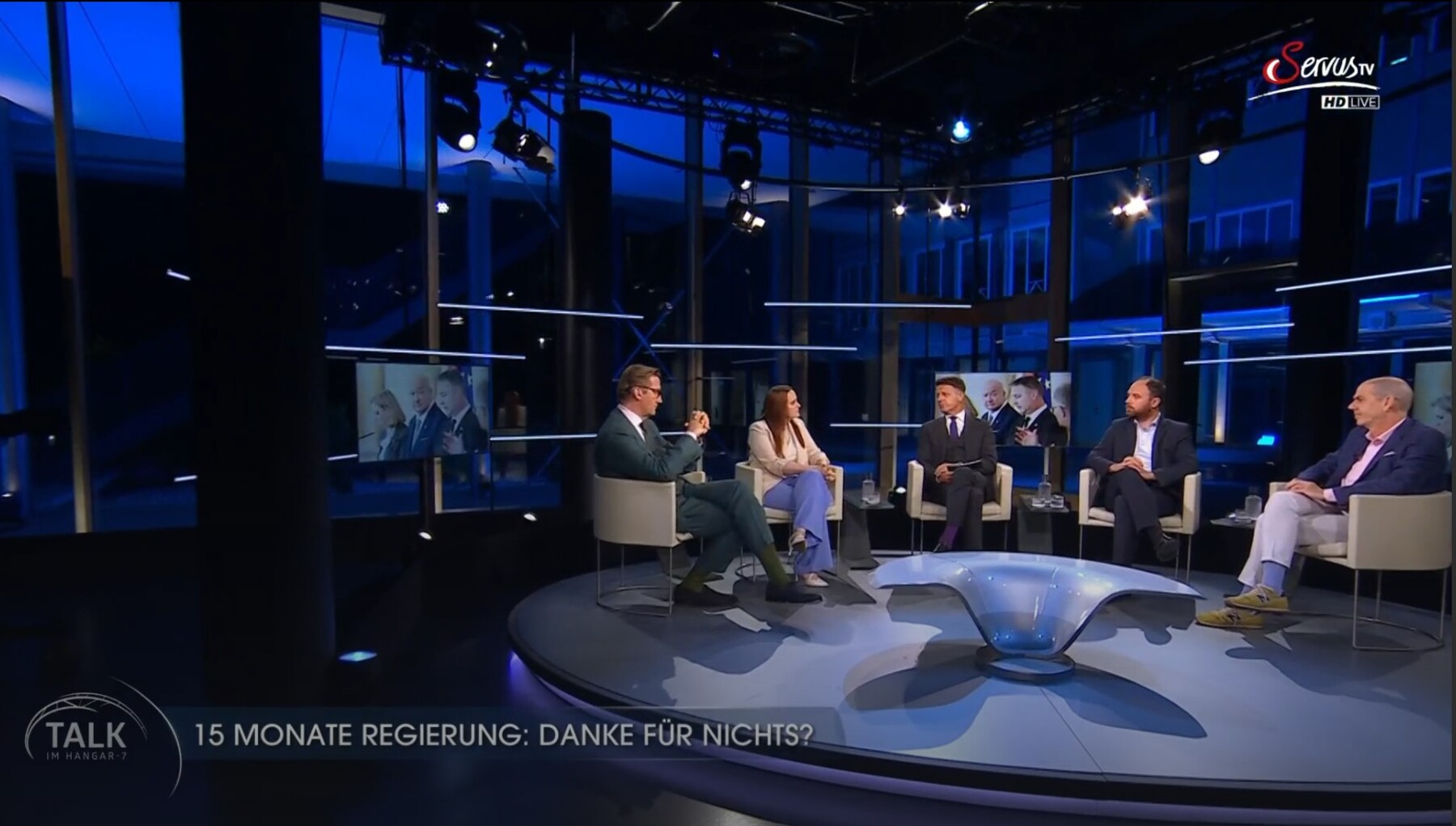
Austrian Chancellor Christian Stocker's coalition government, dubbed the "government of reforms," faced scrutiny on Servus TV's "Talk im Hangar 7." The program's host, Michael Fleischhacker, questioned whether the government's actions truly constituted reforms or merely financial consolidation.
We can speak of a government of reforms. After all, the SPÖ consciously decided, despite the greatest budget deficit of the Second Republic and difficult national and international circumstances, to enter the coalition and 'take responsibility'.
SPÖ federal managing director Klaus Seltenheim defended the coalition's decision to enter government despite the Second Republic's largest budget deficit and challenging economic conditions. He argued that the party chose to "clean up the mess" and combat inflation through various measures, including packages addressing rent, fuel prices, and value-added tax, totaling approximately 1.5 billion euros in inflation-dampening funds. Seltenheim asserted that this was not inaction but a concerted effort.
Praying – that might help.
However, pollster Peter Hajek expressed doubt about the government's ability to inspire private investment and business confidence. He suggested that the current approach relied more on "the principle of hope" than on concrete, encouraging actions. Hajek wryly advised "praying" as a potential catalyst for significant forward movement for both the government and the country, implying current policies might be insufficient.
It was clear from the beginning that this government would not be a success project.
Laura Sachslehner, former ÖVP general secretary and now editor-in-chief of "Exxpress," was more critical. She stated it was "clear from the beginning" that the government would not be a "success project." Sachslehner attributed the "manageable" satisfaction among the government's own voters, as shown in polls, partly to the leadership of Andreas Babler within the SPÖ, suggesting it hinders genuine reform progress. Fleischhacker countered that compromises are inevitable when three parties collaborate, a point Sachslehner met with visible skepticism, calling "compromise" a common excuse.
I honestly have to roll my eyes a bit at the word compromise. Because that's sort of the standard excuse you hear in the...
DistantNews Editorial
Originally published by Die Presse in German. Translated, summarized, and contextualized by our editorial team with added local perspective. Read our editorial standards.
More Stories


From Our Blog

What Gets Lost (and Found) When News Is Translated

The Critical Role of Diaspora Media in Global News

What Travellers Should Know About Countries with Restricted Press

A Digital Nomad's Guide to Following Local News

How the Same Story Looks Different in Different Countries
