


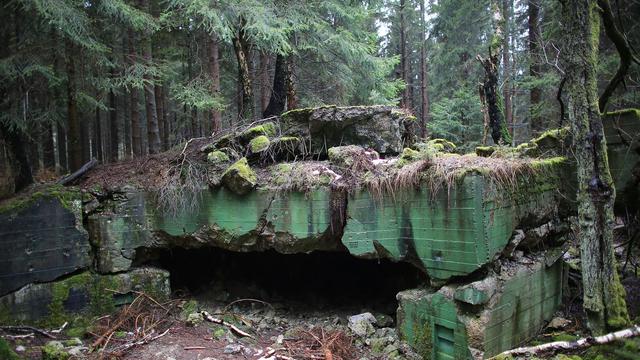
Background: Death Trap: The Battle of Hürtgen Forest 1944/45
Translated from German, summarized and contextualized by DistantNews.
At a glance
News
From a news agency
Outcome reported
- The Hürtgen Forest, a 140-square-kilometer area in Germany's Eifel region, was the site of one of World War II's most brutal battles in 1944-45.
- For the US Army, aiming to advance towards Cologne, the battle became one of the costliest in Europe, earning the forest the nickname "Death Factory."
- The dense, difficult terrain and German defenses made it a major obstacle, and the area remains hazardous due to unexploded ordnance.
In the autumn and winter of 1944-45, the Hürtgen Forest in Germany's Eifel region became the stage for one of World War II's most ferocious and costly battles. Spanning approximately 140 square kilometers between Aachen, Düren, and the Rur river, this dense woodland proved to be a devastating obstacle for the advancing Allied forces.
For the U.S. Army, which was pushing towards Cologne from Belgium, the engagement in the Hürtgen Forest turned into one of the most devastating campaigns in the European theater. American soldiers grimly nicknamed the area the "Death Factory" due to the horrific casualties and the relentless nature of the fighting. The challenging terrain, characterized by steep slopes and narrow valleys, combined with formidable German defenses along the Westwall, significantly hampered the American advance.
The German Wehrmacht exploited delays caused by supply issues and fortified positions to regroup and strengthen their defenses. They established bunkers, positioned heavy artillery, and laid extensive minefields, transforming the forest into a deathtrap. The dense, dark canopy also limited the effectiveness of tanks and air support, forcing U.S. troops into brutal close-quarters combat.
Writer Ernest Hemingway, who accompanied the troops as a war correspondent, is said to have later incorporated the experience of this senseless killing into his novel "Across the River and into the Trees." The U.S. Army did not reach the Rhine River until early March 1945, marking the culmination of this arduous campaign. Even after the war's end, the Hürtgen Forest remained a dangerous place due to the vast number of mines, posing an ongoing challenge for bomb disposal units.
DistantNews Editorial
Originally published by Die Zeit in German. Translated, summarized, and contextualized by our editorial team with added local perspective. Read our editorial standards.
More Stories



From Our Blog

What Gets Lost (and Found) When News Is Translated

How the Same Story Looks Different in Different Countries

The Critical Role of Diaspora Media in Global News

What Travellers Should Know About Countries with Restricted Press

A Digital Nomad's Guide to Following Local News
