

Balizade Hasan Bey Mosque in Lesbos: A Monument’s Resistance
Translated from Turkish and summarized by DistantNews. Read the original for the full story.
At a glance
In-depth
Documents & data
Context piece
- New assessments date the original Balizade Hasan Bey Mosque in Mytilene to 1620-1621 rather than 1615.
- A replacement mosque was built on the site in 1780, probably after earthquakes severely damaged the earlier structure.
- The mosque later became known as the Valide Mosque, while surviving endowment records link it to Huri Hanım and her daughter Ümmü Gülsüm Hanım.
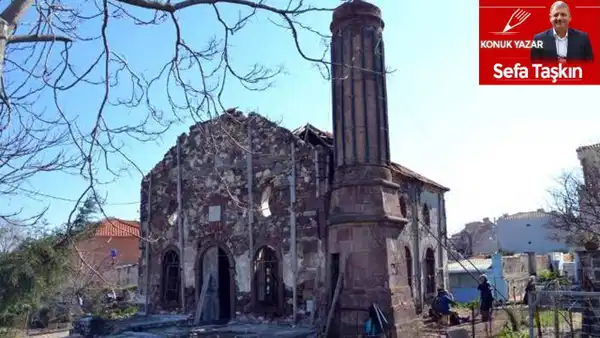
The history of Balizade Hasan Bey Mosque in Mytilene does not end with its construction. Over four centuries, the monument was damaged, rebuilt, renamed and gradually separated from the memory of the man who first commissioned it.
An inscription above the door shows that Balizade Hasan Bey, a notable figure on Lesbos, built the original mosque in the early 17th century. Earlier research dated the building to 1615. Ottoman records and fresh assessments made during restoration now point to 1620 or 1621 as the more likely construction date.
The first mosque appears to have been largely destroyed, probably by earthquakes. According to information published by Greece’s Directorate of Antiquities in Lesbos, a new mosque was built on the site in 1780. The inscription belonging to that later building disappeared in a subsequent earthquake, while the earlier inscription, dated 1615, survived.
Over time, Balizade Hasan Bey’s name faded from local memory. Until research carried out during restoration, the building was generally known as the Valide Mosque. The name refers to “mother,” and surviving endowment records provide a possible link to Huri Hanım.
Lesbos records identify Huri Hanım as the mother of Ümmü Gülsüm Hanım, whose father was Halil Ağa, the island’s Ottoman administrator. Ümmü Gülsüm’s husband was Hafız es-Seyyid Mustafa Efendi. Her 1792 endowment deed says that 20,000 kuruş and income from real estate were allocated in part to pay the imam and preacher of a mosque or mosques founded by her mother. These records add another layer to the monument’s complex history and help explain how the Valide name became attached to it.
About this summary
Originally published by Cumhuriyet in Turkish. Translated, summarized, and contextualized automatically by DistantNews, with a note on how the source frames the story. Not individually reviewed before publishing. How this works.
More Stories

From Our Blog

What Gets Lost (and Found) When News Is Translated

The Critical Role of Diaspora Media in Global News

What Travellers Should Know About Countries with Restricted Press

A Digital Nomad's Guide to Following Local News

How the Same Story Looks Different in Different Countries
